



What is the ICAN AERO 50 II?
ICAN has been making carbon wheels since 2009. In the Chinese direct-to-consumer cycling space, that's a long time. Brands come and go quickly in this market, and the ones that stick around tend to do so because they're building something worth buying, not just because they're cheap.
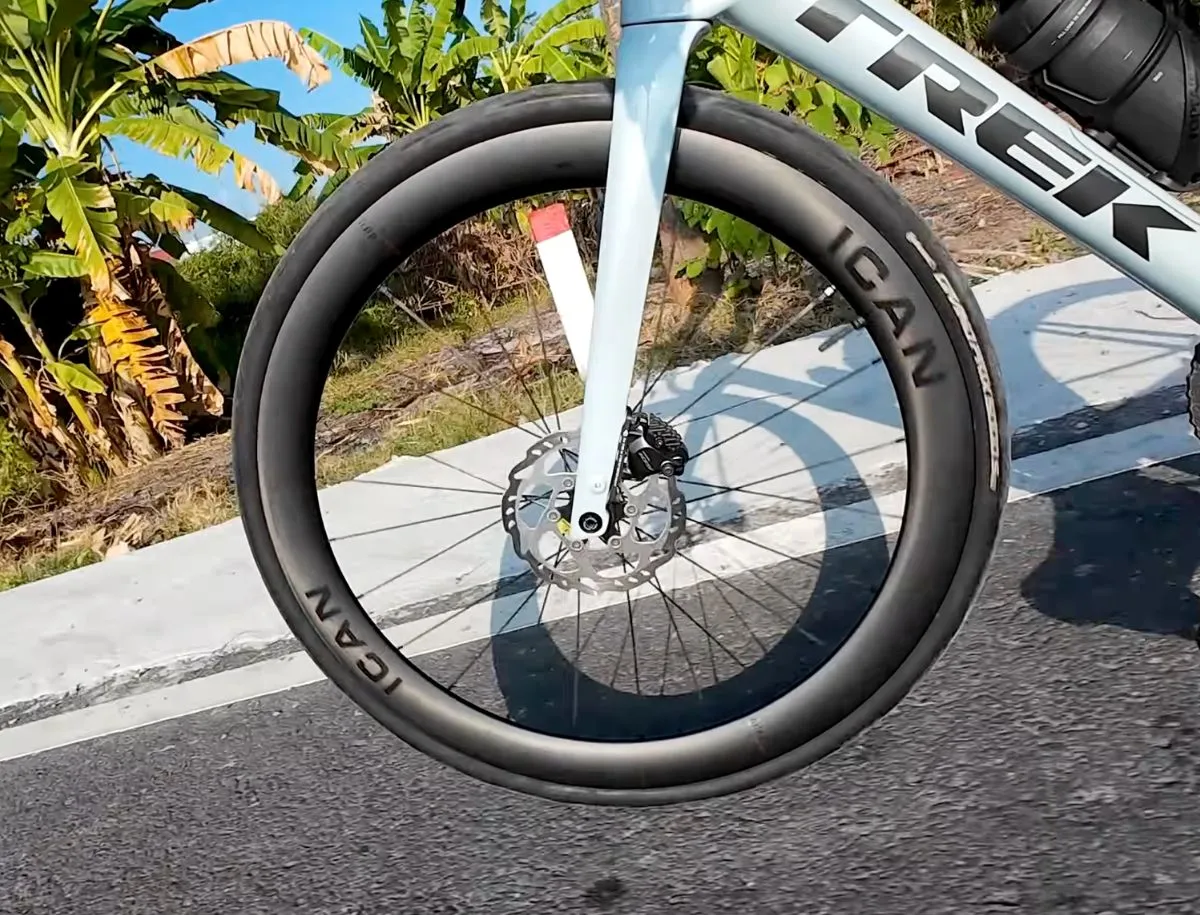
The original ICAN AERO 50 carbon wheels built a strong reputation when it launched around six or seven years ago. It was one of the better-reviewed wheels in its price bracket, and that reputation stayed alive in cycling communities long after the wheel was updated.
When ICAN announced the AERO 50 II, there was genuine interest from riders all over the internet who had been happy with the original. The AERO 50 II is a UCI-approved, tubeless-ready carbon clincher available in 38mm, 40mm, 50mm, and 52mm rim depths. It uses Sapim CX-Ray spokes, ICAN's updated D91 hub, and a combination of T700 and T800 carbon fibre.
Delivery and Unboxing
The wheels arrived from China within 9 days, which is faster than average. Most Chinese wheel brands take around two weeks to reach me. The ICAN box arrived completely undamaged, with no dents or scuffing, which is more than I can say for a lot of the wheel shipments I receive.
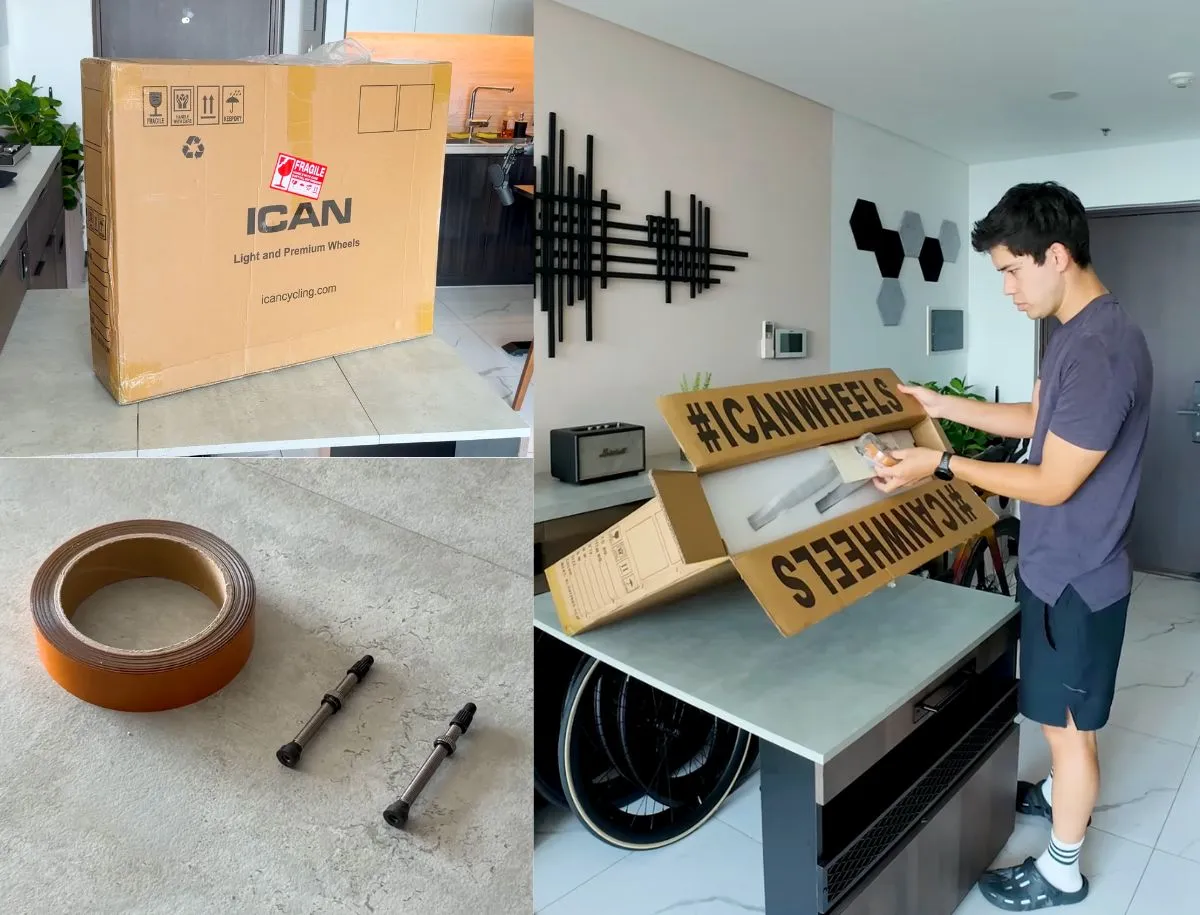
Inside, the packaging was dense with protective material. Even if the outer box had taken a hit in transit, the wheels were well enough protected that they likely would have survived. The box also includes two valves and tubeless tape, so you can go tubeless straight away without a separate order.
First thing I noticed visually: matte black finish with a small gloss ICAN logo. I prefer subtle branding over large white graphics on the sidewall, and ICAN has kept it clean here. The model name "AERO 50 II" is printed in smaller text on the rim, which sounds like a minor detail but is genuinely useful when you have multiple wheelsets and can't always remember which is which.
Weight: Where the ICANs Stand Out
This is the headline number, so let's go through it properly.
ICAN's website lists the 50mm version at 1254 grams. When I weighed my pair without rim tape or valves, the front came in at 573 grams and the rear at 674 grams. That's 1247 grams total. 43 grams lighter than ICAN's own claimed weight.
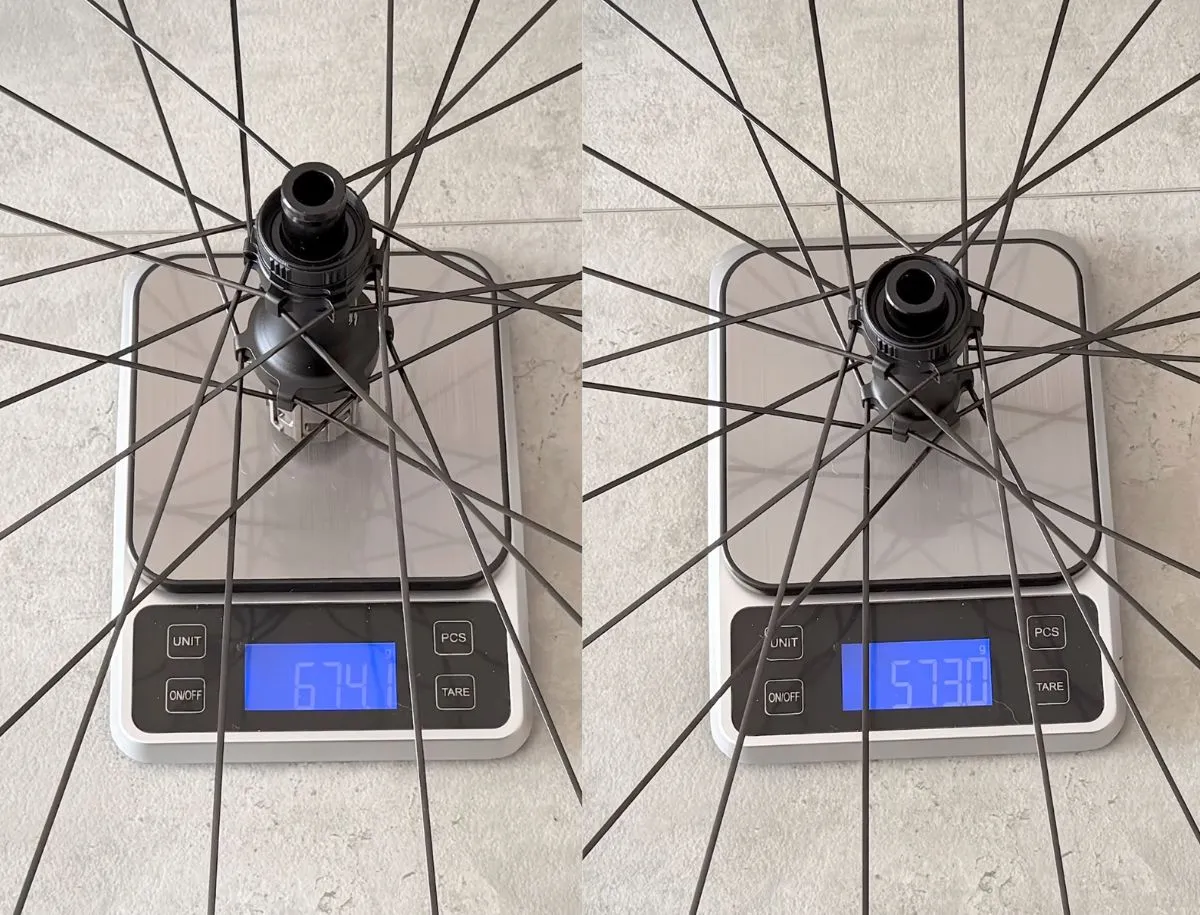
To put 1247 grams in context against other wheels I've personally tested:
- The $840 Elitewheels Marvel II (50mm) weigh 1500 grams. 253 grams heavier.
- The $1,000 MovingSports SL1200 (50mm) weigh 1265 grams. 18 grams heavier.
- The $1,100 Superteam Ultra H2 (50mm) weigh 1290 grams. 43 grams heavier.
The only 50mm wheels I've reviewed that are lighter are the YOELEO QianKun CS50 at 1185 grams.
Those cost $1,650. $1,000 more.
You're getting a wheel that beats the weight of several competitors at $1,000+ while spending $636. That gap matters.
Where lighter wheels make a real difference is on climbs and during accelerations. Removing 100 grams from a rotating part of your bike has more effect than removing the same weight from a static component.
Your wheels are spinning that weight continuously. You feel lighter wheels most when you're attacking a climb, surging out of a corner, or getting back up to speed after a stop. It's not dramatic in isolation, but it's consistent, and over a long ride it adds up.
If you want to see these weighed on camera, I covered the full unboxing and testing process on my YouTube channel. Link below if you want to see the numbers in real time before you decide.
Spoke Tension Test Results
Spoke tension is one of the most reliable quality indicators you can measure without destroying the wheel. Inconsistent tension means uneven flex under load, a wheel that goes out of true faster, and, in some cases, accelerated rim fatigue. It's invisible from the outside, which is exactly why I test every wheel that comes through.
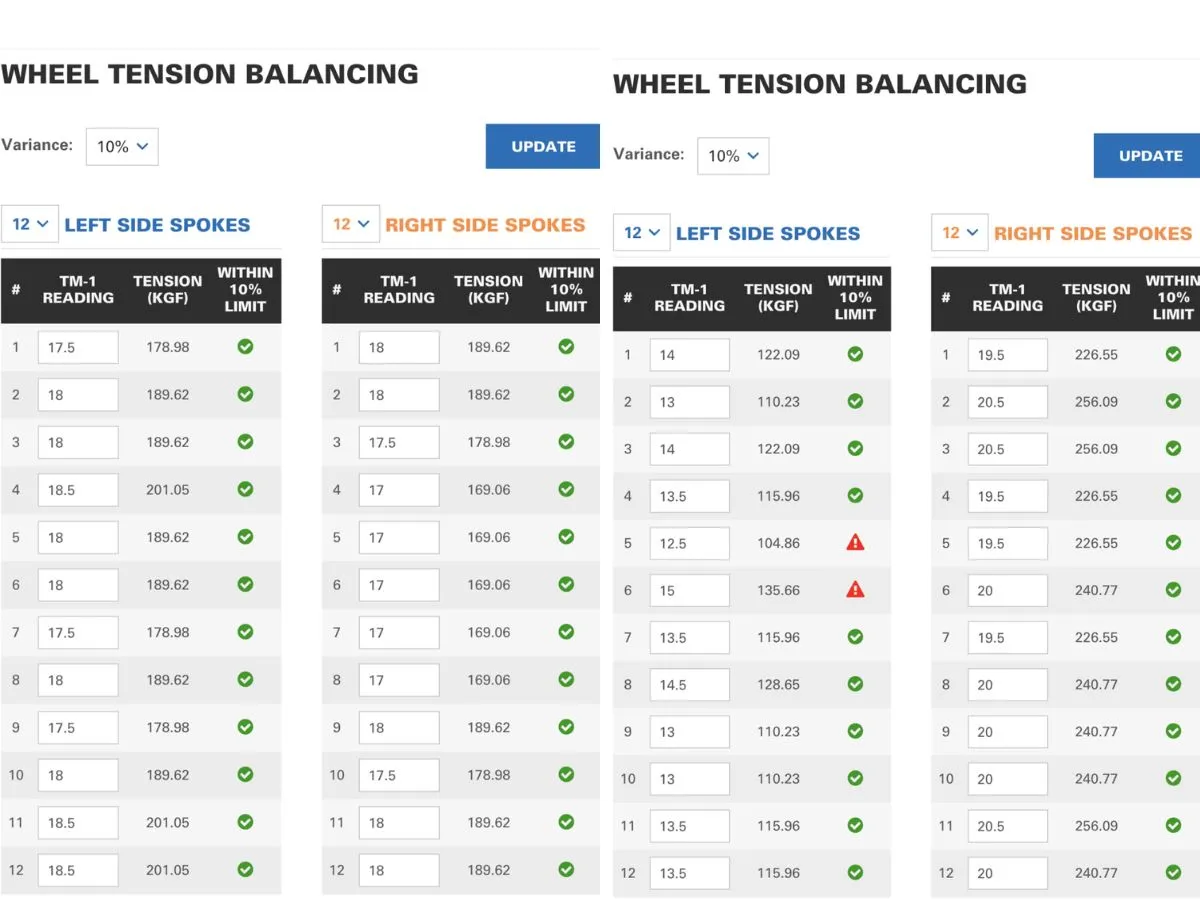
Front wheel: Every single spoke came within the 10% variance limit. The left and right sides were almost identical. The radar chart was about as even as you'd hope to see. That's a well-built front wheel.
Rear wheel: Drive side, all 12 spokes passed. Tension ranged from 226 to 256 kgf, consistent and strong. Non-drive side, 10 out of 12 spokes within the limit. Spokes 5 and 6 sat slightly outside the variance.
Two spokes out of 24 total is a very good result. Most wheels I test have more than that. On my Carbon Wheel Scorecard, spoke tension gets 5 out of 5 for the ICAN AERO 50 II. For a wheel at this price, that's genuinely impressive.
Carbon Fibre Quality
The AERO 50 II uses a combination of T700 and T800 carbon fibre. T700 is the baseline for most carbon wheels at this price, strong and well-understood. T800 is a step up, at around 28% stiffer than T700, which matters in a rim where lateral rigidity under hard cornering and sprinting loads is the priority.
ICAN hasn't published its exact layup schedule, so I can't confirm exactly where each fibre grade is used in the construction. What I can tell you is that the measured weight figures are consistent with a rim that has T800 in the mix, and the ride feel backs that up.
Endoscope Test Findings
I run a small camera inside the rim on every set of wheels I review. On both the front and rear wheels, the layup looks reasonably clean, but there are some surface imperfections visible. A few ripples and what looks like a minor resin inconsistency around the spoke bed area. Nothing that raises a structural concern, but not the cleanest internal finish I've seen either.
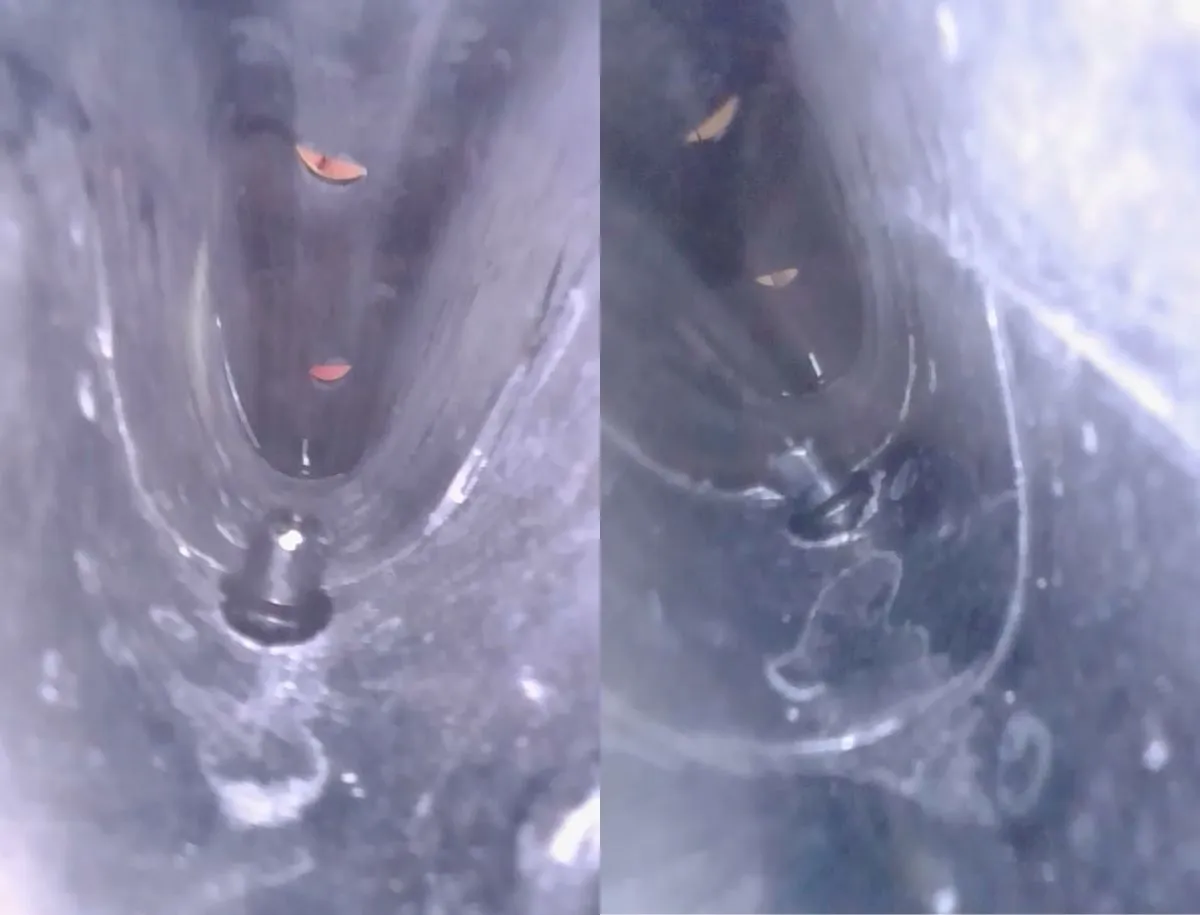
On the Carbon Wheel Scorecard, carbon fibre quality gets a 3 out of 5. Adequate for the price, but not exceptional. The bigger question is consistency across production batches, which a single sample can't fully answer. I'd want to see a few more sets before drawing firm conclusions about their quality control. For now, what's in front of me is solid enough to ride hard without second-guessing it.
Hub, Bearings, and Engagement
The hub is ICAN's updated D91, which replaced the older D01 model. The main change is weight. ICAN shed around 49 grams from the hub, bringing it down from 328 grams to 279 grams. Hub weight sits at the centre of rotation, and it's one of the contributing factors to why these wheels spin up as quickly as they do.
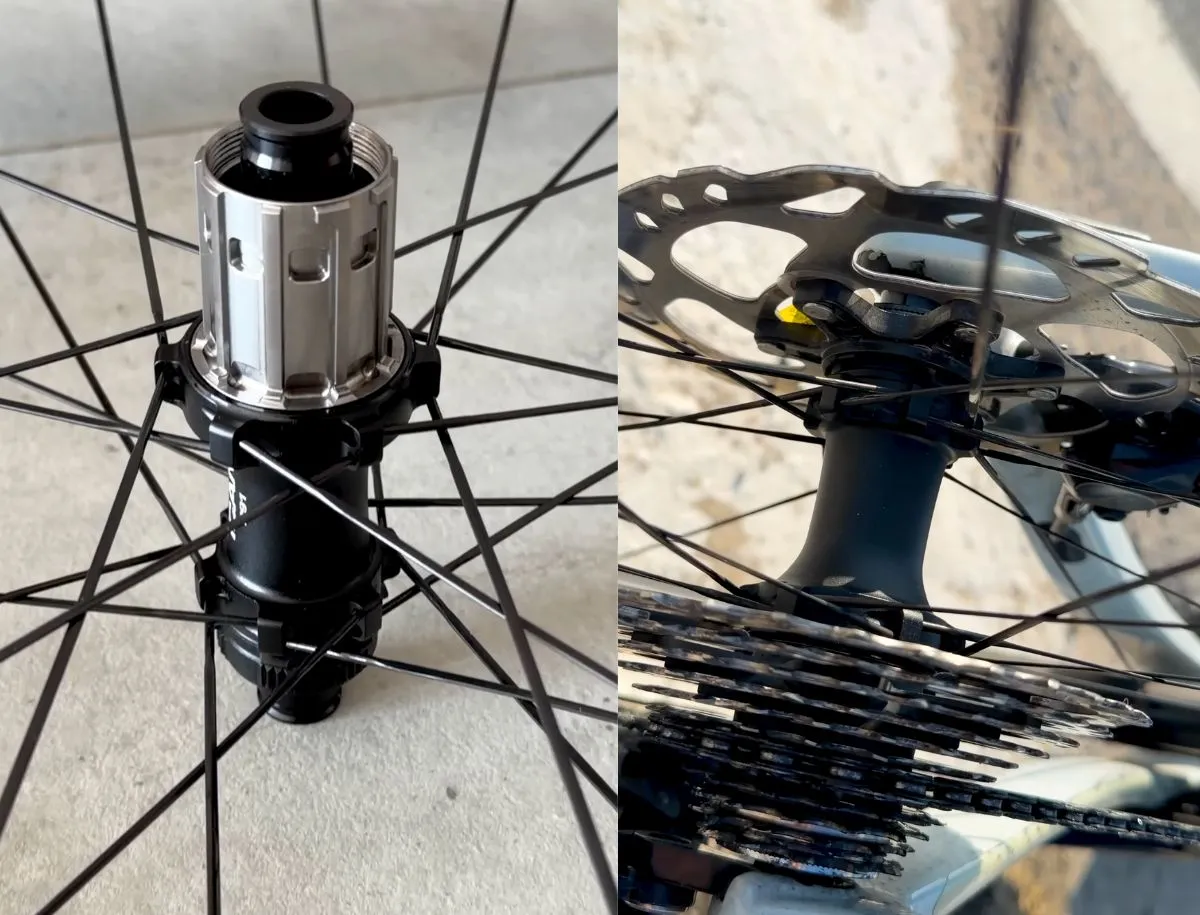
The engagement system is a 45-tooth star ratchet that provides 8 degrees of engagement. That's perfectly adequate for road riding. Higher engagement counts make more of a difference in technical mountain biking, where you're making short, sharp pedal strokes to navigate obstacles. On the road, you're unlikely to notice the difference between 45T and something higher. It's a solid, well-engineered hub for what these wheels are designed for.
The bearings are steel, not ceramic. Ceramic bearings get a lot of attention in marketing, but the real-world performance difference for most riders is negligible. Steel bearings, when well-made, perform extremely well, are widely available, and are much cheaper to replace. For a $636 wheelset, steel is the right call.
One thing worth flagging: the freehub body is aluminum. Over enough kilometres with a Shimano cassette, the cassette can start to bite into the freehub material. It's a known issue with aluminum freehubs, and it's not unique to ICAN. If it becomes a problem, a steel or titanium freehub body replacement costs around $30 to $50. Factor that in if you're doing high mileage.
Ride Experience
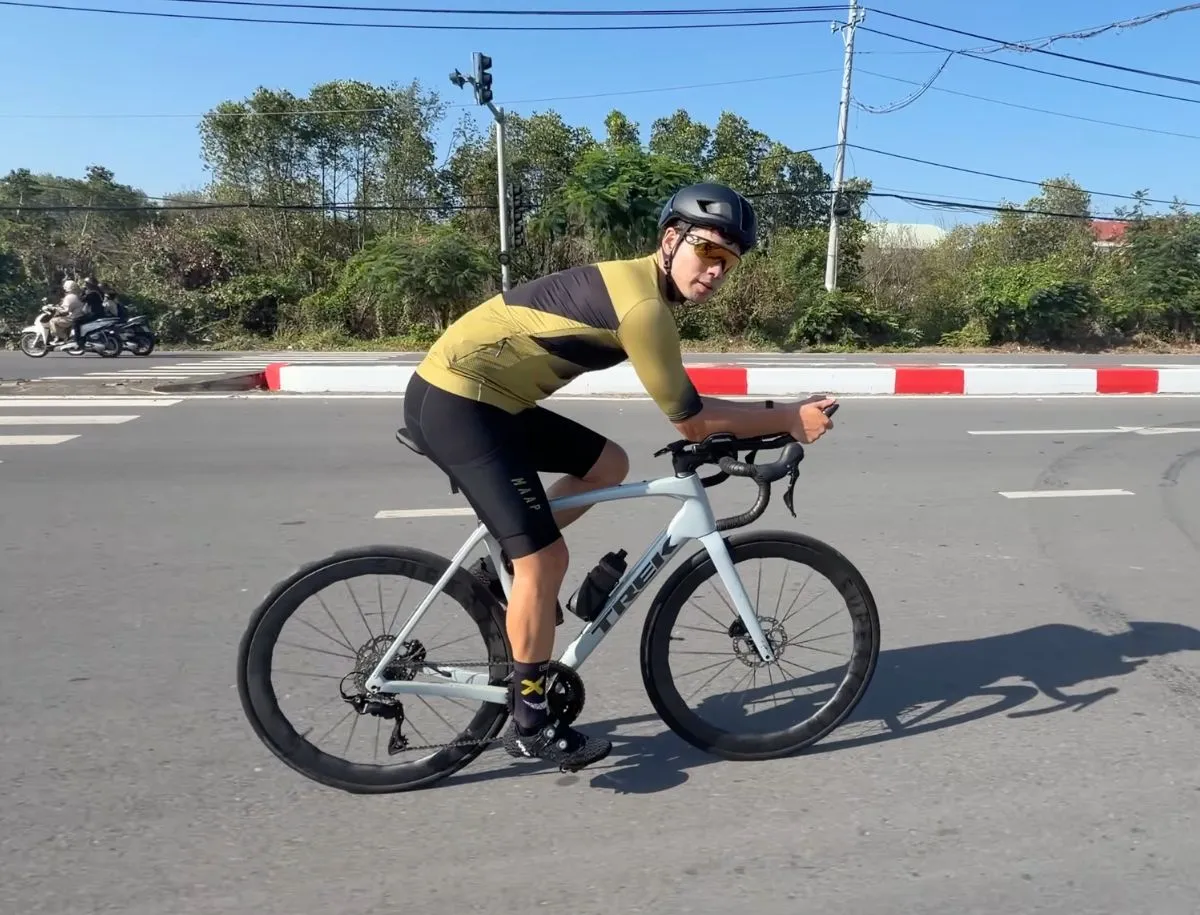
The first thing you notice on the road is how stiff these are. Out of the saddle sprinting, there's no lateral flex. The power goes straight to the road. Some budget carbon wheels have a slightly dead, flexy feel under hard efforts. These don't.
1247 grams is light enough that you feel it on the climbs. On longer sustained efforts, the wheels spin up quickly when you accelerate out of a corner or kick over the crest of a short rise. It's not a dramatic sensation. More of an ease, like the wheel is doing slightly less work than a heavier set would to reach the same speed.
Stiff wheels and comfortable wheels pull in opposite directions, and the AERO 50 II sits firmly on the stiff side. On smooth tarmac, they feel fast and planted. On rougher roads, you feel more of what's underneath you compared to a heavier, more compliant rim.
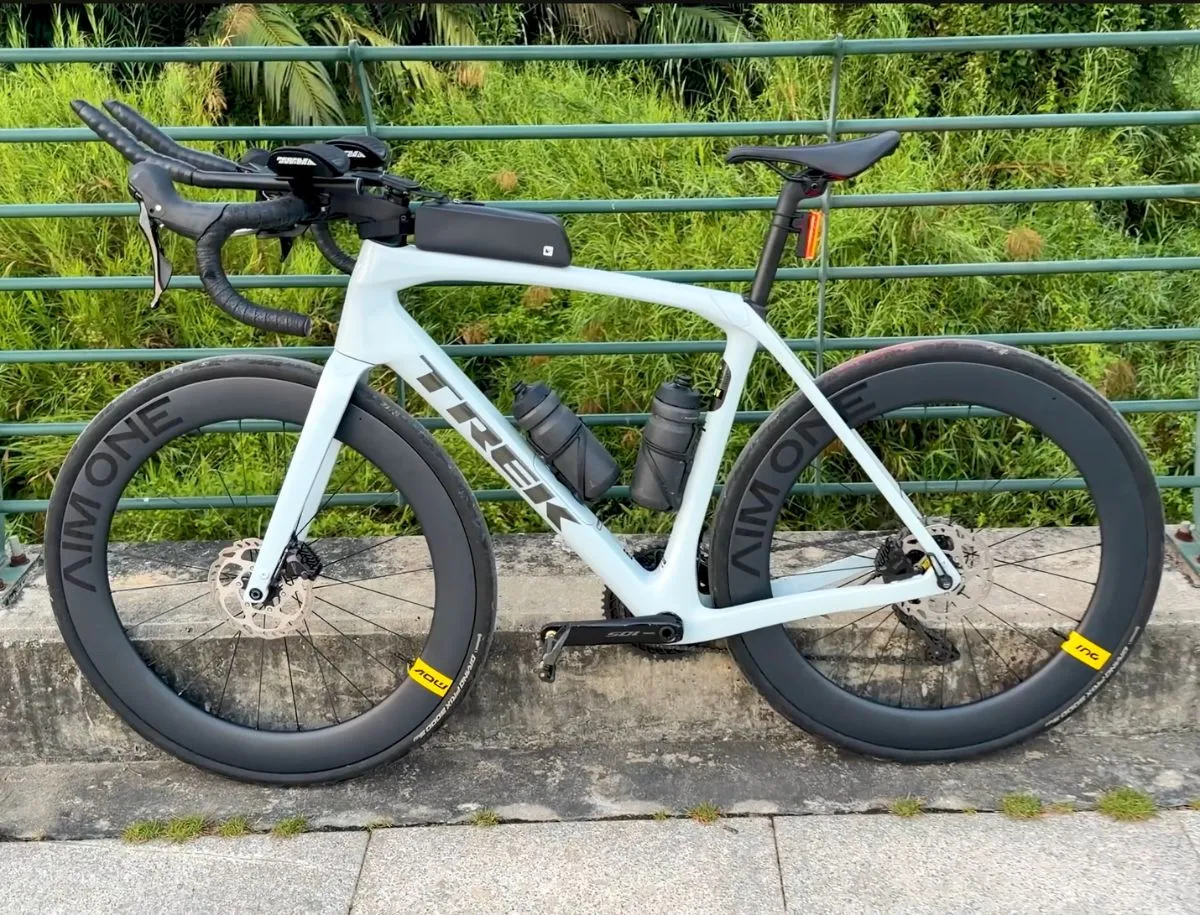
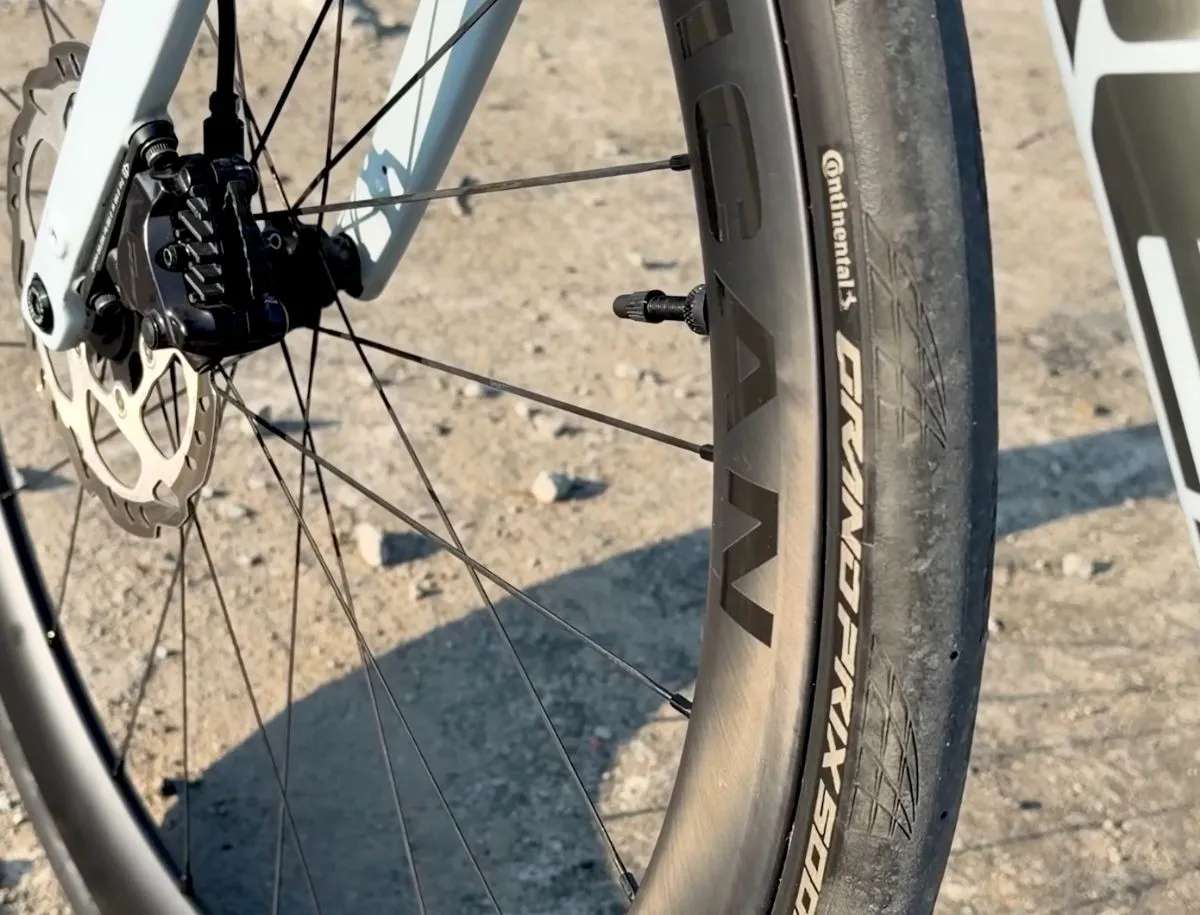
I run 32mm Continental GP 5000 S TR tyres tubeless on these, and the tyre absorbs a significant amount of road buzz. If you're on 25mm tyres and rough surfaces, expect to feel more of the road. Composed and predictable. No vagueness or wobble at speed, which is what you need when you're pushing into a fast corner on a new set of wheels. Braking with a disc setup through these is progressive and consistent.
At 50mm, crosswind behaviour is about what you'd expect. In calm to moderate conditions, these feel stable and confidence-inspiring. In strong, gusty crosswinds, you do feel the wheel wanting to move around. If you ride in exposed or coastal areas regularly and crosswind stability is a priority, a 38mm or 40mm rim depth will suit you better, regardless of brand.
ICAN AERO 50 II vs the Competition
The natural comparison here is the Elitewheels Marvel II, which I reviewed separately and which sells for around $840. The Marvel II weighs 1500 grams in 50mm. The ICAN AERO 50 II weighs 1247 grams. You're saving $170 to $200 and getting a wheel that's 253 grams lighter.
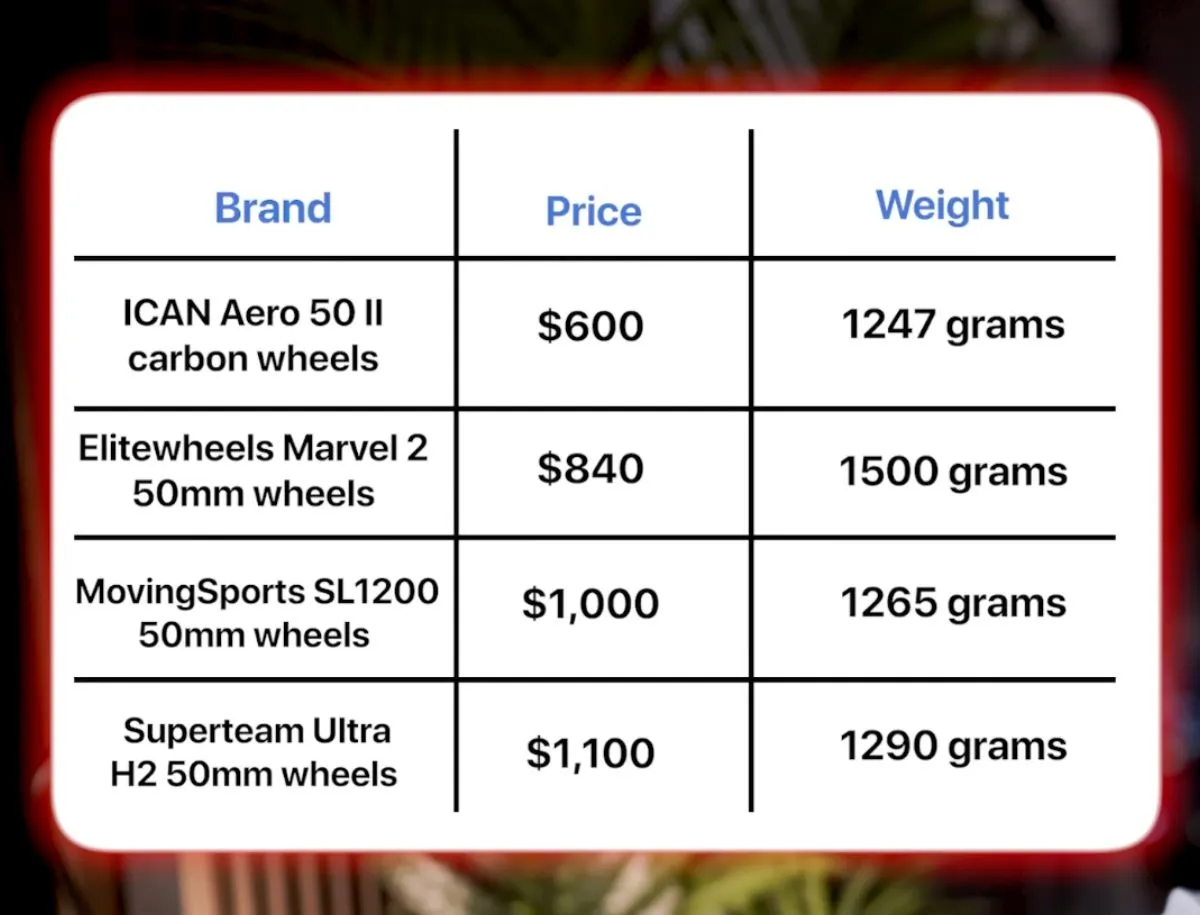
The MovingSports SL1200 at $1,000 weighs 1265 grams. That's 18 grams heavier than the ICAN for $370 more.
At the top of the range, the YOELEO QianKun CS50 comes in at 1185 grams and costs $1,650. If you want the absolute lightest option, that's where you go. But you're paying $1,000 more for 62 grams.
For the $600 to $700 budget, the ICAN AeERO 50 II offers the best weight-to-price ratio of any 50mm carbon wheel I've tested. The Sapim CX-Ray spoke spec at this price point is the detail that really tips it.
Who Should Buy the ICAN AERO 50 II?
These are the right wheels for a road rider who wants to move up from a stock wheelset or a heavier entry-level carbon set without spending $1,000+. If climbing performance matters to you, or you want a wheel that spins up fast for criterium-style riding, the weight advantage these offer is hard to beat at this price.
They're also worth considering if you're looking at the 38mm version specifically. At 1265 grams in 38mm depth, those would make excellent dedicated climbing wheels.
They're not the right choice if you ride in consistently strong crosswinds and want a shallower, more forgiving profile. They're also not the choice if you prioritise long-distance comfort over stiffness, or if you want a wheel with a multi-year crash replacement policy rather than a 15% discount.
Warranty and Crash Coverage
The ICAN AERO 50 II carries a 2-year warranty, which is about average for the direct-to-consumer carbon wheel market. On the Carbon Wheel Scorecard, warranty gets a 3 out of 5.
ICAN also has a crash replacement policy. If you crash and damage the wheels, you can get a 15% discount on the retail price of a replacement set. For context, Trek Bontrager will replace your wheels for free. Some budget brands on AliExpress, including Elitewheels, have no crash replacement policy at all. The ICAN policy sits somewhere in the middle. It's not outstanding, but it's there.
ICAN AERO 50 II: Final Verdict
1247 grams. Sapim CX-Ray spokes. Under $636. The ICAN AERO 50 II is the best value lightweight carbon wheelset I've tested at this price point, and it's not even close.
The internal carbon finish is average, and the freehub body is aluminum, but neither of those things changes what these wheels feel like on the road. Fast, stiff, and genuinely light for what they cost.
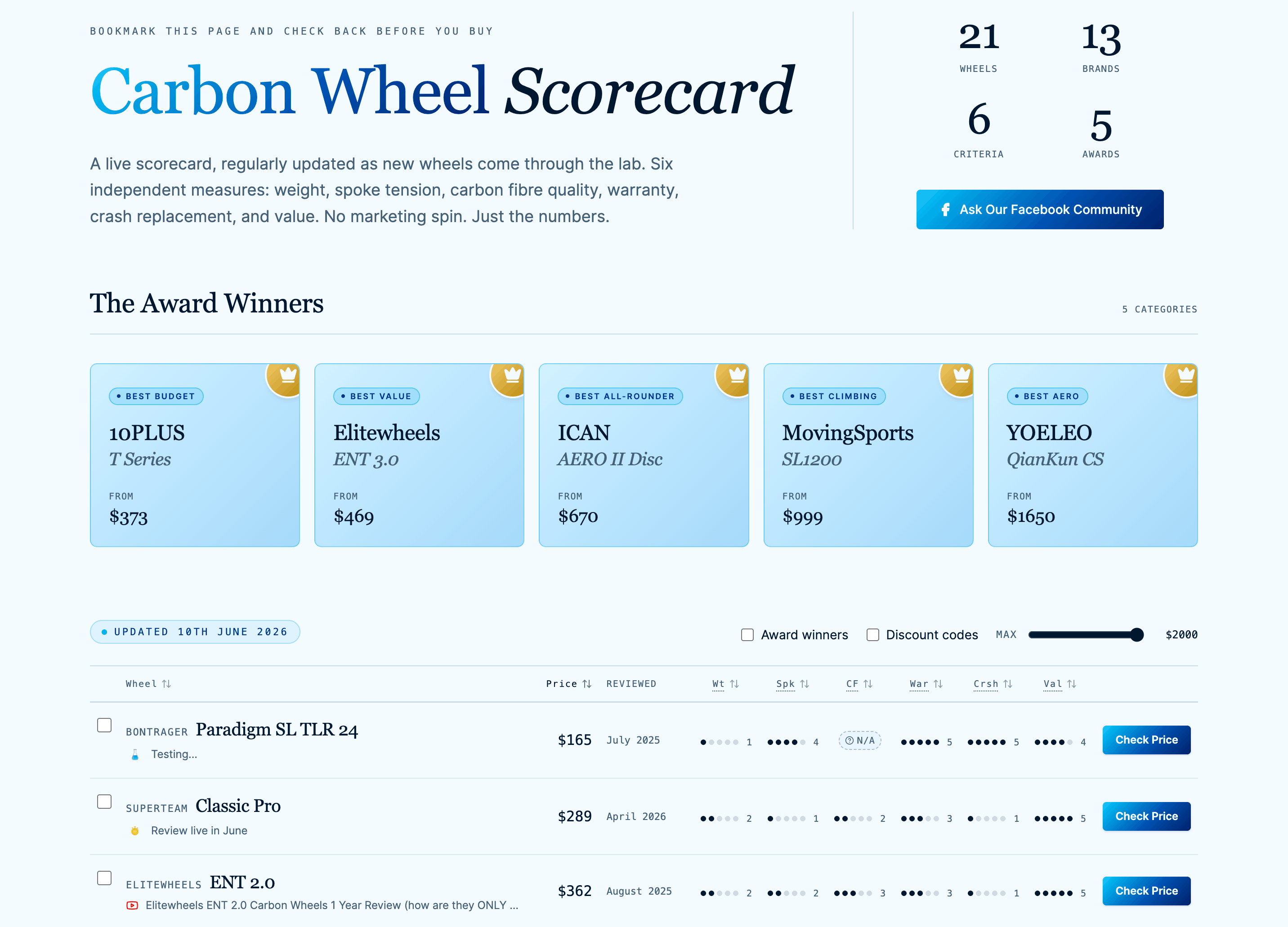
You can find more information on these wheels on the ICAN official website, and as of writing this, you can get 5% discount using my code MIKE5.
I covered the full unboxing and ride test on my YouTube channel. Click here to watch the full video review.

Review by Mike Dee
I test road bikes, carbon wheels, and cycling gear with quantifiable lab tests and real riding. No marketing spin, just the data - so you don't have to spend hours researching or wasting money on the wrong gear.