



Superteam Ultra H2 Review
I've tested about 15 pairs of carbon wheels in the last year. In some areas, the Superteam S-ALL Ultra H2s delivered the best results I've ever seen. Best spoke tension. Best looking wheels I own, in my opinion. Among the lightest at this price point.
But there's one test, one test, most reviewers don't even run, where these wheels came back with a result I didn't expect. So before you hand over around $1,100 for the Superteam Ultra H2, read this first.
Superteam sent me these wheels to review. As with every review on this channel, I'll tell you what I like, what I don't like, and crucially, why you'd choose THESE carbon wheels over another set. Because there are a lot of them out there, the answer might actually surprise you.
What Is the Superteam Ultra H2?
Unless you've been off the internet for the past few years, you've seen Superteam wheels on YouTube, on Reddit, and probably on your group rides. They were founded in 2015, making them one of the more established Chinese carbon wheel brands, and they're based in Xiamen, China, where most carbon wheel brands are based.
What I like about Superteam as a brand is the range. You can get into their Classic PRO series from around $490, all the way up to around $1,200 to $1,500 for their S-ALL Carbon EVO II wheels. Something for most budgets.
Why This Specific Model
The S-ALL Ultra H2 is Superteam's flagship wheelset at around $1,100. That might raise a question: if the EVO II costs more, why is the Ultra H2 the flagship? Because they take a different approach.
The EVO II uses DT Swiss hubs with thicker carbon spokes and a simpler feather-pattern rim, the feather pattern supposedly improving structural rigidity and aerodynamics.
The Ultra H2, on the other hand, uses Superteam's in-house hubs with a higher-engagement ratchet, thinner, lighter carbon spokes with titanium nipples, and the shark-fin wave rim design.
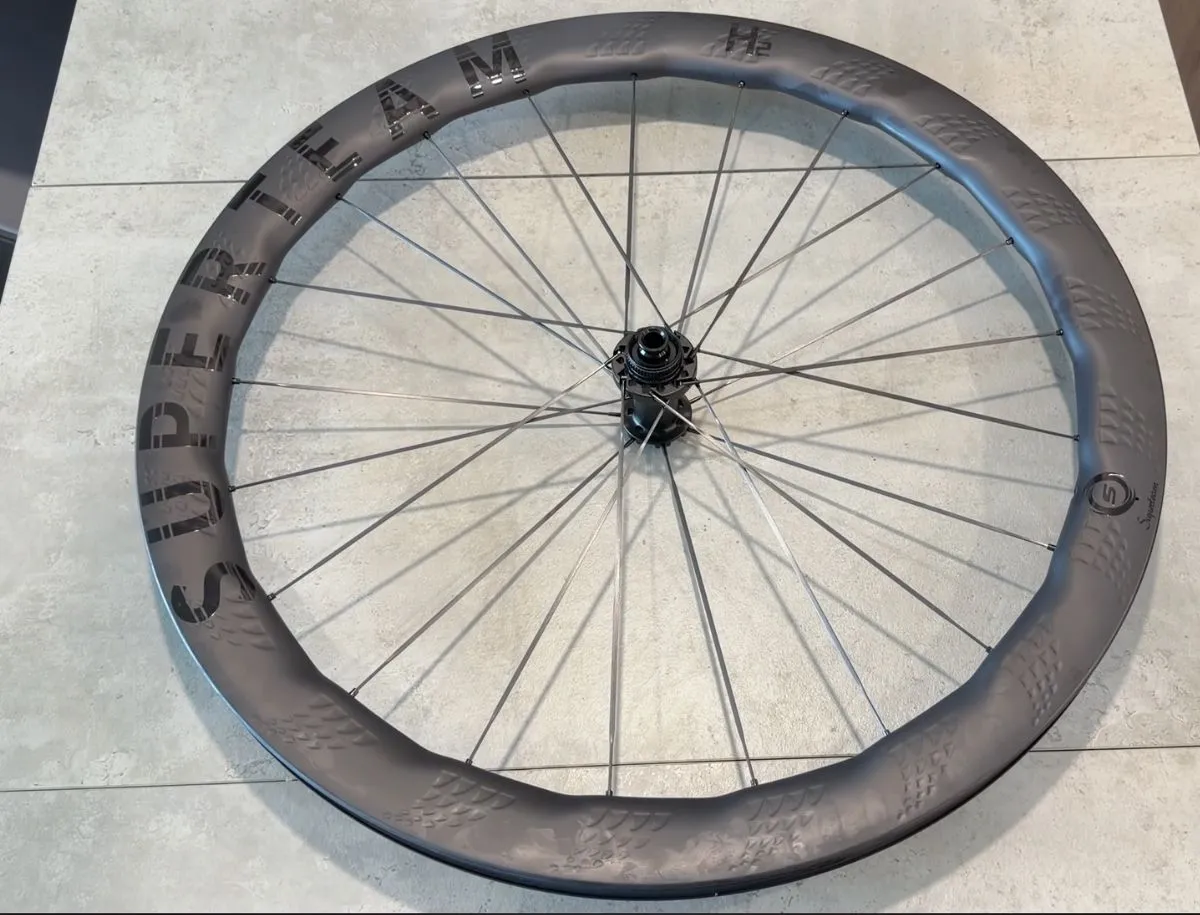
Those bumps designed on the wave-rim are inspired by the humpback whale fins, the idea being that a textured surface cuts through air more efficiently than a smooth one. Superteam claims it reduces drag and improves crosswind stability.
They also claim wind tunnel testing at 40 km/h shows 15% less drag compared to ordinary rims of the same height and width. I'll come back to that claim later.
Warranty and Crash Replacement
The rims and spokes are covered for 3 years, which is about the industry standard. The hubs get 1 year, which is also about standard, but I'd like to see 3 years on the hub for a wheelset at this price.
There's no crash replacement policy. About half the carbon wheels I've reviewed over the last year or two have some kind of crash cover, and half don't.
Trek Bontrager wheels have a 100% crash policy; they'll repair or replace your wheels for free after a crash. Elitewheels gives you 38% off a new set if you crash yours. At $1,100, I think Superteam should offer something.
First Impressions and Delivery
The wheels shipped directly from China on 3rd December and arrived in the UK on 16th December. 13 days from China is reasonable, and I didn't pay a penny in customs or import duties. Superteam shows a banner on their site confirming shipping is tax-included to the US, UK, and EU, which is reassuring if you're worried about getting stung at the border.
The first time I pulled these out of the box, I thought: These are the best-looking carbon wheels I own. And I own a lot of wheels, about 15 pairs, stashed under my desk. I know that sounds vain for a wheel review, but it matters. You want the wheels to be fast and durable, but they've also got to look the part.
These are matte black. That's a win straight away. Matte black on wheels just looks better than gloss, in my opinion. A subscriber who also gets my newsletter emailed me recently saying, "I hate that the Marvel 2's have a gloss finish." It's not just me. The Superteam logo is big, but it's subtle matte black with a gloss decal, exactly how I like it.
If you prefer a bolder look, there's a white decal option at the same price, and a Special Edition with a fancier paint job for $100 more.
And then there's the shark fin imprints on the rim wall. They have an actual aerodynamic job reducing turbulence as the wheel spins. As a bonus, they make the wheel look even better. Combined with the wave rim design, these are probably the most aesthetic carbon wheels I own. Beauty is subjective, but for me, these tick every box.
Rim Depth: The One-Option Problem
I have the 50mm version, because that's the only version Superteam offers for this model. That's okay-ish. 50mm is a solid all-rounder not specialising in climbing or pure aero, but sitting comfortably in the middle, which for most riders most of the time is exactly where you want to be.
But it is a missed opportunity. Put a 38mm version of this build together, and you'd have a serious climbing wheel. Give me a 65mm or 80mm version, and you're in proper aero territory. The fundamentals are strong enough to justify a full depth range, carbon quality, spoke setup, and hub engagement; it's all there. For now, 50mm means you're buying an all-rounder and hoping that it suits your riding.
Weight
Superteam lists these at 1,290 grams. When I weighed them myself, they came in at 1,252 grams, 38 grams under the stated spec, without valves or rim tape. That's very light for a carbon wheelset at this price point.
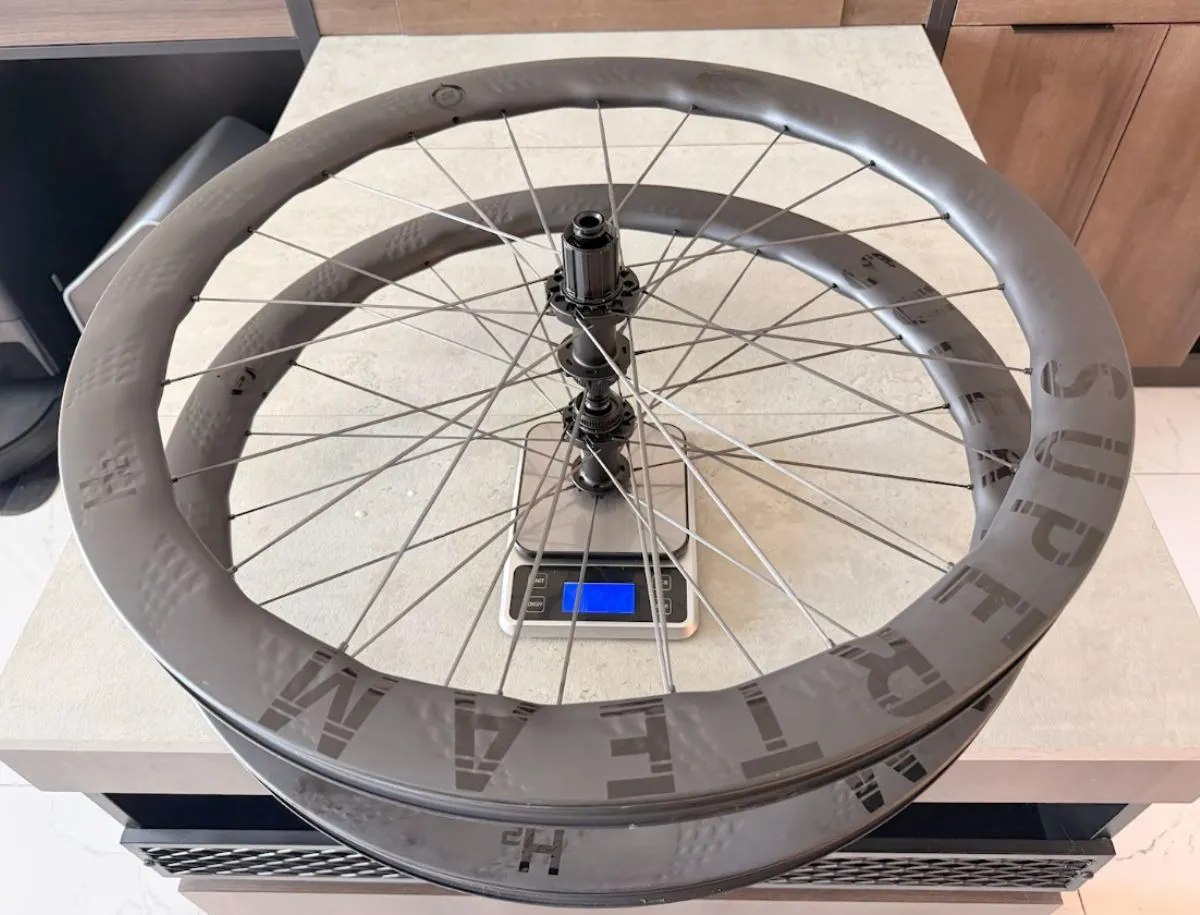
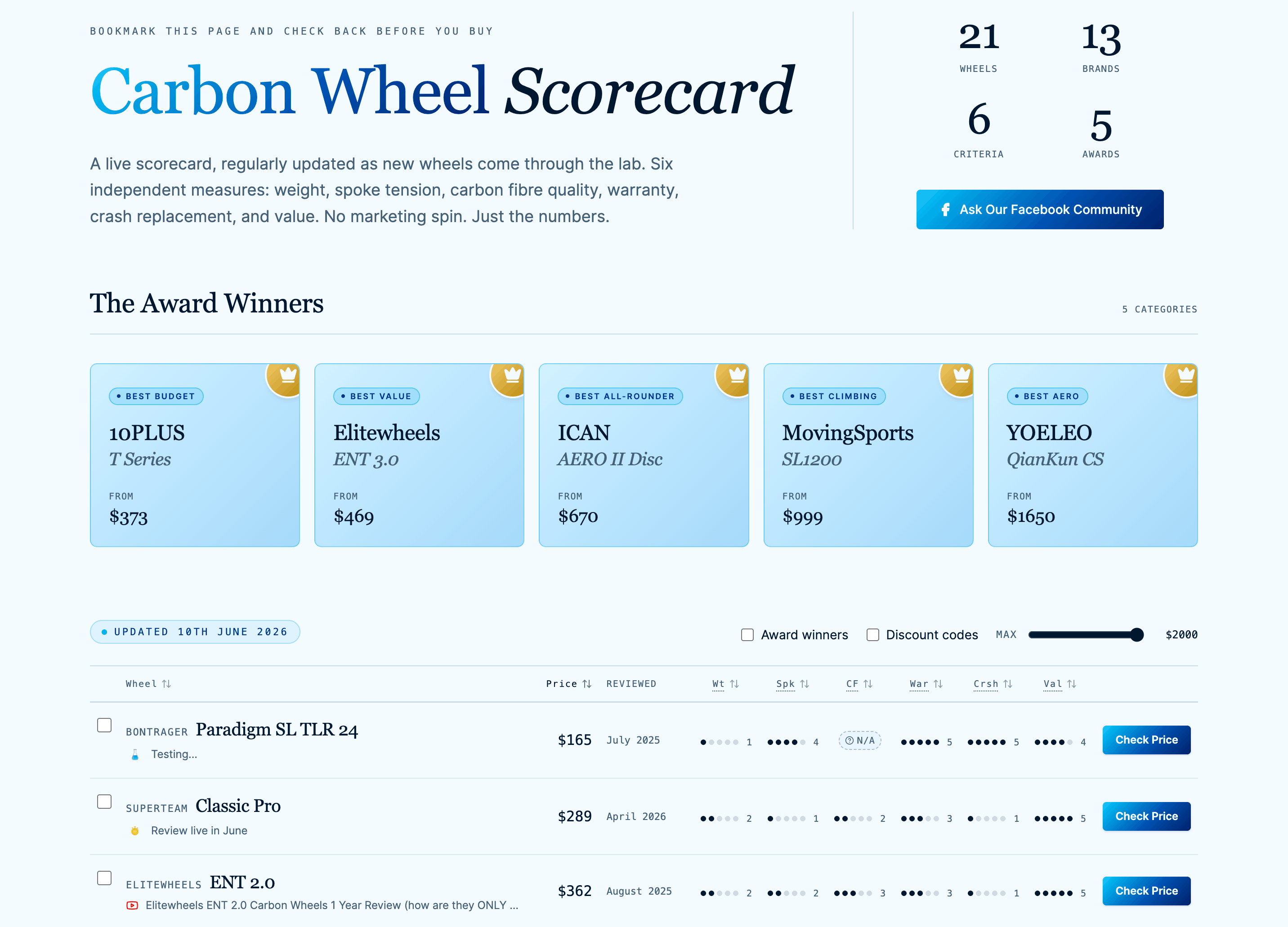
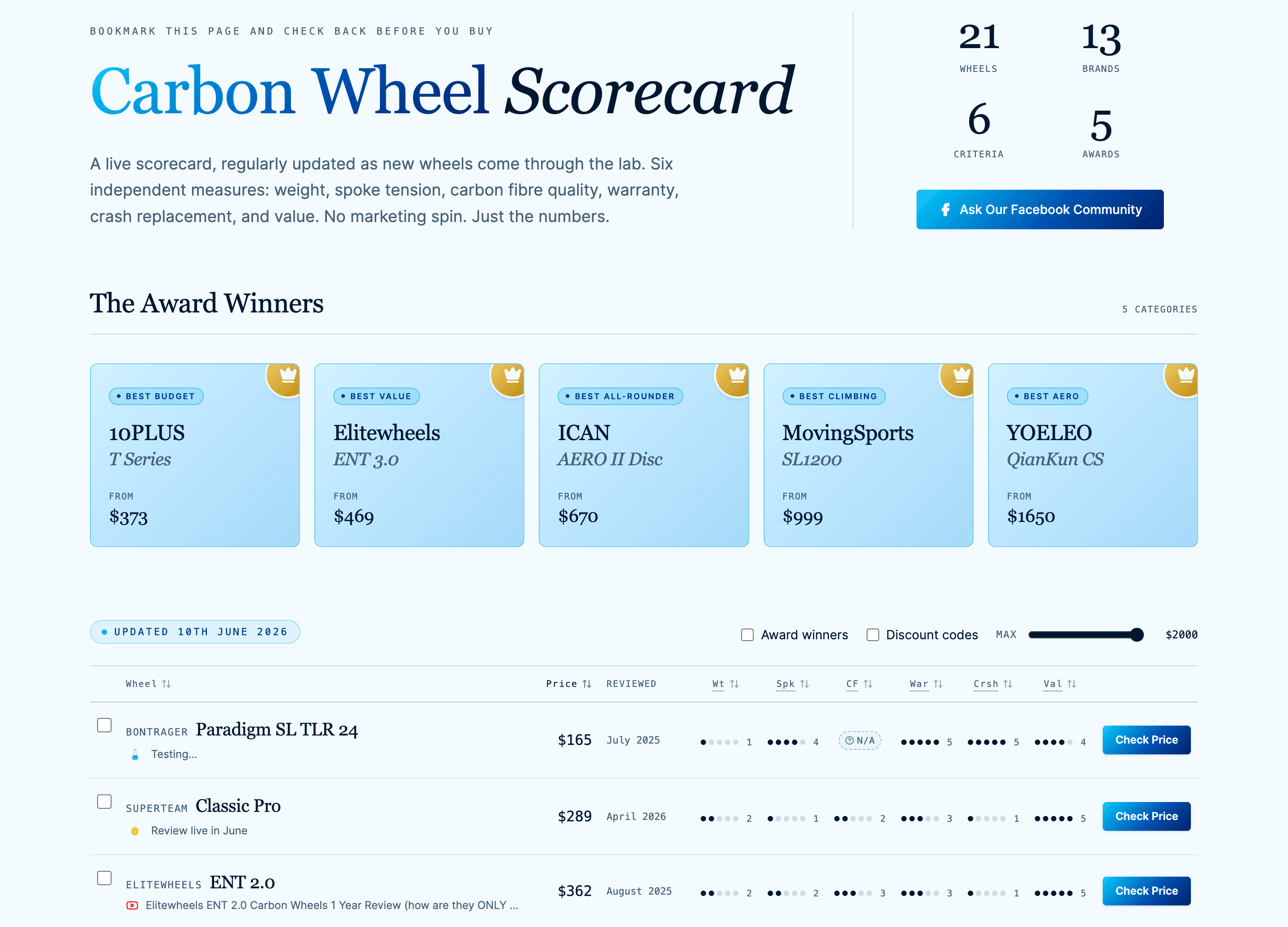
On my Carbon Wheel Scorecard, a database of all the wheels I've tested over the last 12 months, scored across weight, spoke tension, carbon quality, warranty, crash cover, and value, these score 5 out of 5 for weight. I'll link the scorecard in the description.
Spoke Tension
This is where things get genuinely impressive. I test spoke tension on every set of wheels I review because inconsistent spoke tension is one of the leading causes of wheel failure, buckled rims, and poor power transfer. The results on the Ultra H2 were the best I've recorded out of all the wheels I've tested.
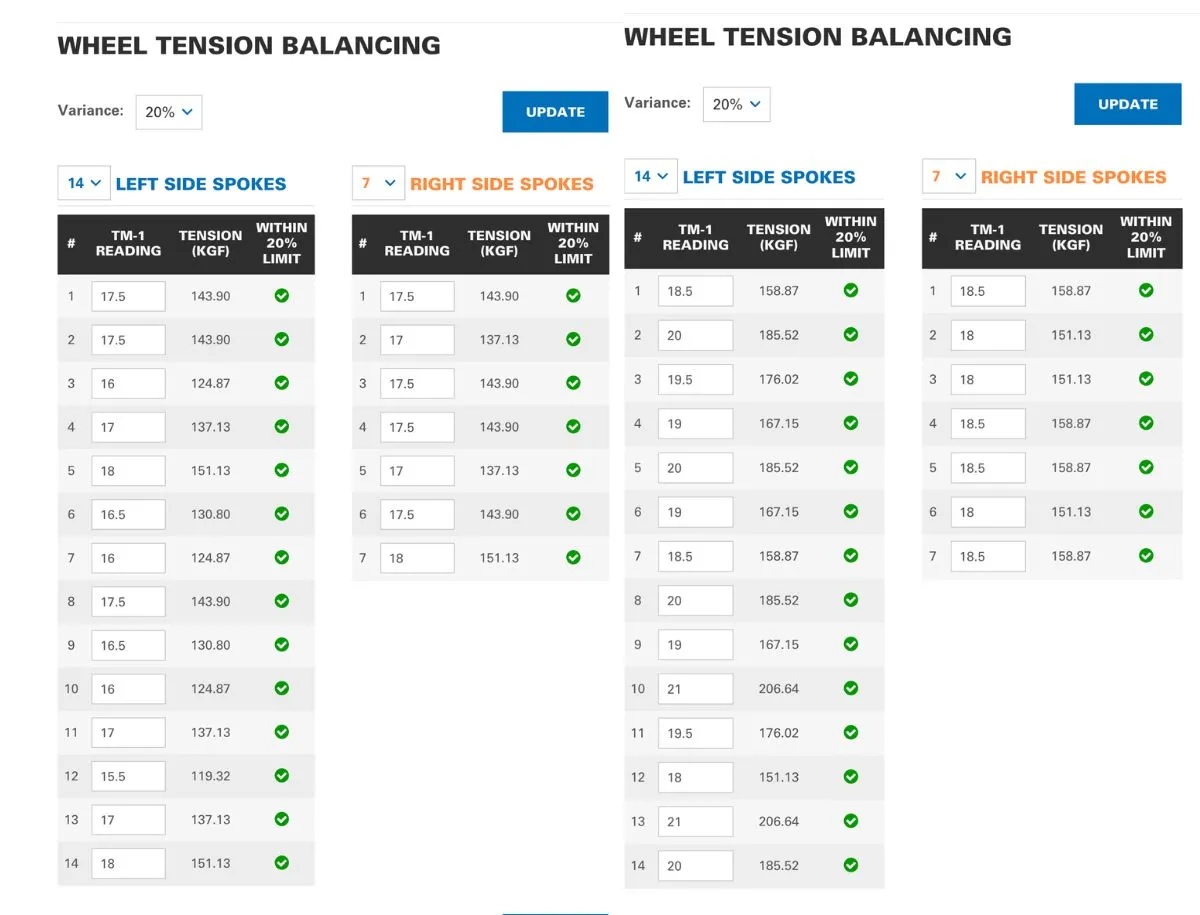
Front wheel: left side spokes running between 119 and 151 kilograms force, right side between 137 and 151 kilograms force. Every single spoke passed the 20% variance test.
Rear wheel: left side running 151 to 206 kilograms force, right side 151 to 158 kilograms force. Again, every spoke was within tolerance. The rear runs at higher tension overall, which is exactly what you'd expect the rear wheel to handle: power transfer, braking forces, and most of your body weight.
Both wheels pass across the board. The spider charts tell the same story visually: a consistent shape with no major spikes or dips. One of the best spoke tension results I've seen.
Hubs and Engagement
The front hub runs two ceramic bearings. The rear runs three ceramic bearings and one steel bearing. I suspect that's deliberate. Ceramic is great for smooth, low-friction rolling, but steel handles high-torque, high-load situations better. Having steel in the rear hub, where the real work happens, makes sense. You're getting the best of both.
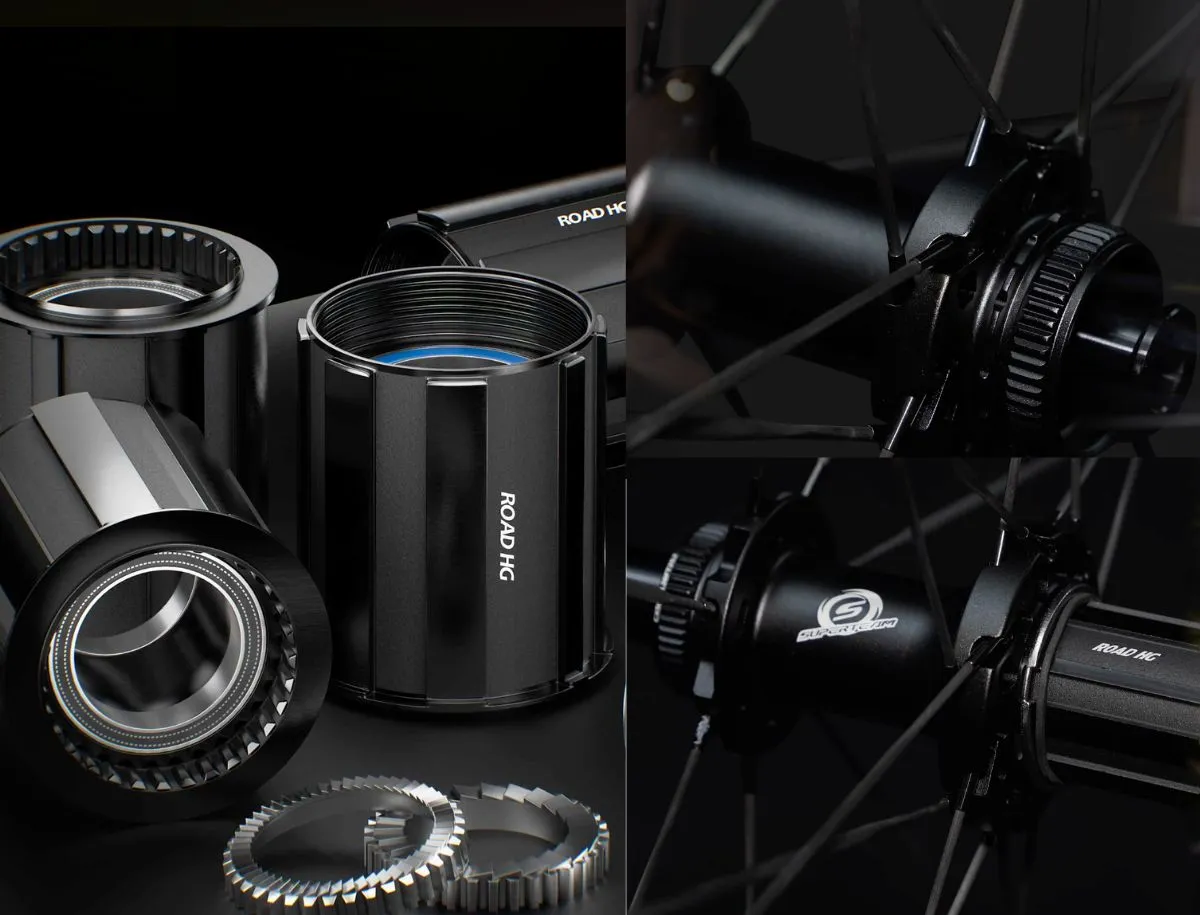
The freehub uses a 54-tooth ratchet system. Fast engagement when you put the power down, the wheel bites almost immediately. I'll get into how this actually feels on the road in a moment, because the responsiveness is one of the things that genuinely sets these wheels apart.
One thing worth flagging: the hub doesn't have a cover over it. In the unlikely event that a spoke loses tension, there's a chance it could pop out. It would only need to move about 1mm. Extremely unlikely, but worth knowing at this price point.
Carbon Construction
The rim is built from T800 carbon fibre with T1000 reinforcing the spoke holes, the areas that take the most stress.
Think of it as using the stronger material exactly where you need it and a lighter one everywhere else. The layup process is multi-angle hand layup, meaning the carbon sheets are laid down by hand in different directions so the finished rim is strong from every angle.
That's the official story. Now for the part I didn't expect.
I ran an internal rim inspection using an endoscope camera on both wheels. The results were honestly not great.
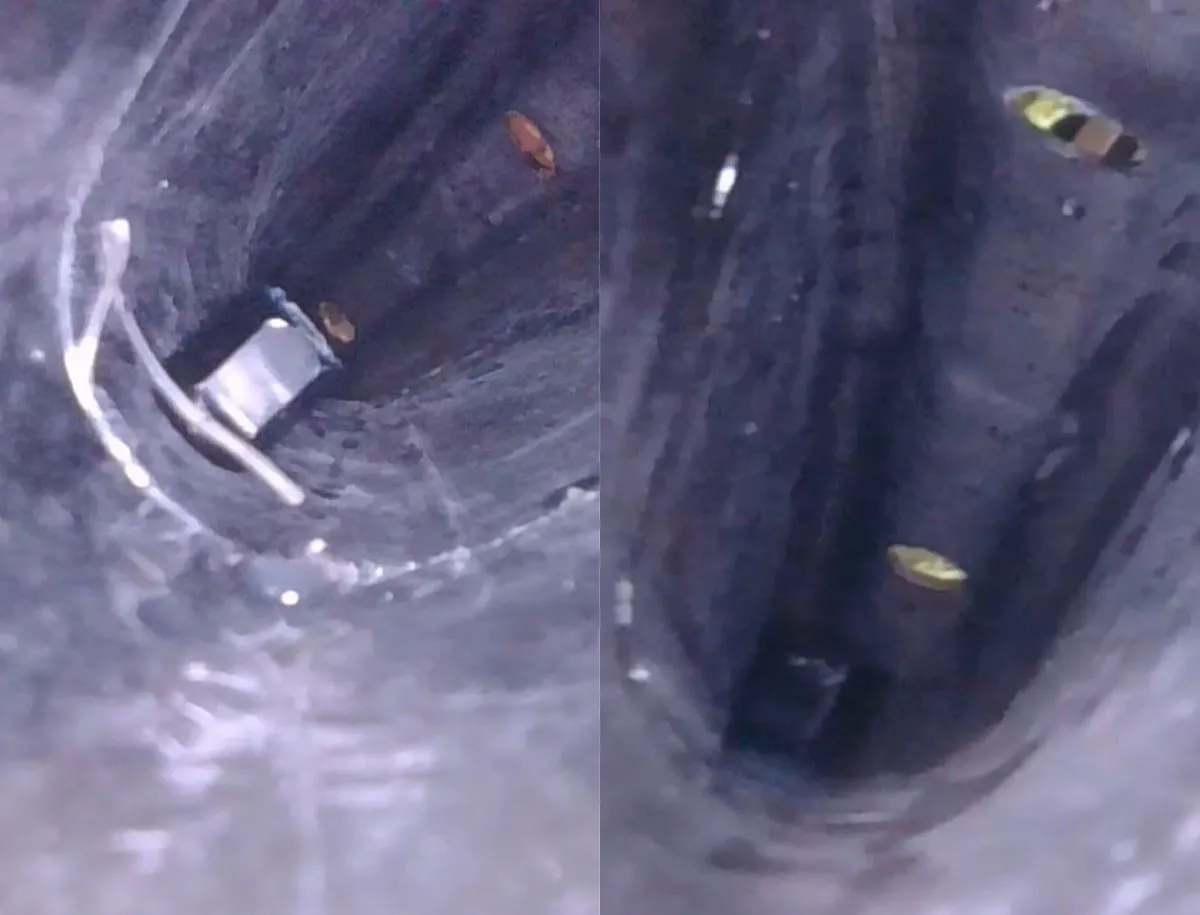
On the front wheel, the surface is rough and granular throughout. There's some minor resin irregularity at the spoke holes, and more importantly, there's a loose fibre and resin strand near the nipple. No structural red flags, but the finish is not what I'd expect at this price point.
The rear wheel tells a similar story. Visible disruption to the carbon layup around the spoke bed area. The carbon isn't as smooth or well-finished as I'd want from a wheelset costing around $1,000. Out of all the wheels I've tested, the internal finish on these sits slightly below average, 2 out of 5 on the Carbon Wheel Scorecard. That's the one result I wasn't expecting.
Ride Experience
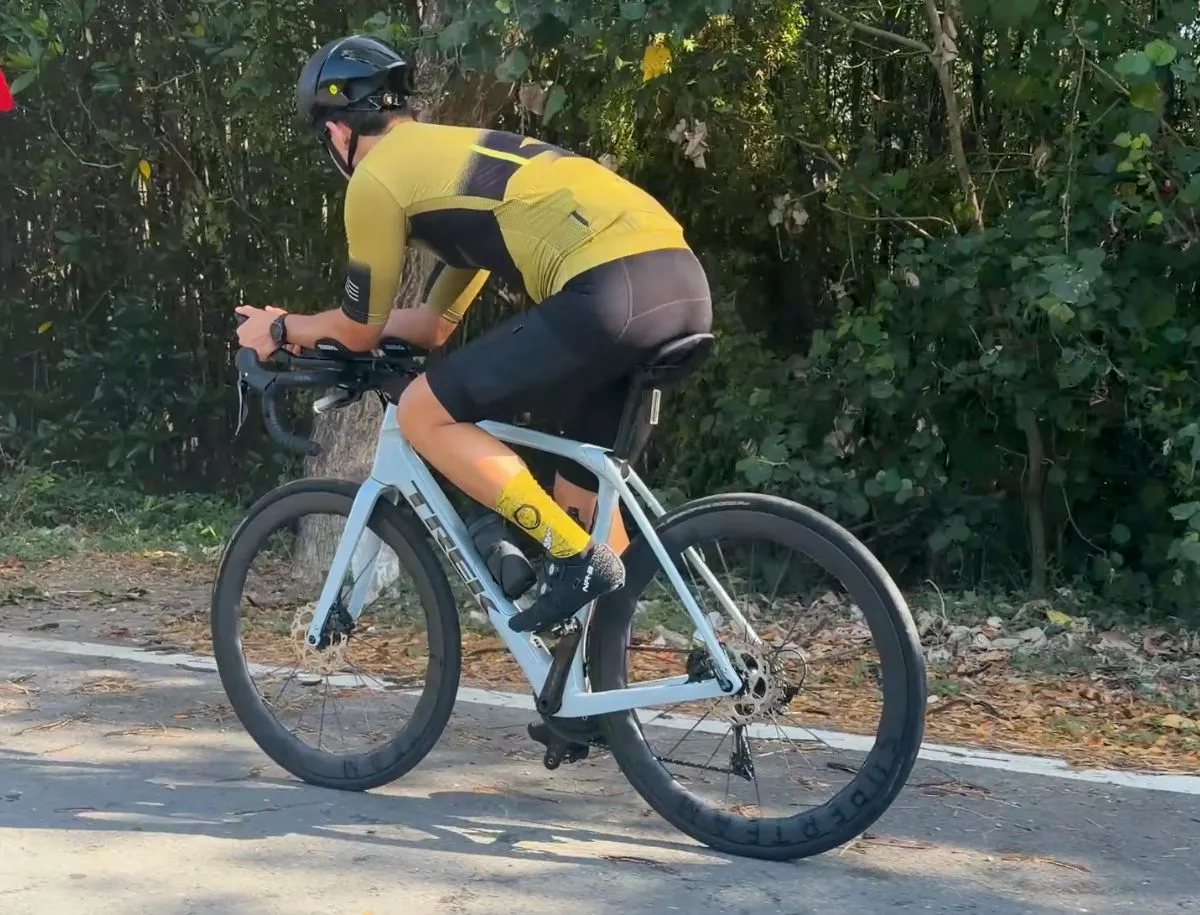
These are stiff wheels. You feel it when you put the power down: immediate response, no flex, no energy lost. But they're not harsh, and that's harder to get right than it sounds.
A lot of carbon wheels with carbon spokes feel like you're riding on concrete. Every crack in the road goes straight through the bike and into your hands and backside. These don't do that. They're stiff where it counts under power, but they still absorb enough road noise to keep you comfortable on longer rides.
Handling is confident and predictable. No surprises, no twitchiness. They go where you point them.
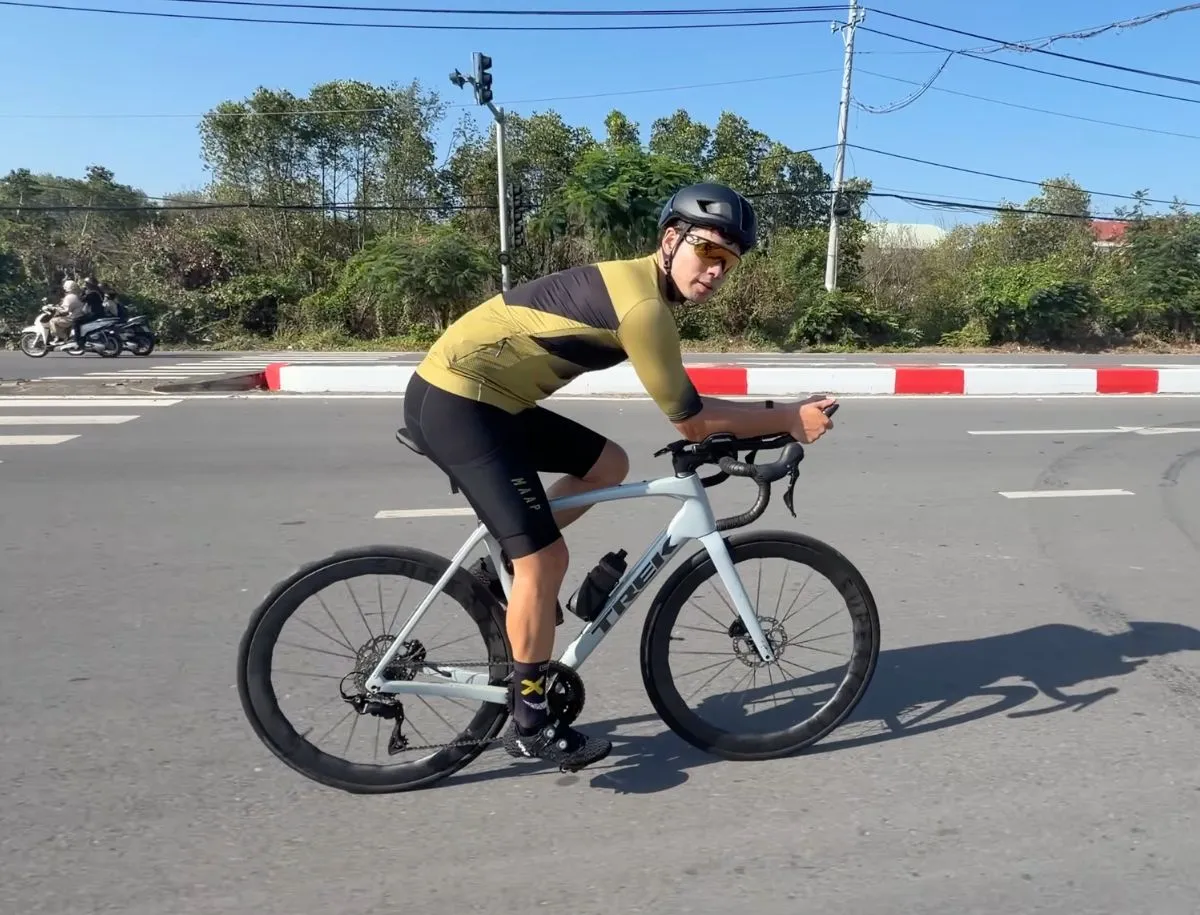
At 50mm depth, crosswinds are always worth asking about. In real crosswind conditions over the four months I've had these, the wheels felt planted and stable. That wider 30mm outer rim profile plays a part; wider rims tend to have better aerodynamic stability than narrower ones at the same depth.
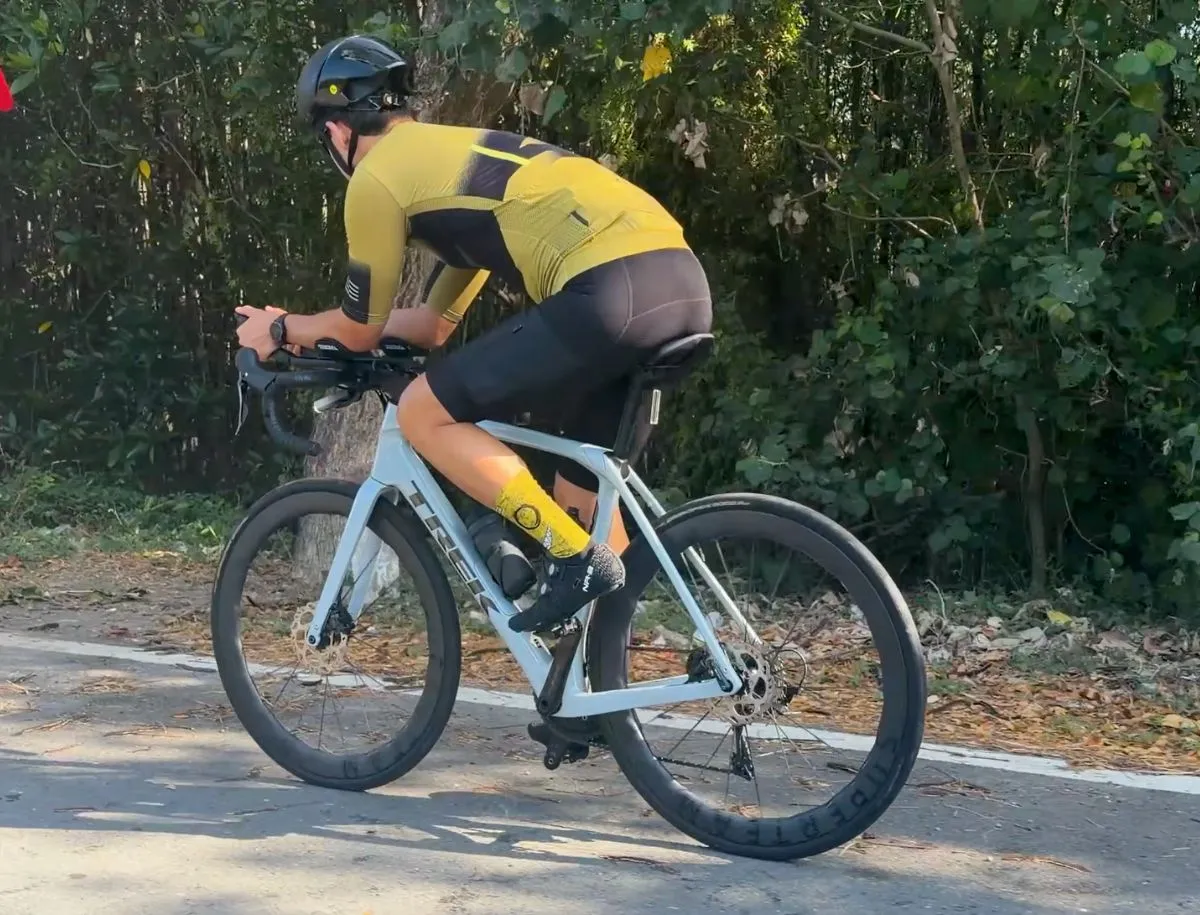
As for Superteam's 15% drag-reduction claim from their wind-tunnel tests, I was skeptical. Having ridden these in real crosswind conditions, I can at least say the stability matches the claim. Whether that's specifically down to the shark fin design, the 30mm outer rim width, or just solid overall construction, I can't say for certain. But the crosswind performance is genuinely good.
The 54T ratchet, combined with the ceramic and steel bearing setup, means the power pickup is something you actually feel. No dead spot, no lag. You put the power down, the wheel bites, and you go. These are probably the most responsive wheels I own right now. It makes them genuinely fun to ride, and a lot of wheels at this price point are impressive on paper and forgettable on the road. These aren't.
I covered the full unboxing and ride test on my YouTube channel, if you want to see these wheels in action before you decide.
Superteam Ultra H2 vs the Competition
At around $1,100, the Superteam Ultra H2 sits in interesting territory. For context, a set of Zipp 303 Firecrest wheels will run you around $2,000 to $2,200. You're paying roughly double for a brand name, a crash replacement policy, and, to be fair, a very well-documented track record.
The Elitewheels Marvel II, which I've also reviewed and ridden, sits around $1,000 to $1,200 depending on build. The Marvel II has a gloss finish (which I'm not personally a fan of), a 38% crash replacement discount, and very clean internal carbon quality. On internal finish, the Marvel II edges ahead.
Where the Ultra H2 clearly wins: spoke-tension results, weight, and ride responsiveness. If you're after the most engaging carbon wheel experience at this price, these are hard to beat. If you want the cleanest carbon quality and crash cover, I'd look at the Elitewheels range.
The price gap between the Superteam Ultra H2 and Zipp 303 Firecrest is close to $1,000. That gap is not worth it. For recreational riders, club racers, and anyone riding Saigon-level road surfaces every day, the Superteam delivers nearly everything the Zipps do for half the price.
Who Should Buy the Superteam Ultra H2?
These are for the rider who wants a fast, light, all-round carbon wheelset that actually feels alive to ride and who doesn't need more than one rim depth option. If you're doing a mix of climbing days, group rides, and the occasional fast solo effort, 50mm works for all of it.
They're for the rider who cares how their setup looks, and won't apologise for it.
They're not for the rider who wants a crash replacement policy, a choice of rim depths, or spotless internal carbon quality that matches the price tag.
Click the button below to check the best prices, and use code MIKE05 for 5% discount at checkout.

Review by Mike Dee
I test road bikes, carbon wheels, and cycling gear with quantifiable lab tests and real riding. No marketing spin, just the data - so you don't have to spend hours researching or wasting money on the wrong gear.