



Is AliExpress Legit for Cycling Gear? An Honest Review After 100+ Purchases
I'll be straight with you: if I had found AliExpress when I first got into cycling, I would have saved thousands of dollars. Not hundreds. Thousands.
That's not a clickbait opener. It's just the reality after 10 years of buying cycling gear on the platform. My first AliExpress purchase was on April 12, 2015, for some phone accessories. Since then, I've placed over 100 cycling-specific orders. Carbon wheels, jerseys, saddles, tires, tools, accessories, the full range.

So is AliExpress legit for cycling gear? The honest answer is yes, with conditions. This article breaks down exactly what those conditions are, how to spot counterfeit products before you buy, which seller signals actually matter, and the real drawbacks that most guides gloss over.
What is AliExpress?
AliExpress is not a brand. It's a marketplace, just like Amazon and eBay. Alibaba Group runs the platform, and individual sellers ranging from small workshops to established brands with dedicated stores list products on it.
This distinction matters because "Is AliExpress legit?" is the wrong question. The right question is: Is this seller legit? The platform itself is structured, has buyer protection, and processes millions of transactions daily. Whether you get a good product depends almost entirely on who you're buying from.
Once you reframe it that way, shopping on AliExpress becomes a lot more navigable.
The Risk: Counterfeit Cycling Products
Yes, AliExpress sells counterfeit cycling gear. It's not the majority of what's on the platform, but it exists, and you need to know how to spot it.
Here's a clear example. Take a MAAP jersey. A legitimate MAAP jersey retails for around $150. If you find one on AliExpress for $15 with no reviews and a store that opened last month, that's not a deal! That's almost certainly a fake. The price gap is too large to be explained by anything else.
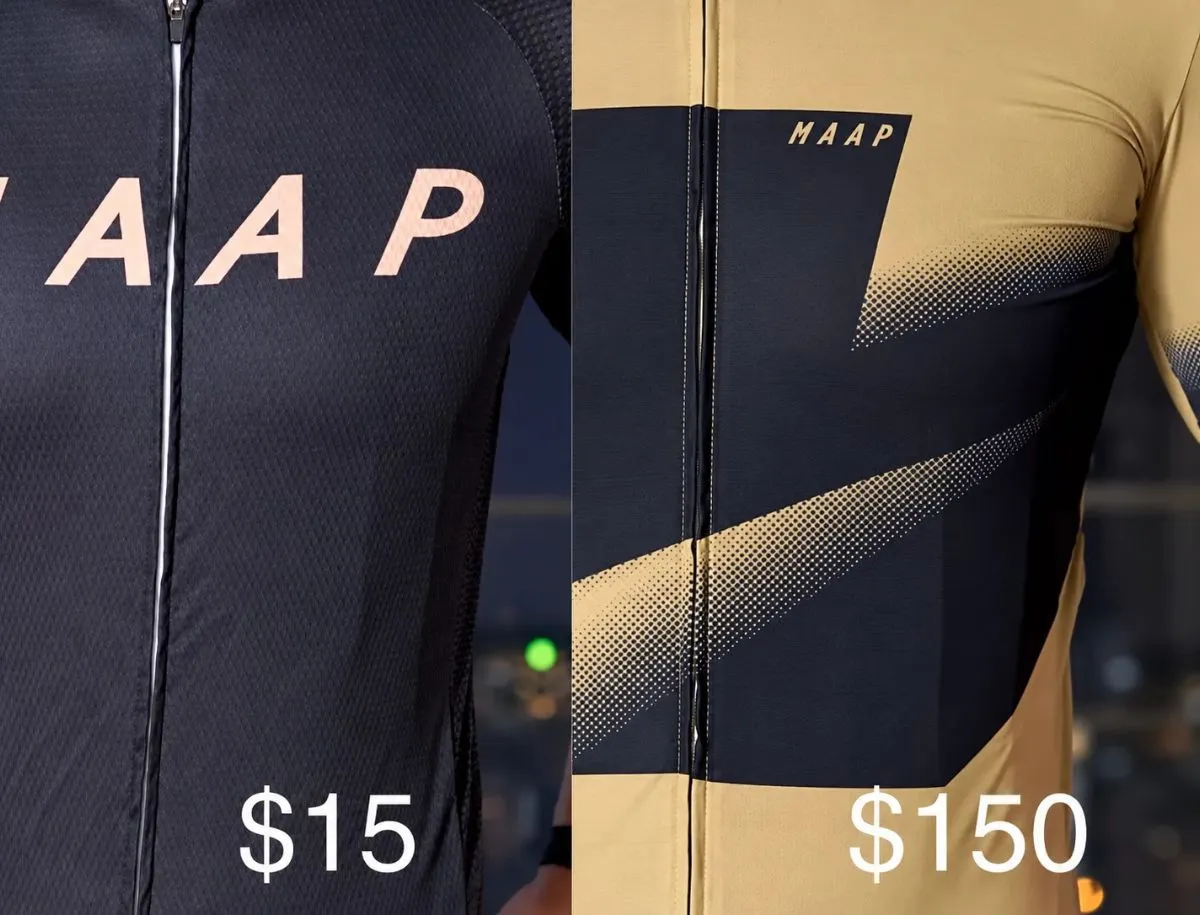
Counterfeit products on AliExpress tend to cluster around recognizable Western cycling brands: MAAP, Rapha, Castelli, and Specialized accessories. Sellers know that brand recognition drives clicks, and they exploit it. These are the products to avoid entirely.
The good news is that AliExpress also has a large ecosystem of legitimate Chinese cycling brands, brands that make their own products, build their own reputation, and actually stand behind what they sell. These are where the genuine value is.
How to Tell If an AliExpress Cycling Seller Is Legitimate
This is the part most guides skip over. Here are the signals that actually matter, based on years of buying.
Check How Long the Store Has Been Open
Legitimate sellers have been around for years, not months. When I looked at the store selling a counterfeit MAAP jersey, it had been open for six weeks. Compare that to Elitewheels; their AliExpress store opened in 2015. A 10-year-old store with a solid track record is fundamentally a different proposition than one that launched recently.
Store age alone won't tell you everything, but a store under six months old selling premium branded goods at steep discounts is a major red flag.
Look at Sales Volume and Review Quality
High sales volume is a positive signal, but it needs genuine reviews. The Elitewheels ENT 2.0 carbon wheels I bought had over 2,000 sales and 307 reviews, averaging 4.9 stars. More importantly, those reviews included real in-use photos: wheels mounted on actual bikes, not product shots on a white background.
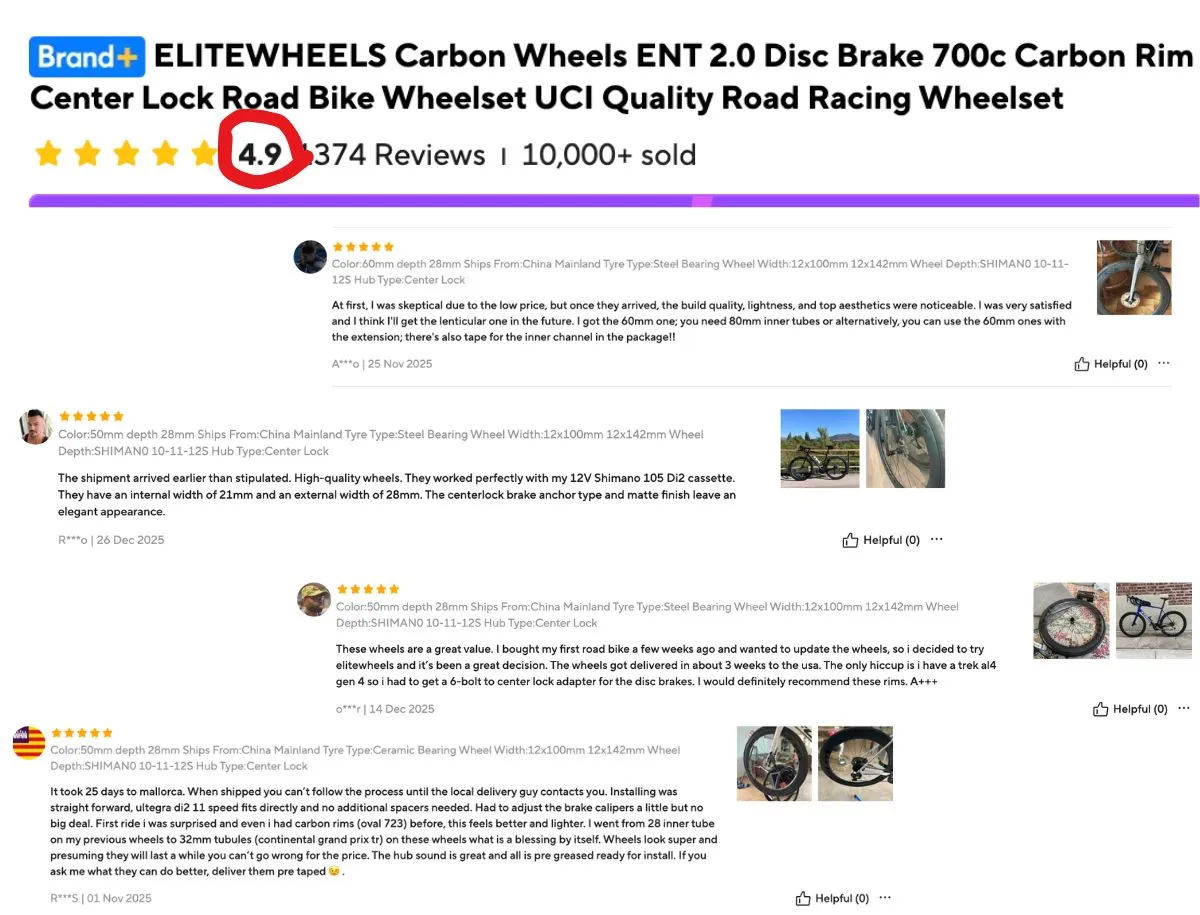
Fake review patterns are fairly recognizable once you know what to look for. If a product has 500 reviews and every single one is five stars, with generic comments like "great product, fast shipping," treat that as a warning sign. Real reviews are messier. Some four-star ratings, a few genuine complaints, mixed feedback. That's what organic looks like.
Check the Store's Overall Rating
Any store rated below 4.6 deserves extra scrutiny. Legitimate sellers maintain high ratings because their livelihood depends on it. A store with hundreds of sales and a 4.4 rating has a problem worth investigating before you buy.
Verify That the Brand Is Real
Some of the best value on AliExpress comes from established Chinese cycling brands that have built genuine reputations. Elitewheels is a good example - in March 2024, they became the official wheel partner for GCN. That's not a fake brand slapping someone else's logo on a product. They have brand equity, sponsor relationships, and a reason to protect their reputation.
Green Cyclist Store is another example of a legitimate cycling store on the platform - they've been operating for 7 years, have sold over 7,000 products in a 180-day window, and have 11,000 followers with a 4.8 rating. They stock Continental tires, tools, gloves, pedals, and a wide range of cycling-related products. I've bought Continental road tires through them personally.
My Personal Experience: Elitewheels ENT 2.0 Carbon Wheels
This is the product I get asked about most, so I'll give you the full picture.
I bought the Elitewheels ENT 2.0 carbon wheels with my own money. The price was around $350 to $400 delivered. Comparable carbon wheels from Western manufacturers would cost roughly 2x the price.
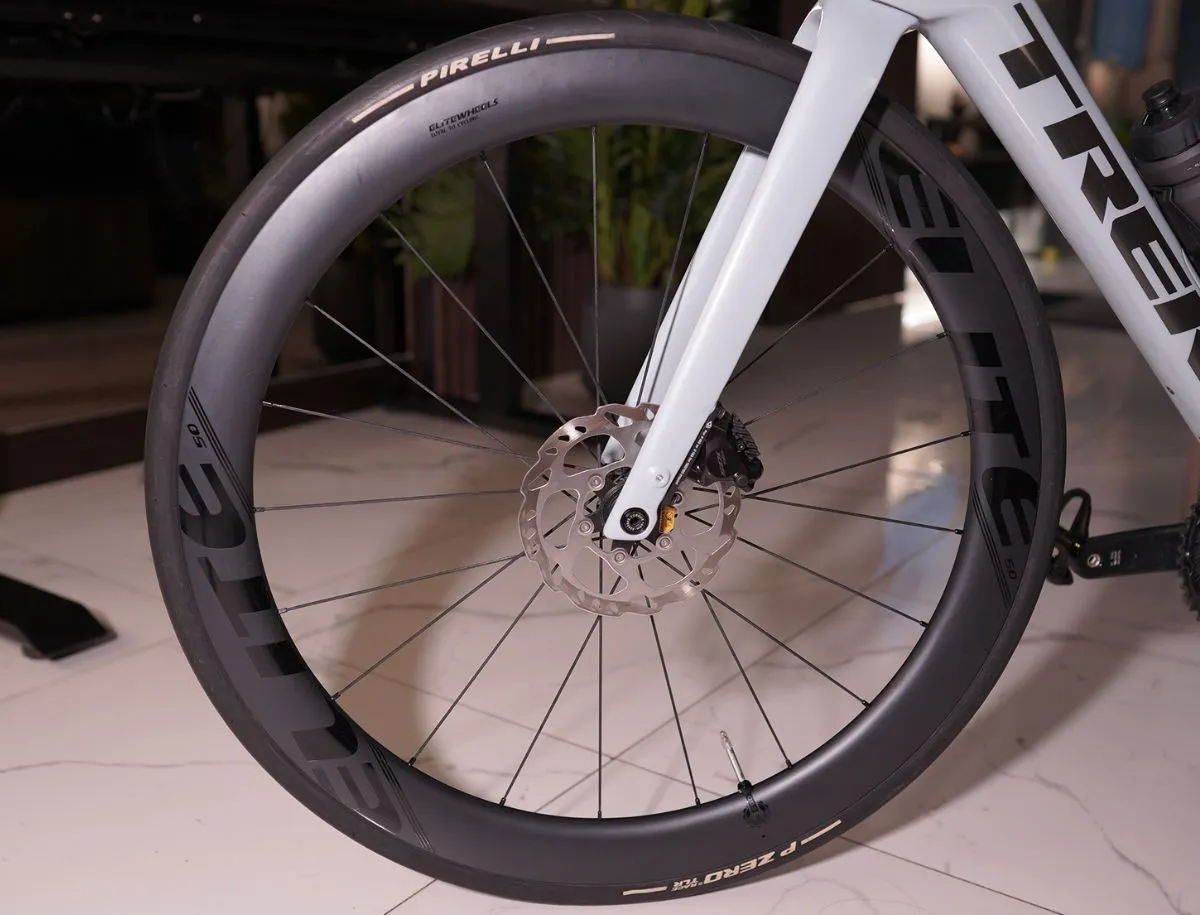
I've since put over 5,000km on them. They've held up without issue.
One thing worth mentioning about customer service: after I placed the order, I came across a $30 discount code the next day. I messaged the seller, admittedly a bit cheekily, to ask if it could be applied retrospectively. They offered to cancel the order so I could repurchase with the code applied. They didn't have to do that. They did it anyway. That's the kind of seller behavior that builds long-term trust.
Not every seller will give you that experience. When I recently contacted RYET, a well-known saddle brand on AliExpress, for a saddle recommendation, they sent me links to seven products with the message "friend, you can have a look." That's the other end of the spectrum. The point is: seller quality varies. Your local bike shop isn't, but the pricing reflects that, too.
Three Things You Need to Know Before You Buy
Most AliExpress cycling guides focus on the upside. Here are the parts that will catch you out if you're not prepared.
Delivery Times Are Long
Forget next-day delivery. Standard free shipping from AliExpress typically takes 10 to 30 days. I've had orders arrive in 8 days, and others take six weeks. If you have a specific event or race on the calendar, don't cut it close. Many sellers offer expedited shipping for an extra $10 to $20, which can bring delivery down to 7 to 15 days, but that still isn't fast by Western retail standards.
Returns and Warranty Are Different
You have 15 days to open a dispute after receiving an item, and AliExpress is generally fair in mediating those disputes within that window. I've initiated disputes roughly five times across ten years and received a full refund each time.
After 15 days, it gets much harder. And if you simply decide you don't like an item, you'll typically have to pay return shipping to China yourself. On a cheap product, the return cost can exceed the item's value. Factor this into your decision before you buy.
This is the real trade-off with AliExpress. The prices are significantly lower, but you're not getting the warranty or return experience of a local bike shop or an official retailer. Know that going in.
Import Fees Can Apply to Larger Purchases
For lower-cost items, you'll generally clear customs without a charge. For more expensive purchases - wheels, complete groupsets, high-end components you may face import duties
depending on where you live. In the UK, for example, items over £135 can attract around 20% in customs charges.
My approach: budget an extra 20% on any AliExpress purchase over that threshold. If the fee hits, you're covered. If it doesn't, you've saved money you already mentally set aside.
Even with import fees factored in, the Elitewheels I bought would still have been half the price of equivalent Western-brand carbon wheels.
What's Worth Buying on AliExpress
The best value tends to be in categories where you're not relying on a Western brand name - because those brand names are frequently what counterfeiters target.
Consider: cycling accessories (lights, bottles, cages, mounts), established Chinese wheel brands like Elitewheels, Continental tires through reputable third-party stores, cycling apparel from brands like Racmmer or Spexcel that make their own kits, saddles, tools, and training equipment.
Be more cautious with: anything claiming to be a well-known Western brand at a price that's too steep a discount, safety-critical structural components from unknown sellers, and anything from a store under six months old.

Review by Mike Dee
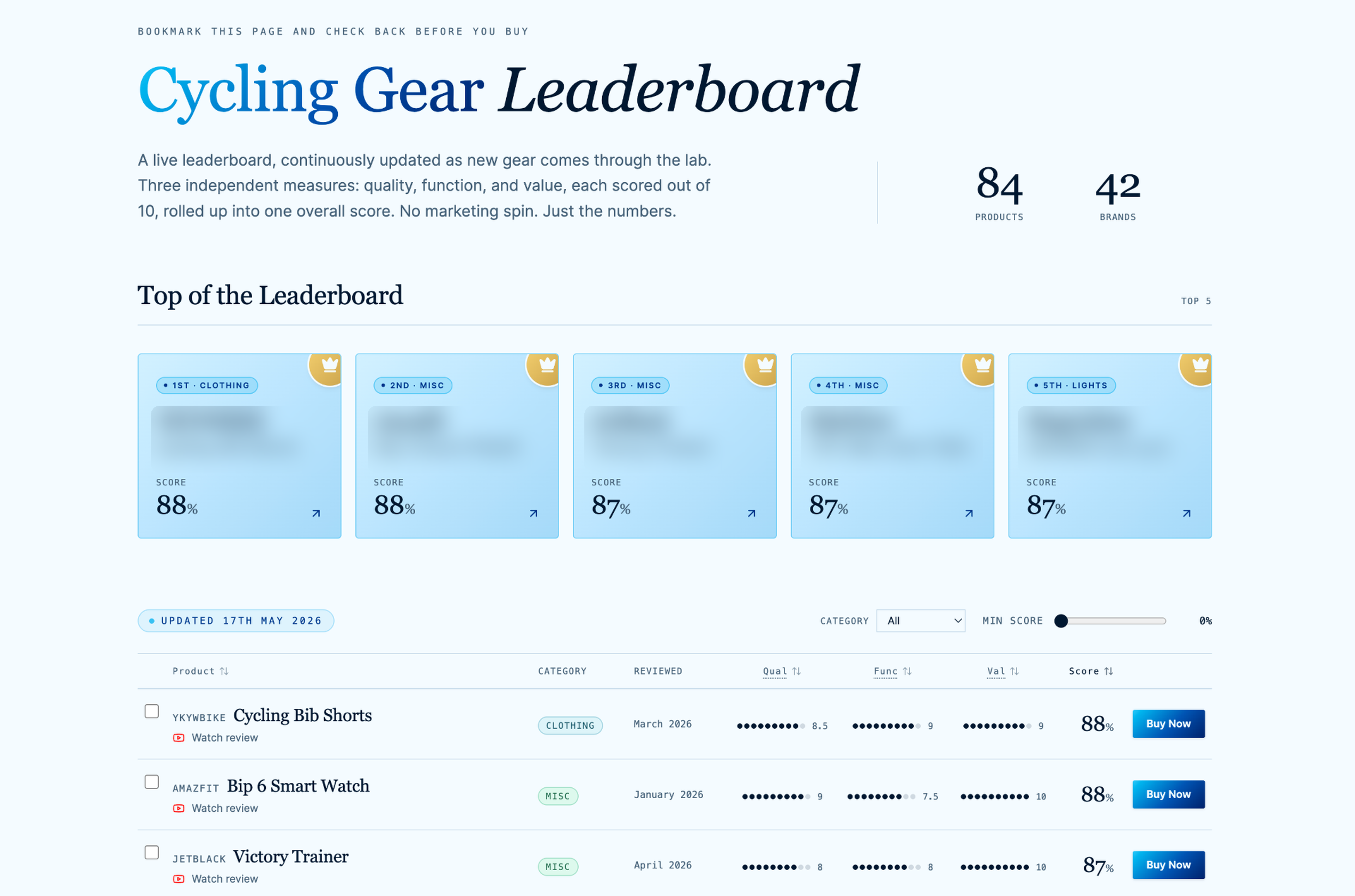
I test road bikes, carbon wheels, and cycling gear with quantifiable lab tests and real riding. No marketing spin, just the data - so you don't have to spend hours researching or wasting money on the wrong gear.

.webp)