



$40 iGPSPORT vs $450 Garmin
My Honest Take After Riding All Three
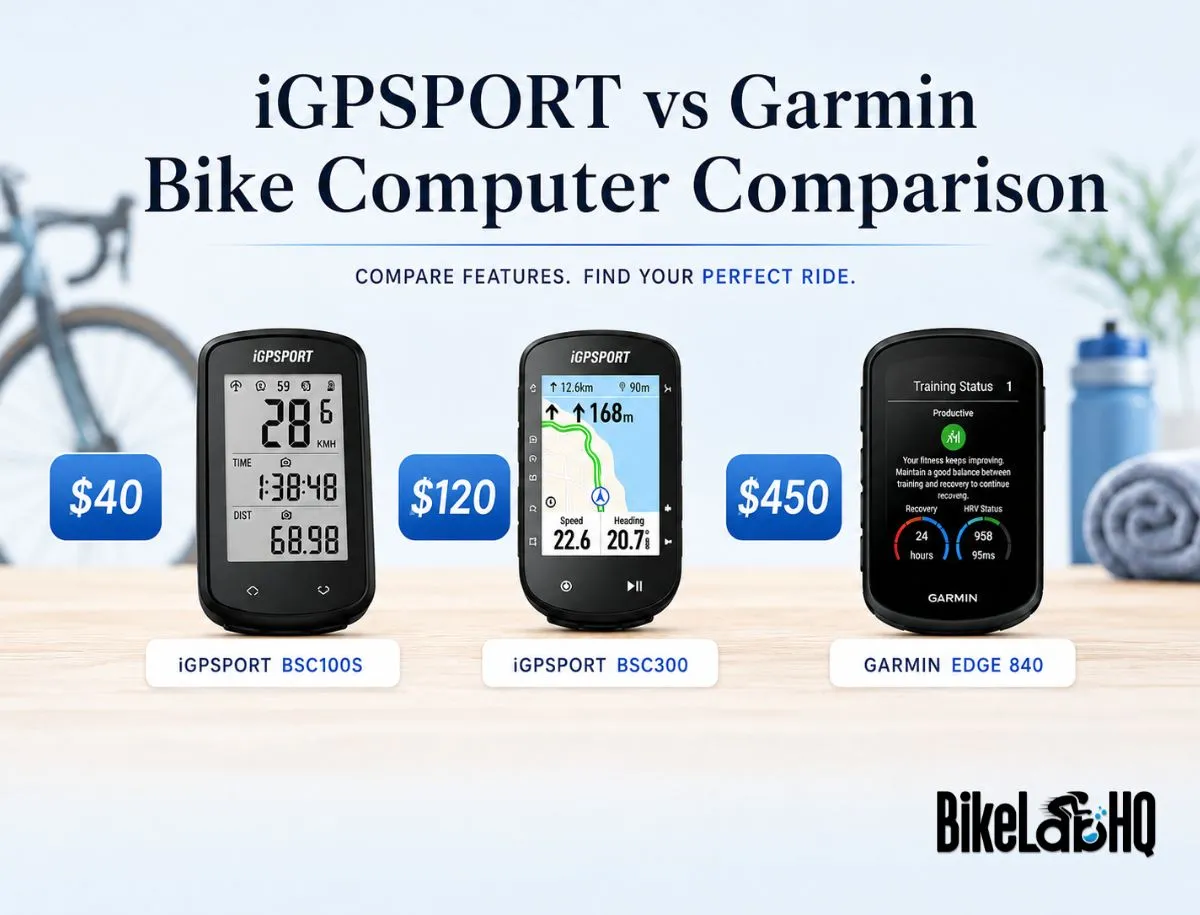
I’ve got three bike computers sitting on my desk right now.
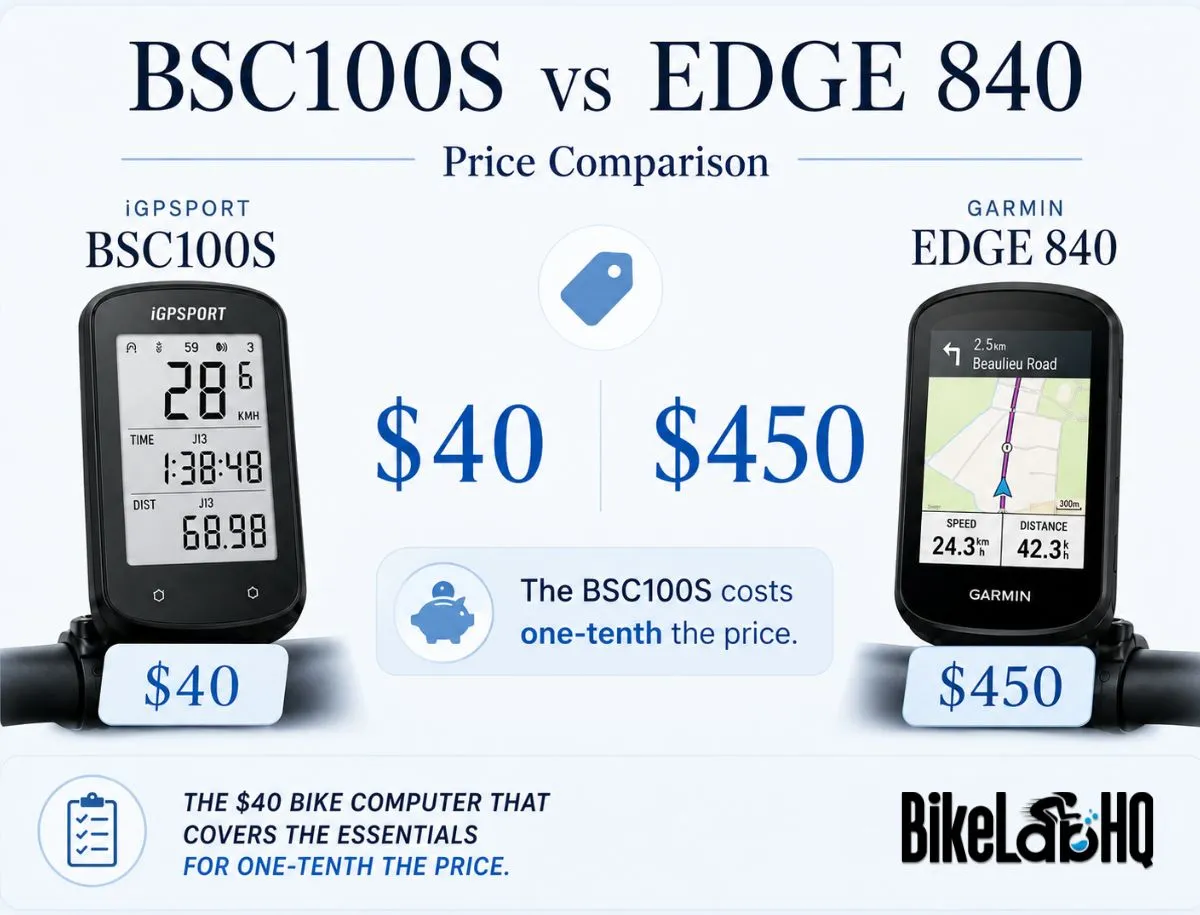
A $40 iGPSPORT BSC100S.
A $120 iGPSPORT BSC300.
And a $450 Garmin Edge 840.
I paid for all of them myself. No sponsorships. No free gear. No brand deals influencing this comparison.
I’ve ridden with the Garmin Edge 840 for about a year. The BSC100S for a few months. And the BSC300 is the newest addition, but I’ve still put enough hours on it to know exactly where it shines and where it falls short.
The big question is simple.
Is the Garmin Edge 840 actually worth spending more than ten times the price of the iGPSPORT BSC100s? Or are budget bike computers now good enough for most riders?
Let’s break it down properly.
Why This Comparison Matters
Bike computers are one of those purchases that quietly get expensive.
You start riding. You want speed. Distance. A bit of structure. Suddenly you’re looking at devices that cost as much as a wheelset upgrade.
When I first got into cycling, I knew it wouldn’t be cheap. What I didn’t expect was just how quickly the price adds up when you start buying branded electronics.
That’s what pushed me to look beyond the usual Western brands and test cheaper alternatives. Especially Chinese brands like iGPSPORT that sell in huge volumes on AliExpress.
So this isn’t a spec sheet comparison. This is real riding. Real training. Real frustration. Real convenience.
iGPSPORT BSC100s Review
The $40 Bike Computer That Shouldn’t Be This Good
I’ll say it straight away.
I love this thing.
Not because it’s perfect. It isn’t. But for $40, it does exactly what most cyclists actually need.
What I Expect From a Bike Computer
Before talking about features, it’s essential to be clear about expectations.
For me, five metrics matter on every ride.
Ride duration
Distance
Current speed
Average speed
Time of day
If a bike computer nails those five reliably, it’s already doing most of the job.
The BSC100s do all five. Accurately.
It pairs quickly. It connects to Strava without drama. It syncs with my Garmin watch. It just works.
That’s already more than some expensive gear manages.
Screen Size and Readability
The screen is 2.6 inches.
That might not sound impressive on paper, but on the bars it’s spot on. Big enough to read at speed. Not bulky. Not distracting.
It’s anti-glare and stays readable even in intense sun. I’ve used it in harsh light and heavy rain with zero issues.
The screen size is actually very close to the Garmin Edge 840, which says a lot.
Weight and Build
The BSC100S weighs 67 grams.
The Garmin Edge 840 weighs about 85 grams.
That difference isn’t huge on the bike, but it’s funny when you realise the $40 device is lighter.
The body is thin. About 15mm thick. It doesn’t feel cheap in hand. It doesn’t creak. Buttons are tactile and responsive.
Battery Life
This Is Where It Gets Silly
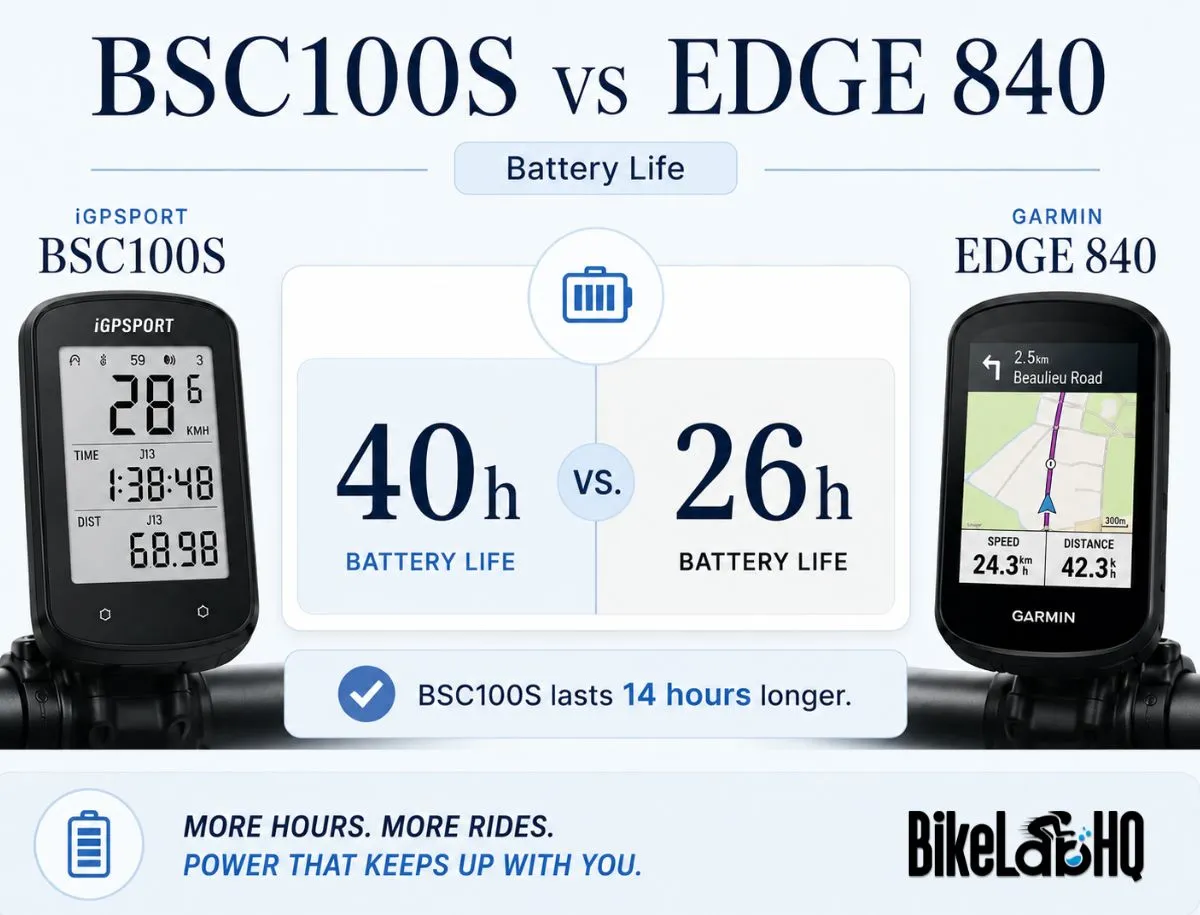
Battery life is rated at 40 hours.
And in real use, that figure holds up.
I can go weeks without charging this thing. It uses USB-C. Charging is fast. There’s no battery anxiety.
Now compare that to the Garmin Edge 840.
26 hours.
32 hours if you pay extra for the solar version.
That’s one of the moments where you pause and ask yourself what you’re really paying for.
Waterproofing
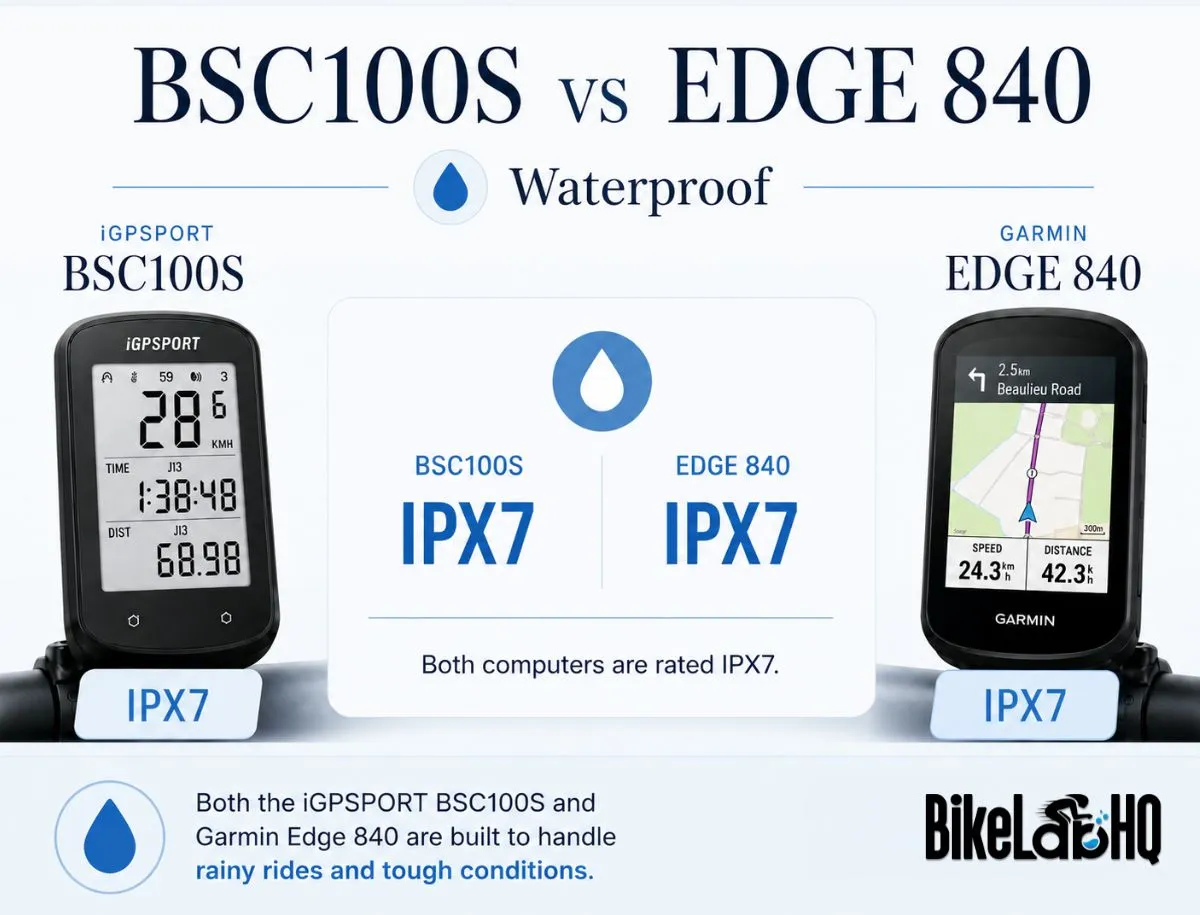
Both the iGPSPORT and Garmin are rated IPX7.
That means rain. Heavy rain. Bike washing. Dropping it in a puddle.
No issues.
This is usually where budget tech cuts corners. iGPSPORT didn’t.
Where the BSC100s Fall Short
There are limitations.
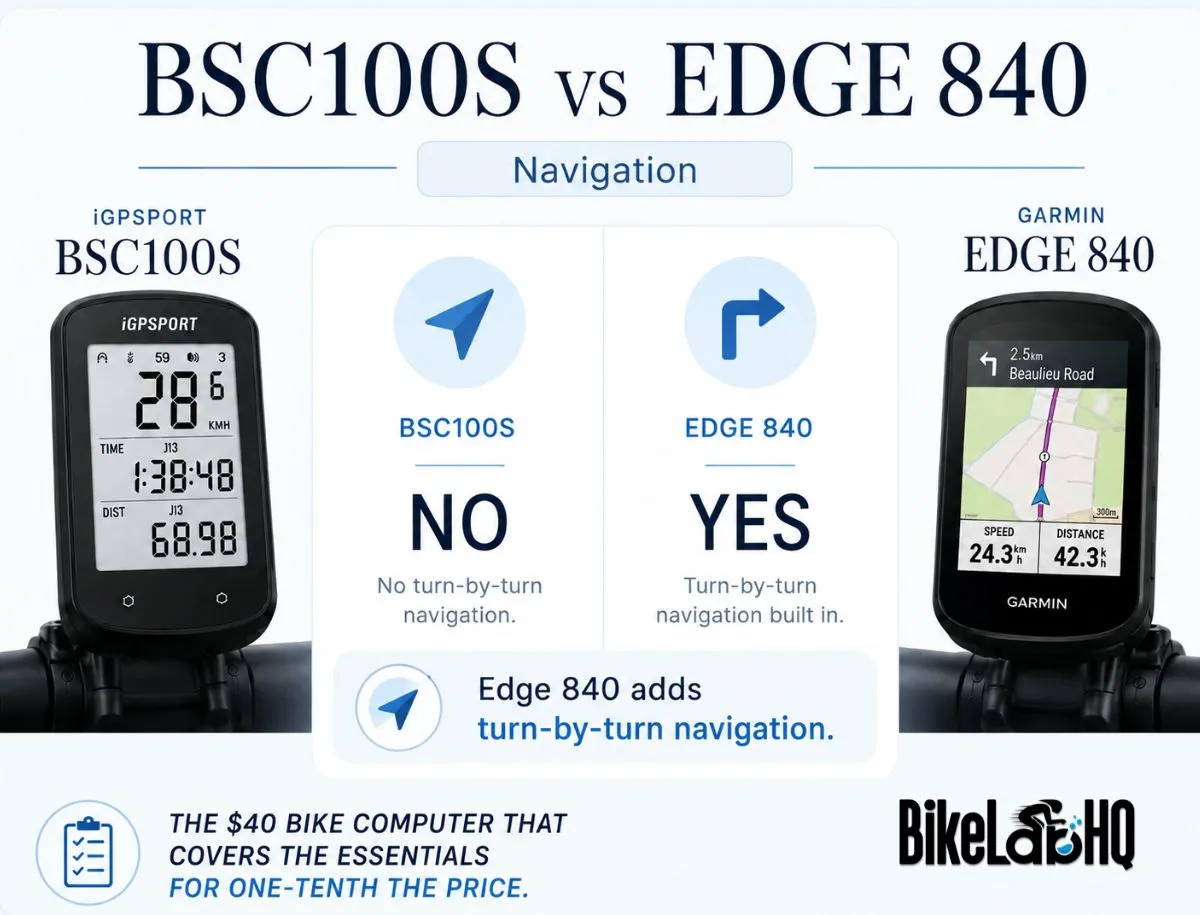
No navigation.
No maps.
No colour screen.
That’s fine.
At $40, expecting turn-by-turn navigation would be unrealistic.
My only real complaint is cosmetic. The logo on the front is large. The branding is loud. It doesn’t look premium.
But again, this is not a premium product. It’s a functional one.
If you’re new to cycling, on a tight budget, or just want reliable ride data, this thing is ridiculous value.
iGPSPORT BSC300 Review
The Sweet Spot for Most Riders
The BSC300 sits in an exciting place.
It costs around $120. Three times more than the BSC100s. Still far cheaper than the Garmin.
And this is where iGPSPORT starts competing seriously.
What You Get for the Extra Money
The BSC300 shares a lot with the BSC100s.
Same weight.
Same waterproof rating.
Same USB-C charging.
Same button-based control.
The differences are meaningful.
Colour Screen
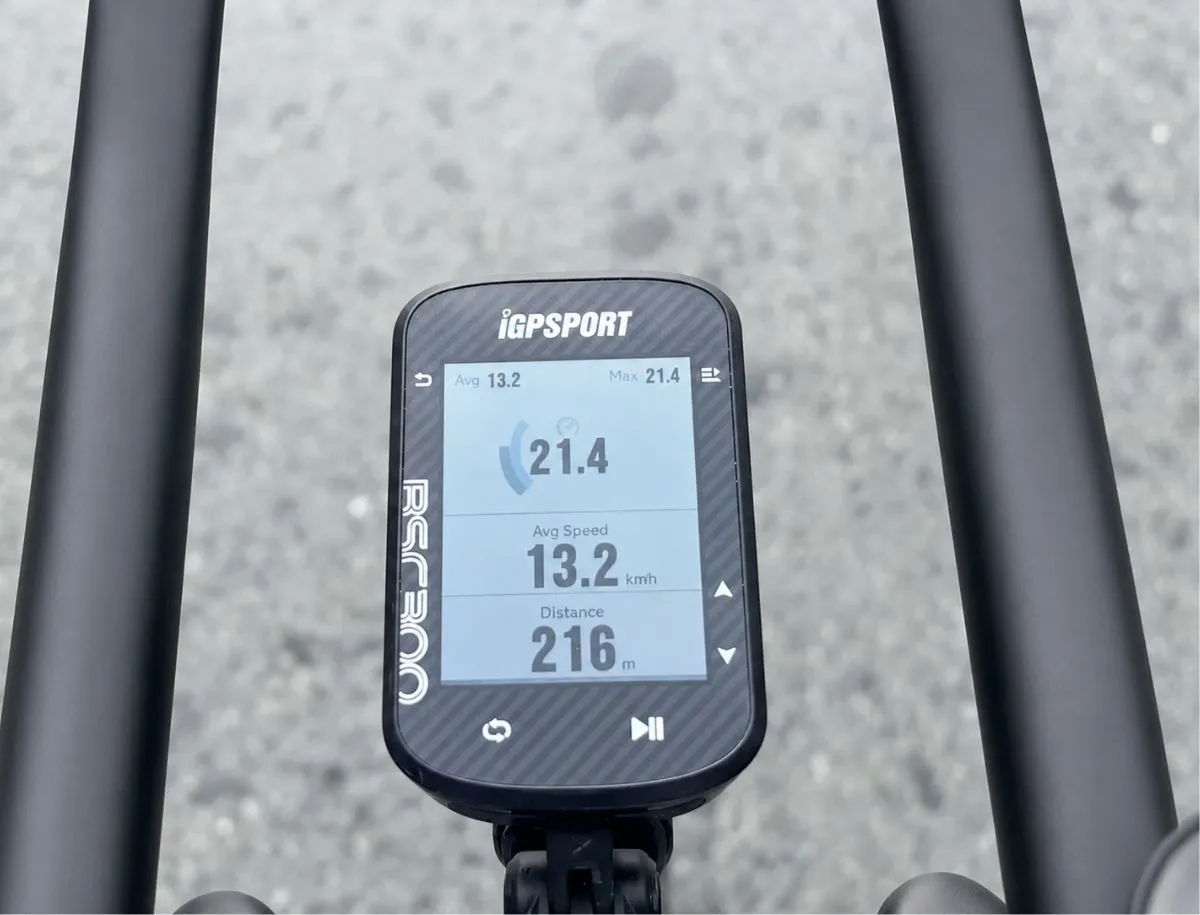
The BSC300 has a full colour display.
This alone will matter to many riders. Data fields are easier to read. Screens feel more modern. It’s just nicer to look at.
Navigation and Maps
This is a significant upgrade.
The BSC300 has navigation.
That changes how you ride, especially if you explore new routes or travel with your bike.
Having maps on a $120 bike computer still feels strange in a good way.
Routes load quickly. Turns are clear. It does the job.
Battery Life Tradeoff
Battery life drops to around 20 hours.
That’s the cost of a colour screen.
For me, this isn’t an issue. I charge my bike computer after every ride. I’ve never needed 20 hours in one go.
If you’re doing ultra-distance events, it might matter. For most riders, it won’t.
Screen Size and Interface
The screen is slightly smaller at 2.4 inches.
You notice it if you compare side by side. Not enough to be a deal breaker.
The interface is busier. There are more icons. More on-screen prompts.
Some people will like that. I prefer cleaner layouts like Garmin’s. This is personal taste.
Build Quality
The Garmin still feels a touch more refined. The edges. The buttons. The finish.
But it’s close. Much closer than the price gap suggests.
For $120, the BSC300 offers colour maps, solid battery life, and reliable tracking, making it the option I’d recommend to most people.
Garmin Edge 840 Review

Better, Yes. Better Value, No.
Let’s be clear.
Ignoring price, the Garmin Edge 840 is the best bike computer here.
It’s faster. More refined. More polished.
But value matters.
The Garmin Ecosystem
This is Garmin’s biggest strength.
I use a Garmin Forerunner watch daily. I’m training for an Ironman 70.3. Garmin Coach structures my workouts. Garmin Connect ties everything together.
If you live inside that ecosystem, the Edge 840 fits perfectly.
Touchscreen and Buttons
It has both.
Buttons work better in the rain or sweat. The touchscreen is excellent for navigation and route input.
This combo works well.
Data Depth
This Is What You’re Paying For
The Garmin Edge 840 gives you data that the iGPSPORT units simply don’t.
Training load
Recovery time
VO2 max estimates
FTP estimates
ClimbPro
Training stress
If you train with power and race often, you care about performance metrics. This data can be helpful.
For many riders, it’s overkill.
Build and Support
The Edge 840 feels solid.
Garmin support is also a real advantage. Physical stores. Warranty handling. Repairs.
I once had an issue with mine. Walked into a store. Fixed in minutes.
That convenience has value.
My Honest Issue With the Garmin Edge
I don’t use it enough.
Most of my riding right now is indoors. The Edge sits on the bars doing very little.
For something that costs $450, that hurts.
Compare that to my Garmin watch, which I wear every day. That one earns its price.
The Edge doesn’t, at least for me.
Which Bike Computer Should You Buy?
This depends entirely on how you ride.
Choose the iGPSPORT BSC100S if
You’re new to cycling.
You want basic ride data.
You don’t care about navigation.
You want the cheapest option that still works properly.
This is the best entry-level bike computer I’ve tested.
Choose the iGPSPORT BSC300 if
You want navigation.
You want a colour screen.
You ride outdoors often.
You want value without overpaying.
This is the sweet spot.
If I had to buy again, this is what I’d choose.
Choose the Garmin Edge 840 If
You train seriously.
You use power data.
You want advanced metrics.
Budget isn’t a concern.
It’s a fabulous bike computer, just not a great value.
Where to Buy
And What to Watch Out For
iGPSPORT computers are sold heavily on AliExpress and Amazon.
Always buy from authorised sellers. Especially with Chinese brands.
Sometimes prices are similar on both platforms. If that’s the case, returns to Amazon are easier.
Garmin is best bought from official stores or authorised dealers.
I’ll drop links below to all three options so you can compare availability where you live.

Review by Mike Dee
I test road bikes, carbon wheels, and cycling gear with quantifiable lab tests and real riding. No marketing spin, just the data - so you don't have to spend hours researching or wasting money on the wrong gear.