



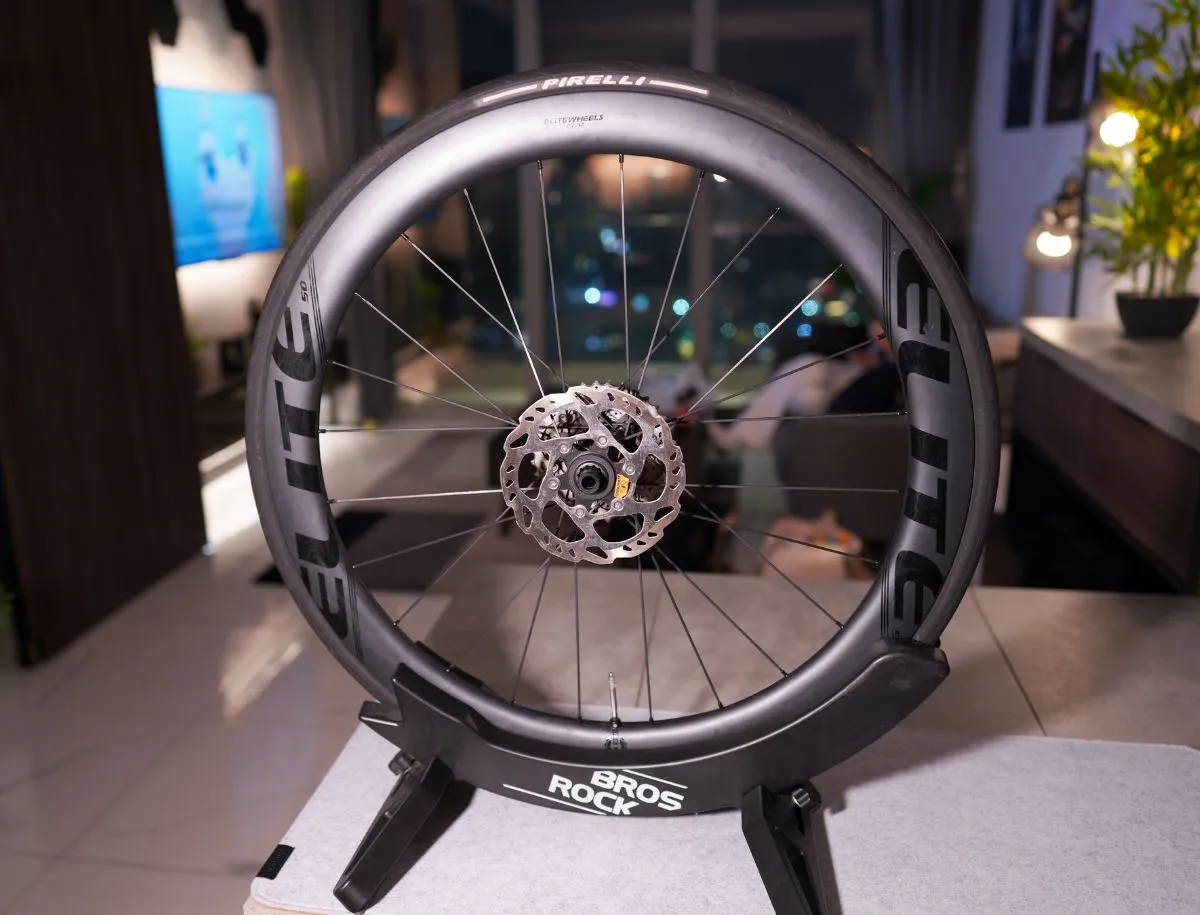
Elitewheels ENT 2.0 Review: 2 Years and 7,000km Later
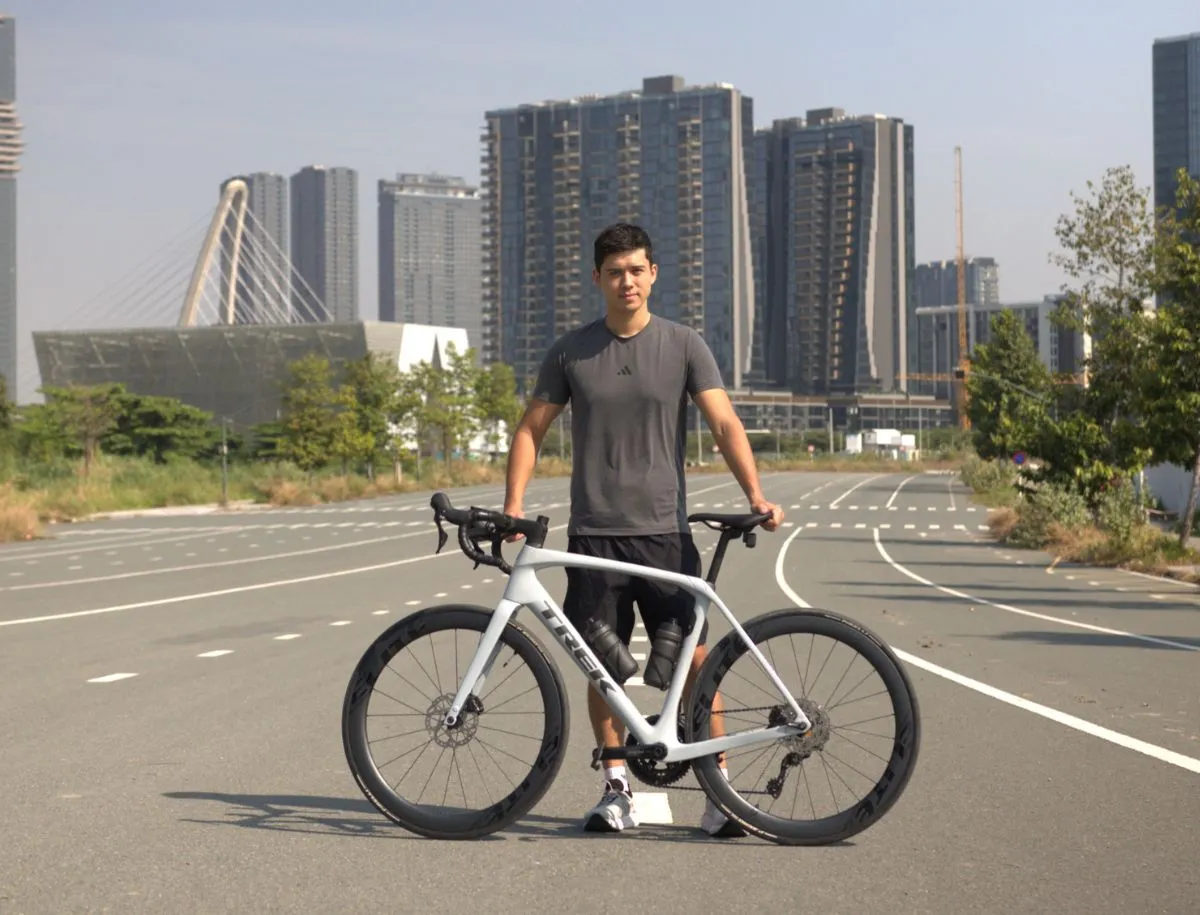
I paid $315 for these wheels in September 2024. Two years and 7,000km later, they've shown one measurable weakness and zero failures.
The weakness is spoke tension. Eight spokes out of tolerance across the pair - I'll show you the data further down.
The zero failures part covers Ironman 70.3 training blocks, wet rides, and more Saigon potholes than I can count.
I bought them with my own money. No sponsorship, no free wheelset with strings attached.
This page used to have three separate reviews: one at 1,500km, one at 12 months, one at two years. I've merged them so you can see what changed at each stage, and what didn't. Current verdict up top, then the three checkpoints in order.
What Is the Elitewheels ENT 2.0?
The ENT 2.0 is Elitewheels entry-level carbon wheelset, sold directly through their official AliExpress store. It's the best-selling carbon wheelset on the platform - over 10,000 units sold from the official store alone, with a 4.9-star average across 1,380 reviews when I last checked.
That kind of volume tells you one of two things. Either the product is good, or the marketing's good enough to hide the fact that it isn't. Two years in, I can tell you which.
Here's what you're buying:
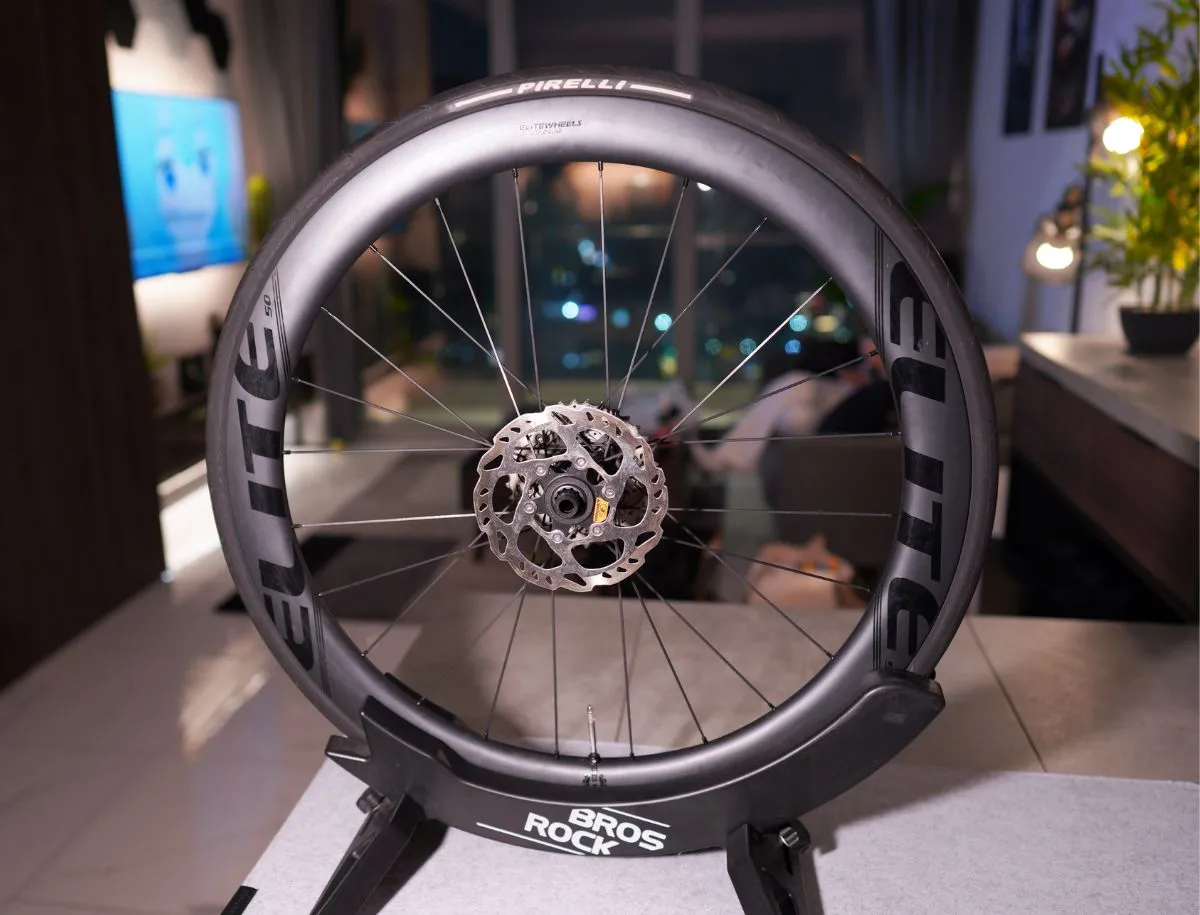
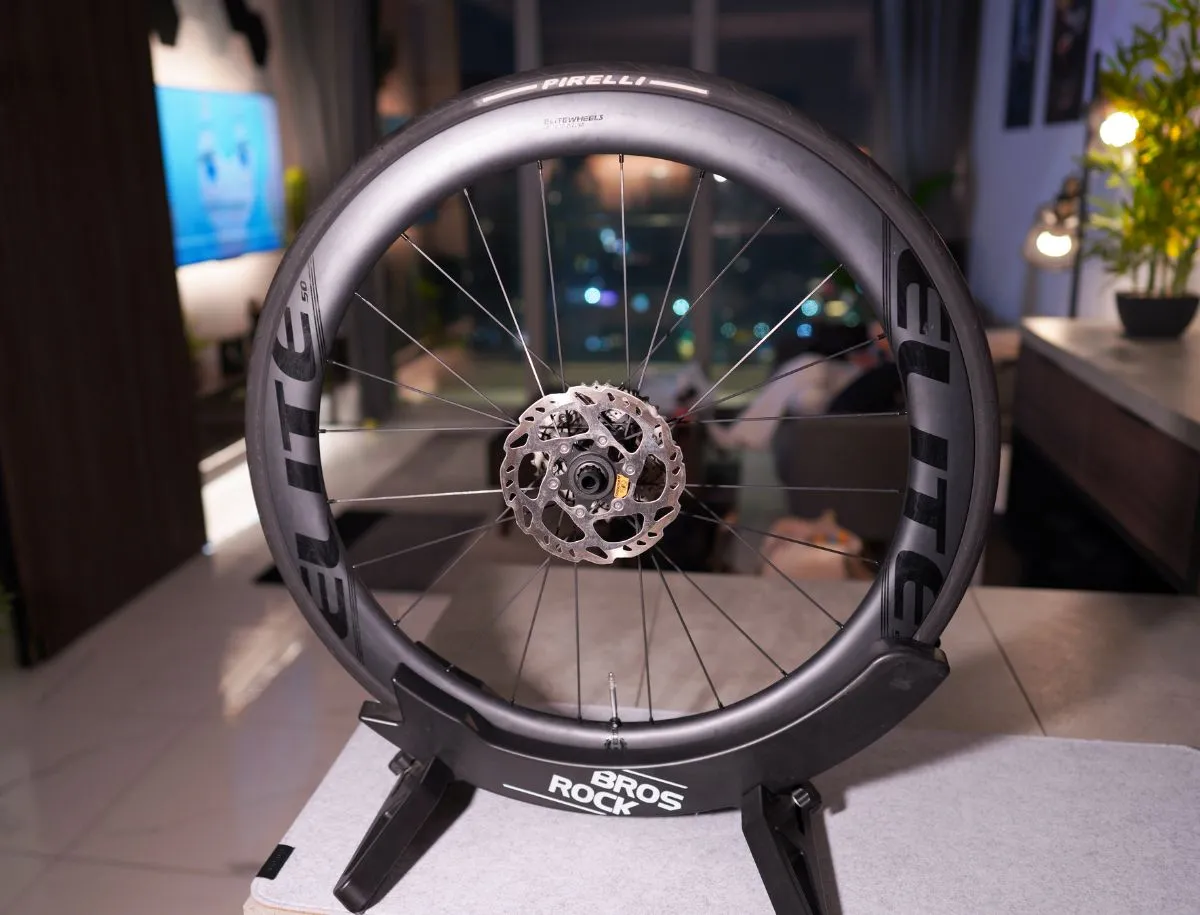
- Rim depth: 50mm on mine. You can spec 30, 38, 50, 55, 60, or 82mm.
- Rim width: 21mm internal, 28mm external.
- Setup: tubeless-ready, hooked rim, disc brake only, QR or thru-axle.
- Hub: 4-pawl rear.
- Weight: 1,603g for the pair on my scale.
The 2.0 replaced the original ENT with a redesigned rear hub. Elitewheels claims a 15% gain in rear-wheel transmission efficiency from 27% more contact area in the freehub, plus 20% more lateral stiffness.
Those are their numbers, not mine. I can't measure transmission efficiency in my apartment. What I can tell you is whether a wheel feels like it's flexing when you stand up and hammer. After 7,000km, this one doesn't.
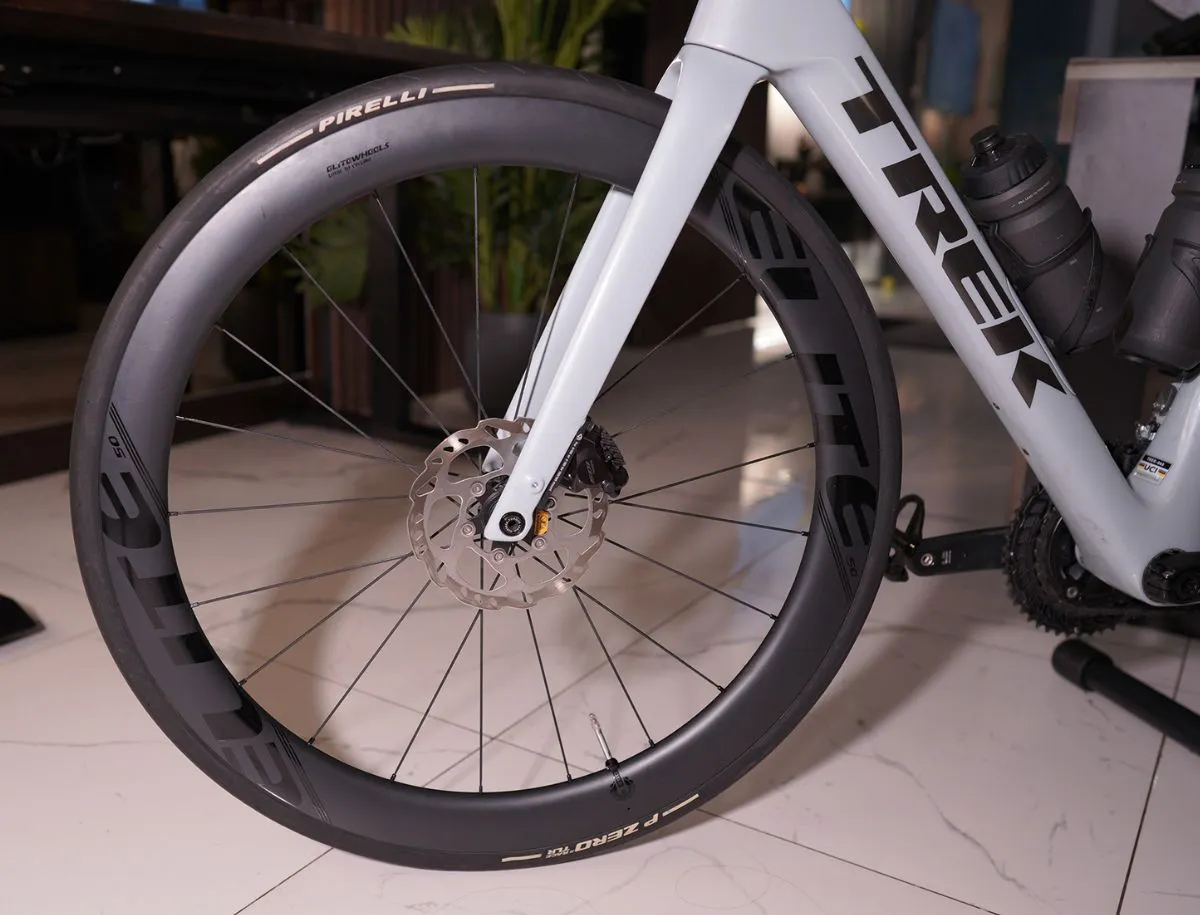
Why it matters: When I went looking for carbon wheels for my Trek Domane SL5, my local bike shop quoted me over $1,200 for a decent set of Zipps. I'd just spent $3,500 on the bike. I walked out, went home, and found these for $315.
On credibility: Elitewheels became GCN's wheel sponsor in 2024, and they're sponsoring UCI ProTeam Solution Tech - NIPPO - Rali for the 2026 season. The pros race the higher-end Drive wheels, not the ENT. So it doesn't prove the ENT is good. It does tell you this isn't a no-name factory listing.
How I Tested These Wheels
Every wheelset I review goes through the same process, roughly 20 hours per pair:
- Weight on a scale, not the listing.
- Carbon quality checked inside the rim with an endoscope camera.
- Spoke tension measured on every spoke with a Toopre TM-1 tension meter.
- Real riding: 500-1,000km minimum. The ENT 2.0 got 7,000km.
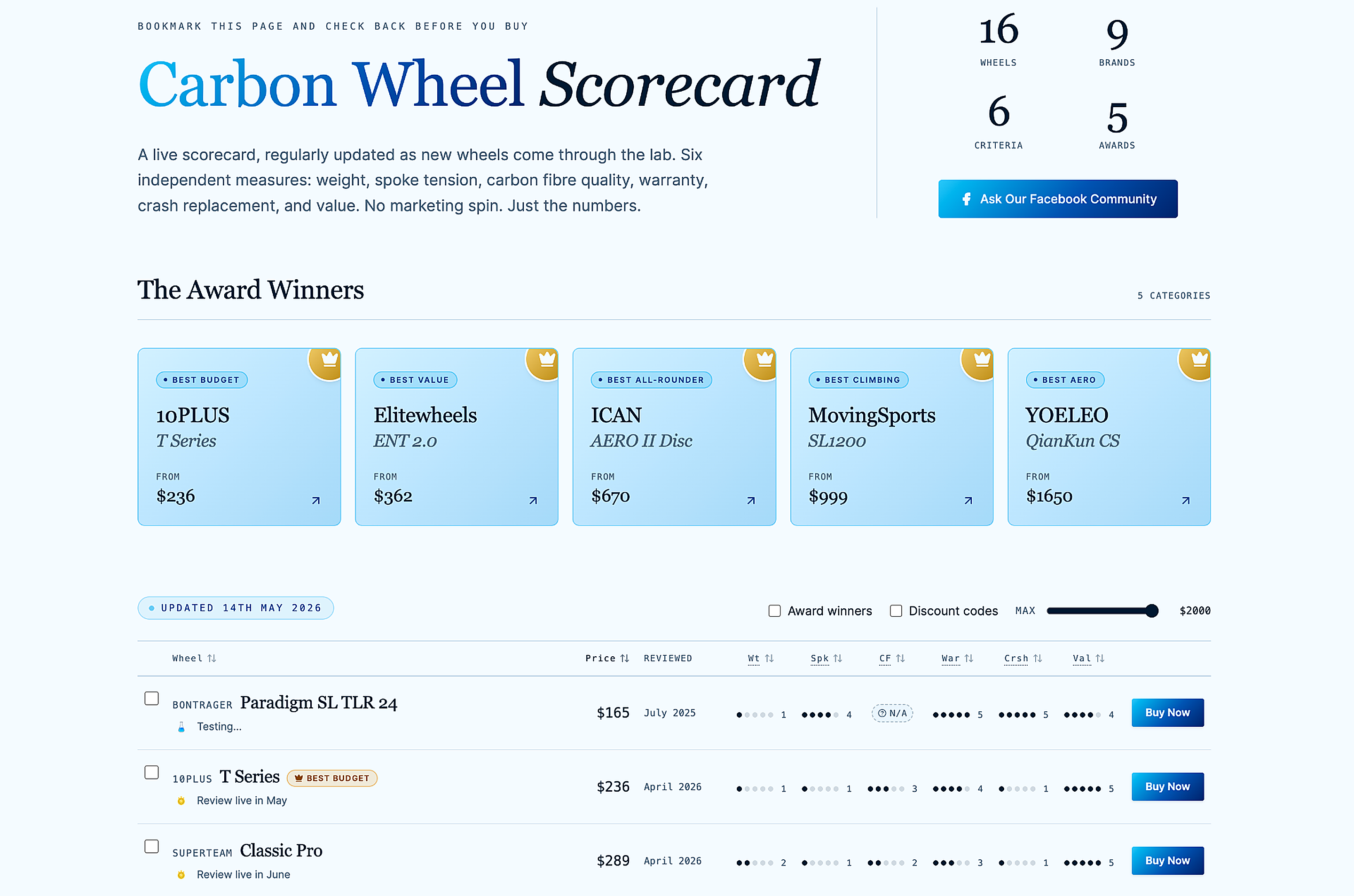
The ENT 2.0 was the first wheelset on my Carbon Wheel Scorecard. It's now the benchmark I measure 30+ other wheelsets against.
First Ride to 1,500km
[YouTube embed: https://www.youtube.com/watch?v=Gu6wHceNvZg]
Shipping and setup
Delivery from China took 3-4 weeks. Customs fees depend on where you live, so check your country's import rules before you order, not after.
The rim tape comes pre-installed. Check the seal anyway before you mount tubeless tyres - setup takes patience. The freehub takes standard Shimano/SRAM cassettes with no drama.
Two things to confirm before ordering. Your bike has to be disc brake. And you need to pick QR or thru-axle to match your frame.
If you've never swapped wheels, disc rotors, and tubeless tyres, pay a shop to do it. It's a small cost against what you're saving.
The first ride

I came off the stock Bontrager Paradigm SL aluminium wheels. Within the first few minutes, the difference was obvious.
It felt like someone had added suspension. Road buzz that used to rattle through the bars was gone. The bike felt more planted in corners and snappier under hard efforts.
Now, the honest caveat. I also switched to Pirelli P Zero Race TLR tyres in 28mm. The tyres deserve part of the credit for that comfort. I can't split the two cleanly, and I won't pretend otherwise.
In hindsight, I'd have gone 32mm. More on why in the downsides.
Looks
The 50mm depth makes the Domane look far more aggressive than the shallow stock wheels did. The logos are gloss black on a matte black rim. Visible up close, invisible from across the café. I like that.
Crosswinds
This was my biggest worry before buying. 50mm felt deep for someone who'd never ridden carbon.
After 1,500km, I could count on one hand the times I'd noticed the wind push the front wheel. For most riders on most roads, the crosswind fear is overblown at this depth.
12 Months Later
[YouTube embed: https://www.youtube.com/watch?v=ORlJXLML3Ts]
A year in, the question changed. Not "is this better than aluminium?" but "is this cheap carbon starting to show its price?"
It wasn't.
Hub
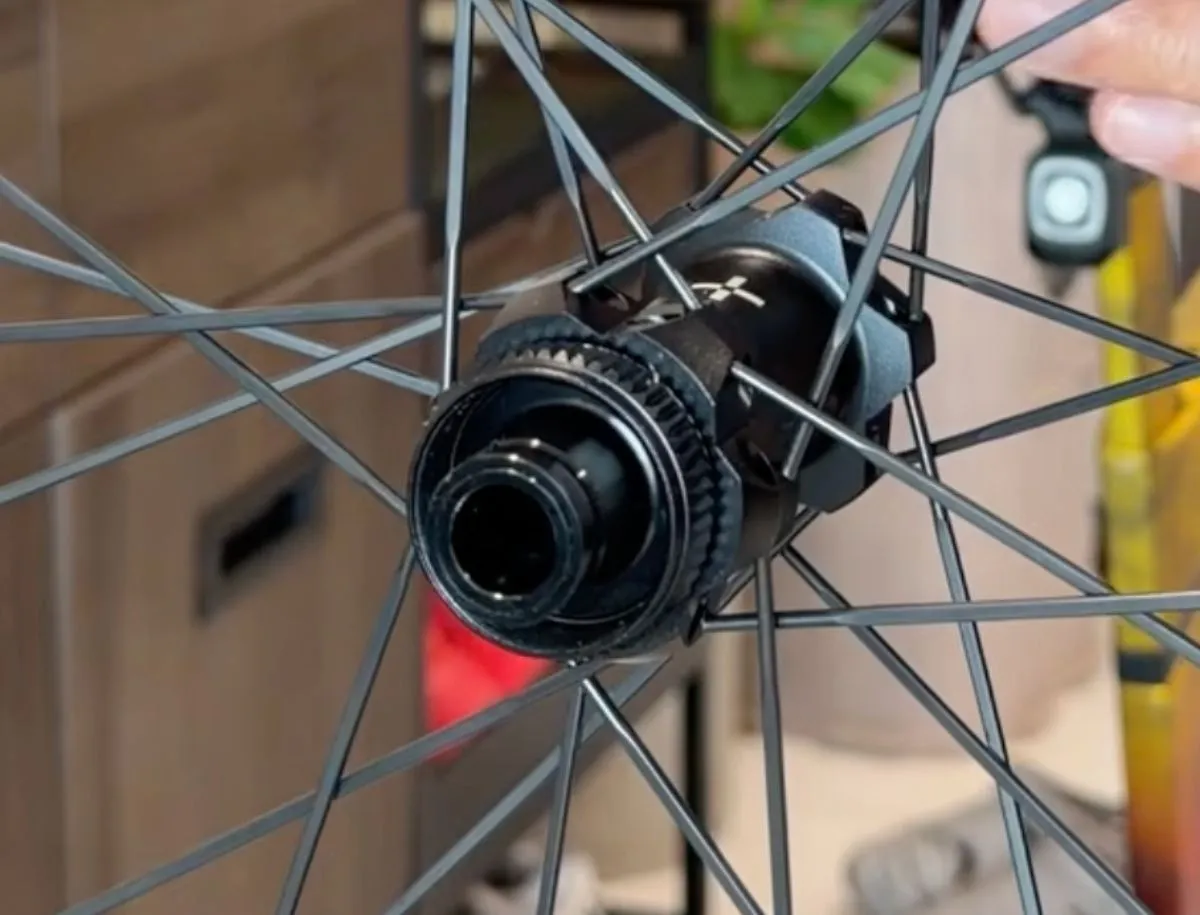
The redesigned hub was the main selling point of the 2.0. After 12 months, it felt the same as day one. No play. No grinding. Freehub engagement still crisp.
Weight and acceleration
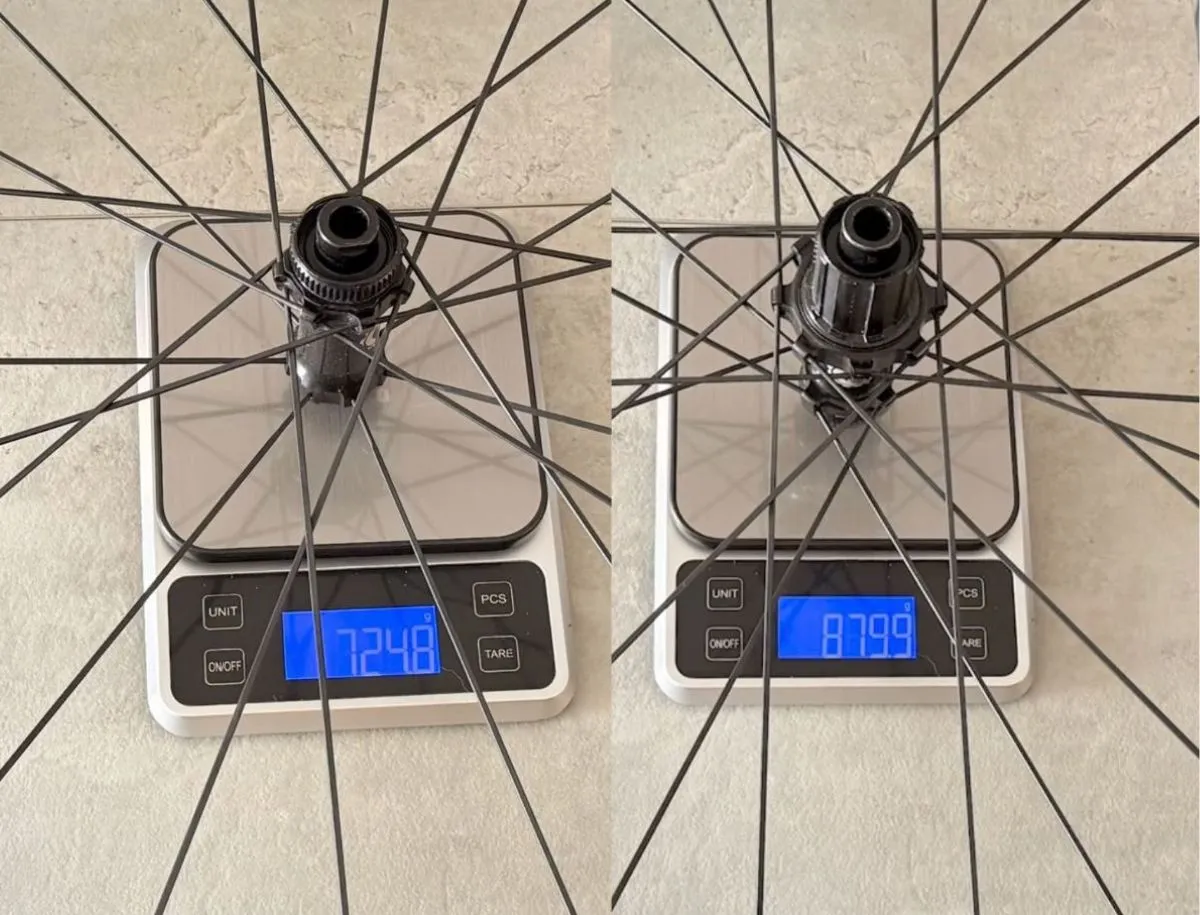
At 1,603g, you notice the drop from stock aluminium when you accelerate and climb. But it's not a revelation on a bike as heavy as the Domane.
You can buy lighter carbon. It generally costs double or triple.
Durability at one year
No delamination. No impact damage on either rim. The finish still looked close to new.
Longevity is the main fear people have about budget carbon, and at this point I had no evidence for it.
Elitewheels vs the $250-300 no-name wheels
Around this point I started testing other carbon wheelsets properly, and the obvious question came up: why not save another $50-100 on a generic listing?
Because the extra money buys you an official store, a 1,000-day warranty you can realistically claim, and thousands of other owners who've already found the problems. With a no-name listing, you're the test rider.
2 Years Later and 7,000km
[YouTube embed: https://www.youtube.com/watch?v=zuTWy03F_YY&t=217s]
A big chunk of those 7,000km was Ironman 70.3 training. Long rides, often back to back, in Saigon heat, on roads that are not always in great condition. These wheels have not been babied.
Structure and finish
No chips. No cracks. No structural marks on either rim. The finish has held up better than I expected from a $315 wheelset.
The wheels ride almost exactly as they did in 2024. No gradual loss of stiffness, no developing wobble, nothing that says they're running out of life.
Hubs
Still no play, no creaking, no sign of bearing wear. Whatever Elitewheels changed on the 2.0 hub has held up to two years of hard use.
Wet weather
I've ridden them in the wet plenty of times. Braking through the disc setup has been consistent every time. No surprises.
Crosswinds, revisited
Over 7,000km, I've needed a real correction on the front wheel a handful of times. If you regularly ride exposed, gusty roads, drop to the 38mm. Otherwise, 50mm is fine.
The spoke tension problem
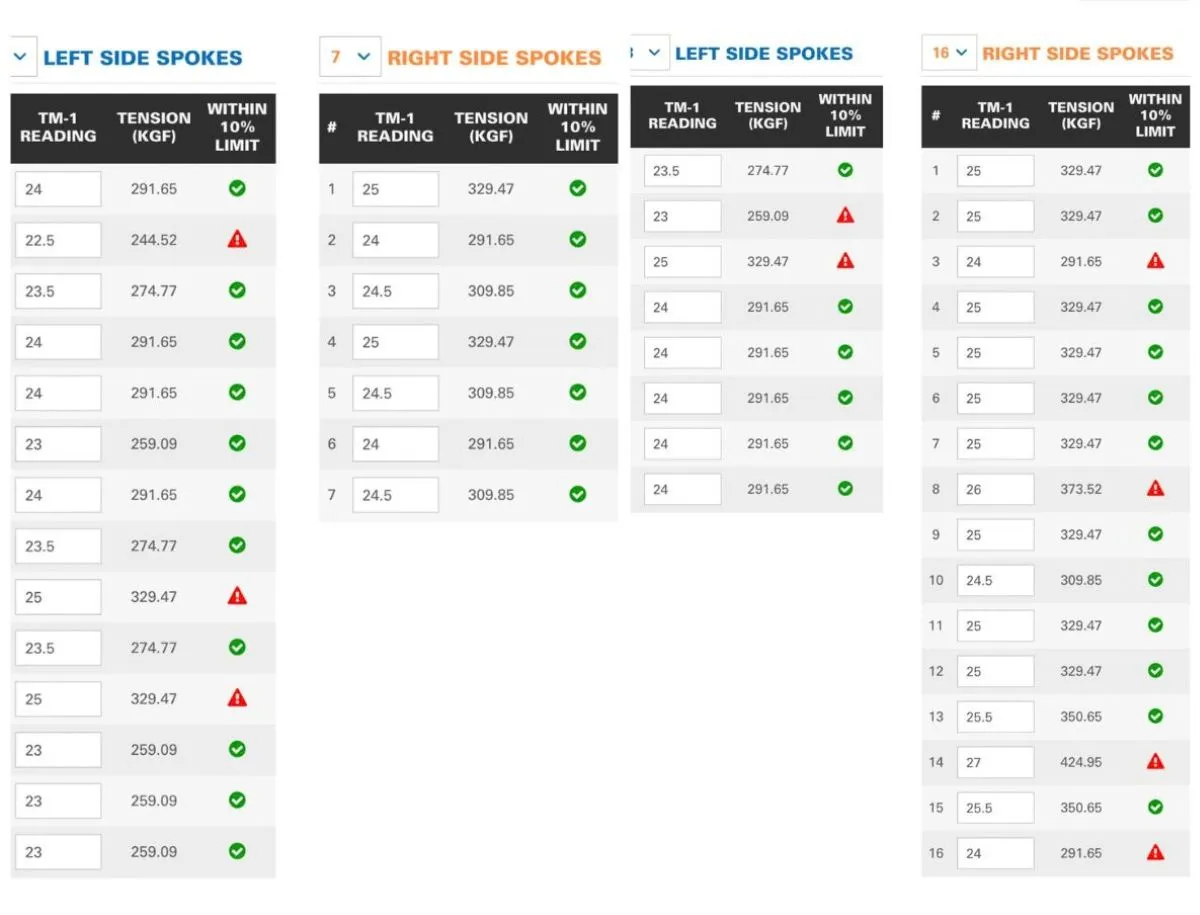
This is the one result I can't wave away.
Spoke tension matters more than most riders realise. Uneven tension is one of the leading causes of wheels going out of true and spokes failing under load. A wheel can look perfect and ride fine while carrying tension variance you'd never spot without measuring it.
I measured every spoke with a Toopre TM-1. Three spokes on the front and five on the rear came back outside a 10% variance limit. On the radar charts, both wheels show uneven shapes - left and right sides pulling in different directions instead of the round profile you want.
That landed the ENT 2.0 in the bottom half of the wheelsets I've tested for tension.
Here's the part that matters just as much: I haven't had a single failure. No broken spokes. No wheel out of true.
So the data is a warning, not a verdict. If you buy these, get them re-tensioned by a local wheelbuilder. It costs little next to what you've saved on the wheels.
Value: Is the Premium Worth It?
ENT 2.0 vs Zipp
My bike shop wanted over $1,200 for a decent Zipp set. The ENT 2.0 sits around $350-390 now.
What you give up with the ENT: better out-of-the-box spoke tension, a crash replacement programme, and less weight.
What you keep: real carbon ride quality, a hub that lasts, and $800 or more in your pocket.
For most riders upgrading from aluminium, that gap isn't justified. If you race and count grams, or you need Western warranty support, the maths changes. That's a smaller group than expensive-wheel marketing would have you believe.
ENT 2.0 vs Hunt 50 Carbon Disc
Hunt is the fairer comparison if support matters to you. The 50 Carbon Disc lists at £899 on Hunt's site, often discounted. You get a 22mm internal rim, a claimed 1,464g, a 3-year warranty, UK-based support and 60-day returns.
That's a real upgrade in everything except price. If a local warranty would let you sleep at night, Hunt earns its premium. If not, the ENT gets you most of the ride for less than half.
ENT 2.0 vs ENT 3.0
Elitewheels has now released the ENT 3.0. I paid $397 for mine with a coupon, so roughly $100 more.
For that you get a 23mm internal rim, a 120-point engagement hub, and a darker matte raw carbon finish. You don't get less weight - mine came in around the same 1,600g. And it only ships in three depths versus the 2.0's six.
My take: if you run or plan to run 30-32mm tyres, spend the $100. If you just want the cheapest proven way into carbon, the 2.0 is still the better buy per dollar. Full breakdown in my ENT 3.0 vs ENT 2.0 comparison.
Why $350 carbon is getting rarer
Margins on carbon wheels are thin everywhere. At $300-400, they're razor thin. Materials, manufacturing, quality control, shipping and warranty all come out of that price.
A $1,500 wheelset isn't four times better than a $400 one. But the profit on it is a completely different conversation. That's why most brands don't bother competing below $500 - and why even Elitewheels priced the 3.0 about $100 higher.
The ENT 2.0 lives in a shrinking segment. That makes it more relevant, not less.
If you're buying, check the current price and use [MIKE CODE] at checkout.
Who Should Buy the ENT 2.0 (and Who Should Skip It)
Buy these if:
- You're on stock aluminium wheels and want your first real carbon upgrade.
- You want to know what carbon feels like before committing four figures.
- You're a triathlete who needs a wheel that handles volume and heat without falling apart.
- You need a depth the ENT 3.0 doesn't offer, like 30mm or 82mm.
Skip these if:
- Every gram counts.
- You want a formal crash replacement programme.
- You're running or moving to 32mm tyres. Get the ENT 3.0 instead.
- You're not comfortable buying direct from AliExpress.
Whatever you do, buy from Elitewheels' official store, not a third-party seller. That's where the warranty and customer service apply. This is the listing I bought from. Prices move constantly on AliExpress, so check before you commit.
Long-Term Verdict
Two years. 7,000km. More than 20 other wheelsets tested since for comparison.
The ENT 2.0 still has the best value-to-performance ratio of anything I've ridden. The spoke tension result is a real flag - get them re-tensioned. But it hasn't caused a single problem on the road, and the ride quality, hub, and carbon have all held up.
Sometimes the premium is worth it. For most riders upgrading from aluminium, this time it isn't.

Review by Mike Dee
I test road bikes, carbon wheels, and cycling gear with quantifiable lab tests and real riding. No marketing spin, just the data - so you don't have to spend hours researching or wasting money on the wrong gear.