Seraph TT-X71 vs SAVA A7L Pro: The Best $1600 Road Bike on AliExpress?
Two carbon road bikes. Both from AliExpress, both around $1600, and I own both of them.
I bought the SAVA A7L Pro about 1.5 years ago. I bought the Seraph TT-X71 about four months ago. One of them is better than the other by a bigger margin than I expected.
Disclosure: I bought both bikes with my own money, from the official AliExpress stores. Seraph gave me a discount because I mentioned I'd be reviewing the bike. The SAVA, I paid full whack.
I'll go through the spec sheets first, then the stuff that doesn't show up on a spec sheet - what these bikes are like to ride - and then give you a straight answer at the end.
The Prices
The SAVA is $30 cheaper. That's the whole price gap.
The Seraph TT-X71 is $1274 plus $435 shipping at the time of writing, which comes to $1709. A $70 coupon brings it down to $1639 delivered to your door. That includes shipping and customs, so for most countries it's the final price - no surprise import fees landing on your doormat three weeks later.
The SAVA A7L Pro is $1679, or $1609 with a $70 discount code.
On a $1600 bike, $30 is not a lot. I mention it because if these bikes were identical in every other way, the SAVA would win on price. They are definitely not identical in every other way.
AliExpress prices move around and coupon codes come and go, so check the store links for whatever's current:
- Seraph TT-X71 official store: https://s.click.aliexpress.com/e/_c3Pvuisl
- SAVA A7L Pro official store: https://s.click.aliexpress.com/e/_c2wWTR1J
The word official matters here. Third-party sellers list these same bikes, and when you're spending $1600, you want the brand's own store.
The Spec Sheets
The frames, forks, seat posts, bars and wheels are broadly comparable. The groupset is where the gap opens up.
Put a Western brand sticker on either frame and you'd be paying two, maybe three times the price.
Shimano 105 vs Wheeltop EDS TX
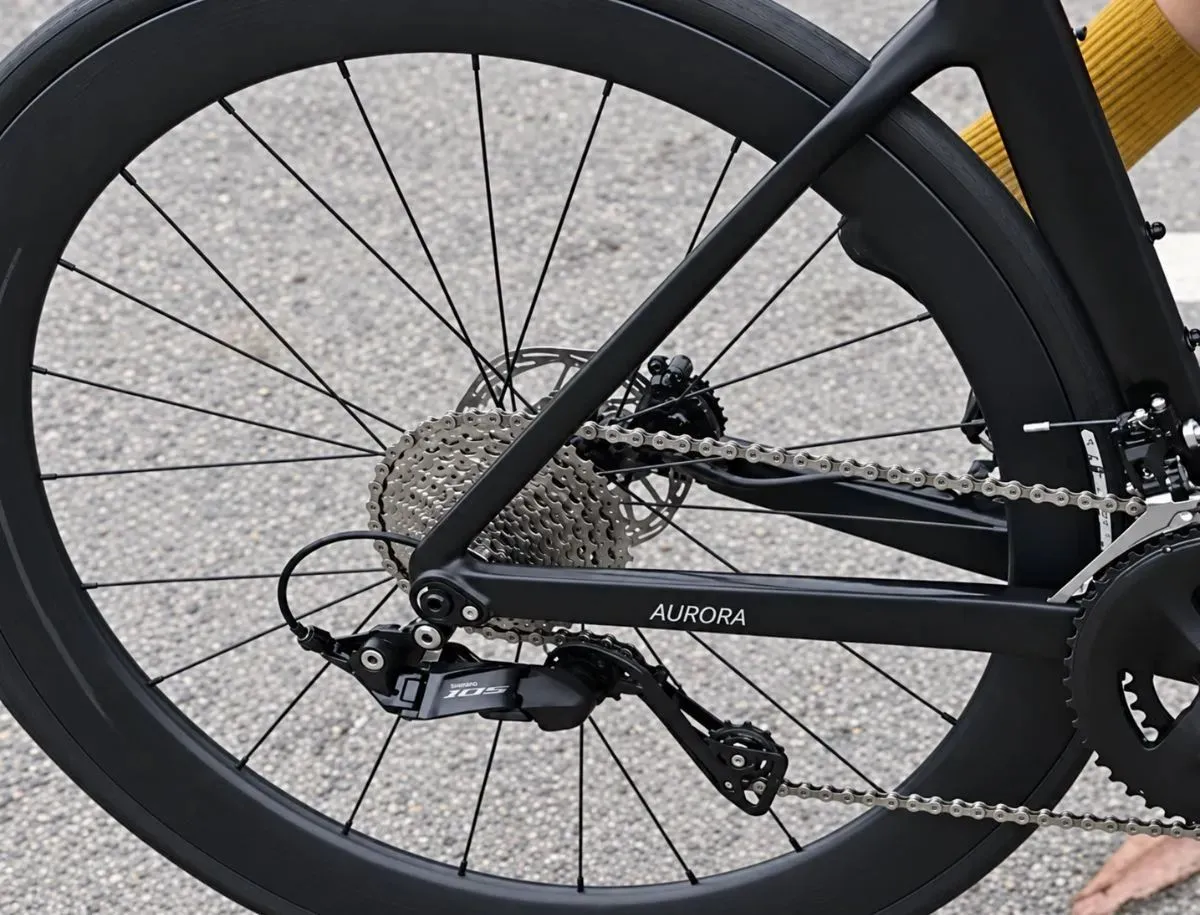
Shimano 105 is proven. It's been on millions of bikes, it shifts super smoothly, every bike shop on the planet can work on it, and parts are everywhere. The 105 on my SAVA has not skipped a beat. If reliability and serviceability are what you care about, it's the safer choice.
The Wheeltop EDS TX does something the 105 can't: electronic shifting at this price.
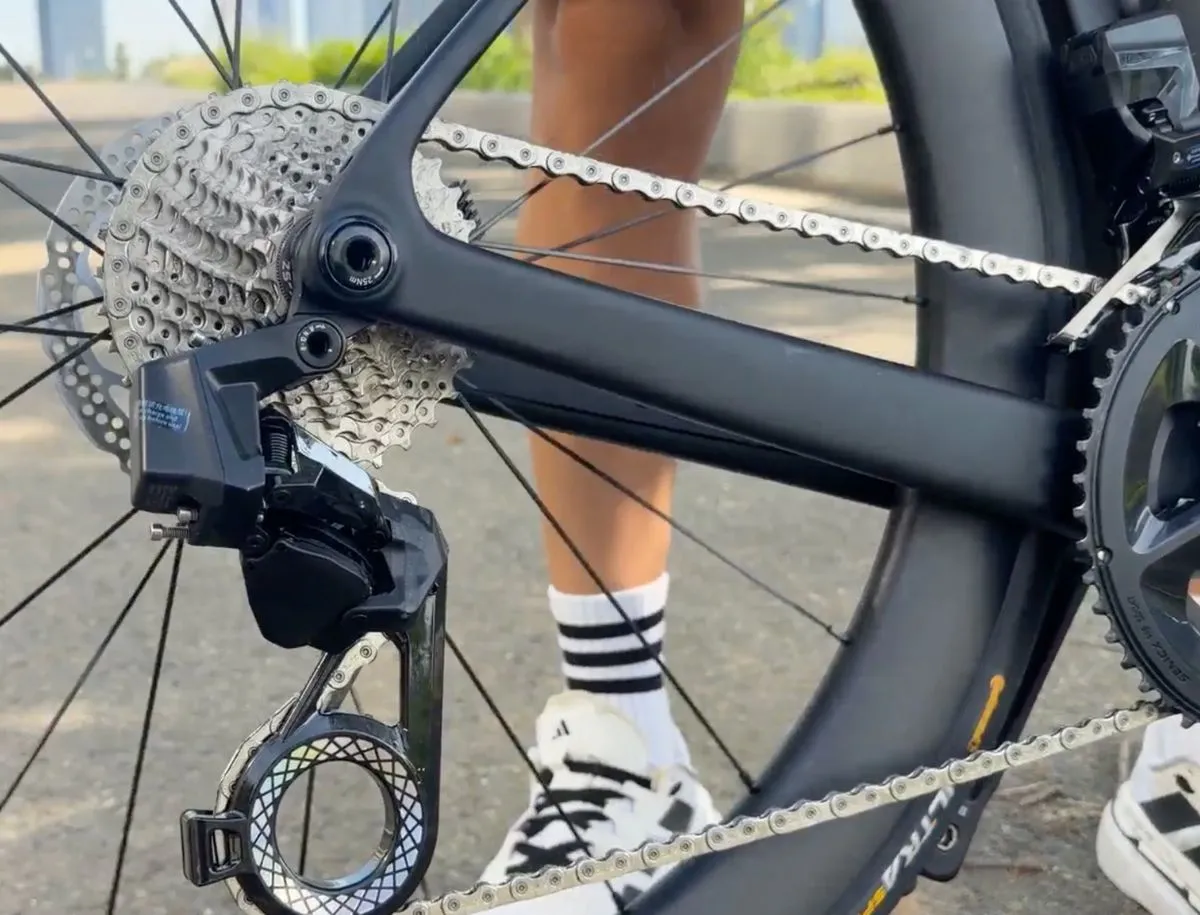
It's not as good as Shimano Di2. Di2 shifts smoother and it's a bit quieter. But the Wheeltop gets close enough that the gap doesn't bother me on the road, and it costs a fraction of what Di2 costs. I'd take the Wheeltop over a mechanical 105 every time.
Part of that is rational. Electronic shifting doesn't care about cable friction or cable stretch, so shift quality doesn't slowly degrade over the months the way mechanical can.
Part of it isn't rational at all. I associate electronic shifting with bikes costing $5000 or $6000. Every time I press that button on a $1600 bike, it feels more expensive than it is.
The Seraph's wide-range cassette
The Seraph's rear derailleur is huge, because it's built around a wide-range cassette.
Wide range gives you an easy climbing gear, which is great if you live somewhere hilly. The trade-off: the same number of gears spread across a wider range, so the jumps between them are bigger.
I notice this in group rides. Cruising at around 32kph I'm often stuck between two gears - one where my legs spin slightly too fast, the next where I'm pushing slightly too hard. Solo, it's a non-issue. I just adjust my speed. In a group where you're not setting the pace, you can't.
Not a dealbreaker. But you'll feel it.
Tyres and Clearance
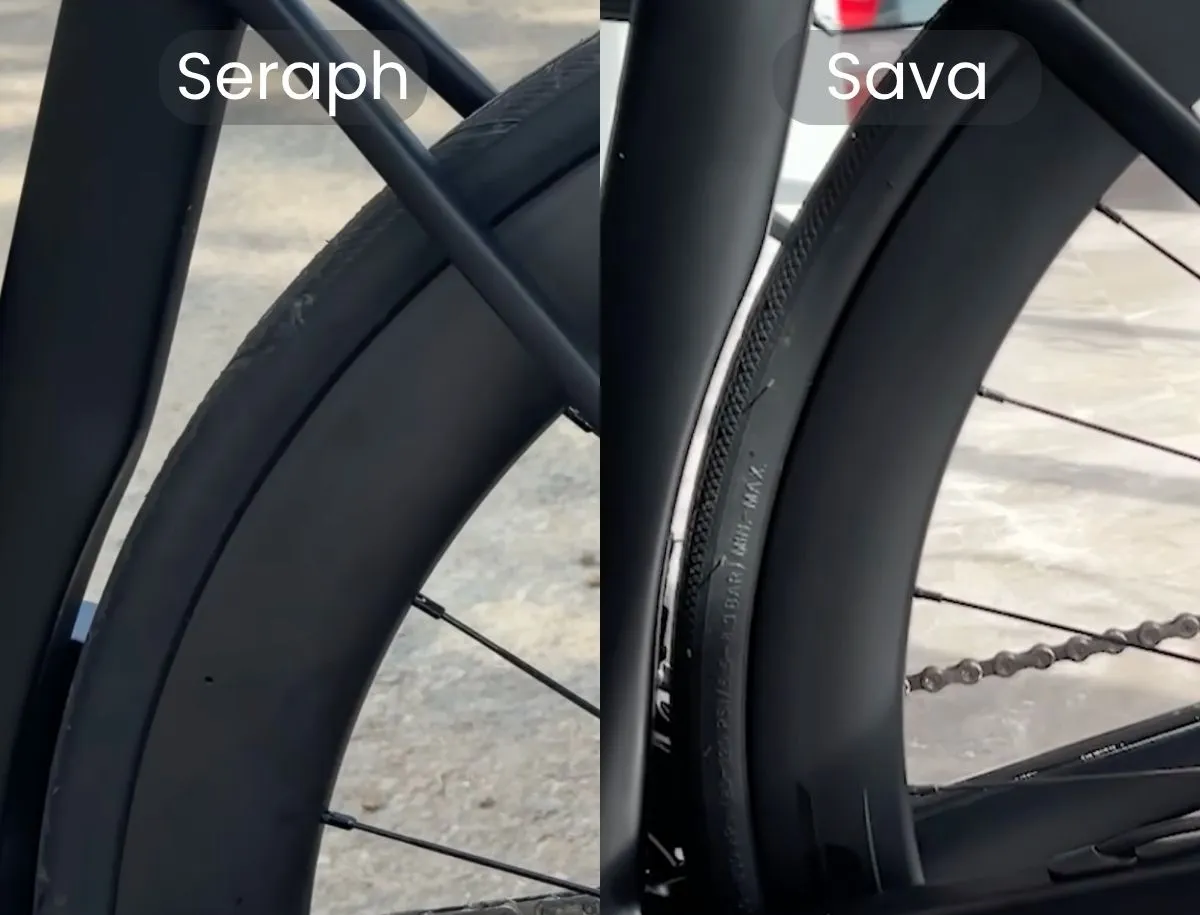
This is the second real gap, and the one people underestimate.
The Seraph has 30mm maximum tyre clearance and ships with 28mm tyres. The SAVA maxes out at 28mm and ships with 25mm.
25mm tyres feel dated now. Tyre width has been moving up for years, and the roads where I ride are rough, with potholes seemingly everywhere. On the SAVA, the 25s were the first thing I wanted to change. Going to 28s does help. But that's your ceiling.
Can you fit 30mm tyres on the SAVA?
Technically, yes. I wouldn't.
- To cover my own back. If you fit 30s or 32s and have an accident because of them, you can't point at your screen and say "Mike told me I could."
- The real risk. Run tyres wider than the recommended 28mm, hit a big pothole, and if the tyre bulges it could crack the carbon fork.
- The warranty. It could invalidate it.
In my opinion, follow the manufacturer's recommendation.
What I run on the Seraph
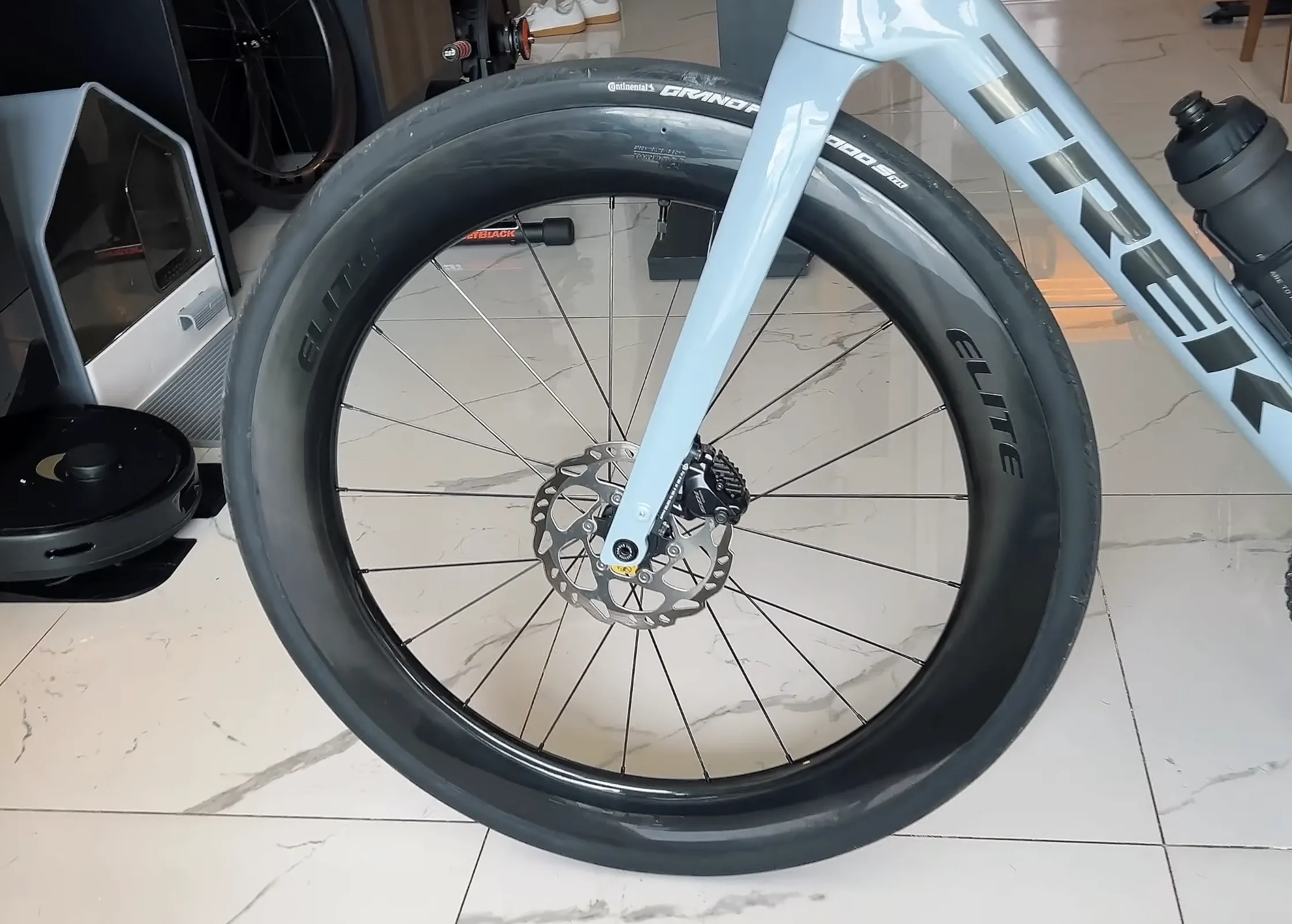
I swapped the stock 28mm Continental Ultra Sports for 30mm GP 5000 S TR tubeless.
Partly that's because I test a lot of carbon wheels; I'm on roughly my 25th set, and I run the same tyres across all of them so there's one less variable. But 30mm at lower pressure also smooths out a lot of road buzz before it reaches your hands.
I'd have liked 32mm clearance. But 30 beats 28, and on rough roads that difference is real.
If you want the raw data on every carbon wheelset I've tested, ranked from best to worst, you can get free access to the database here: https://scorecard.bikelabhq.com
Wheels
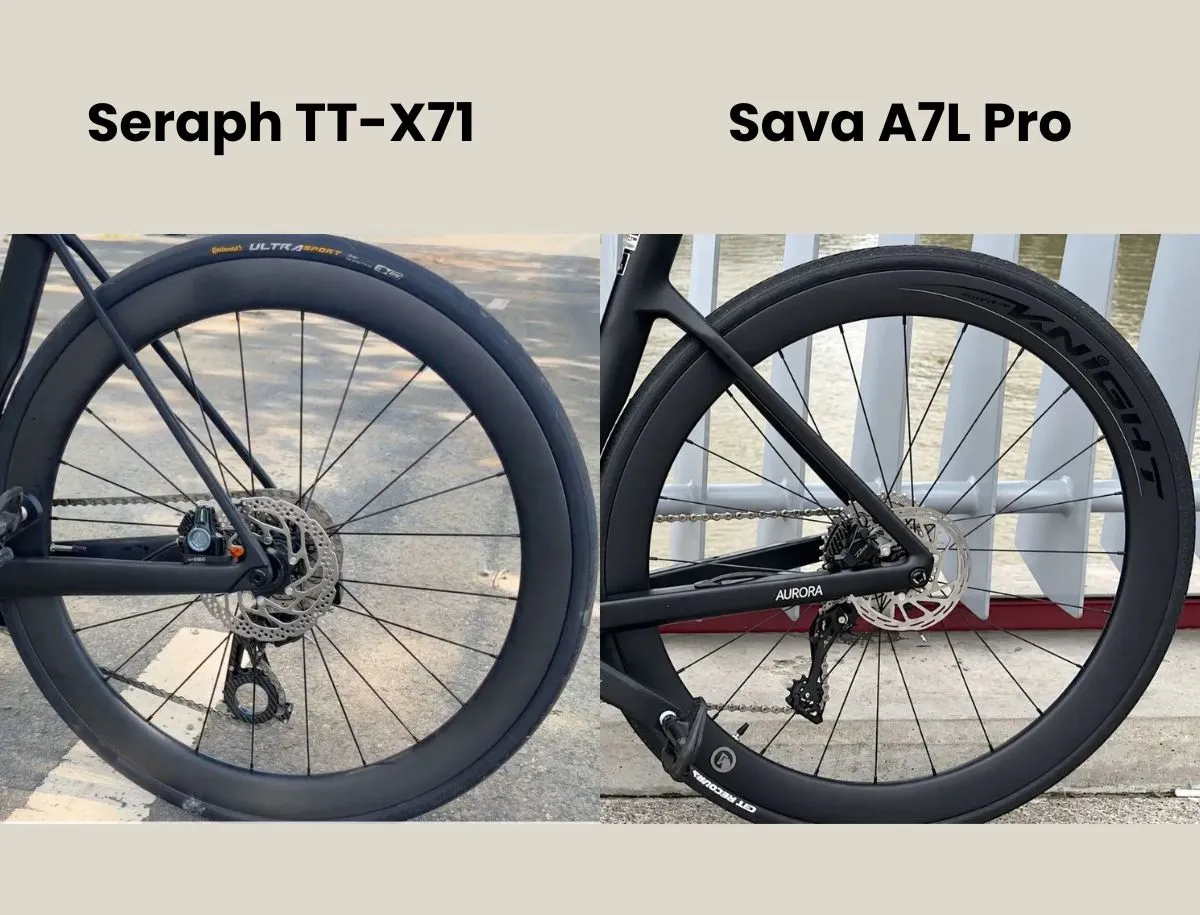
Close to a draw. Both bikes come with 50mm carbon wheels, and both sets are decent. Not amazing. Decent, for the price.
The SAVA runs its own in-house 50mm wheels, and I like how understated they look: gloss black branding on a matte black rim, so the decals are barely there. They look like wheels off a much more expensive bike. They're tubeless-ready, and 50mm is a good depth for most people - deep enough for an aero benefit without being a handful in crosswinds.
The Seraph comes with Wheeltop 50mm wheels, and they're good enough that I don't see any urgency to replace them. I did swap them out eventually, but only because I was testing a set of Serenade TRWs and wanted to keep riding the bike.
Either way, you're getting wheels that would normally be a $350 to $400 upgrade on their own.
Weight and Frame
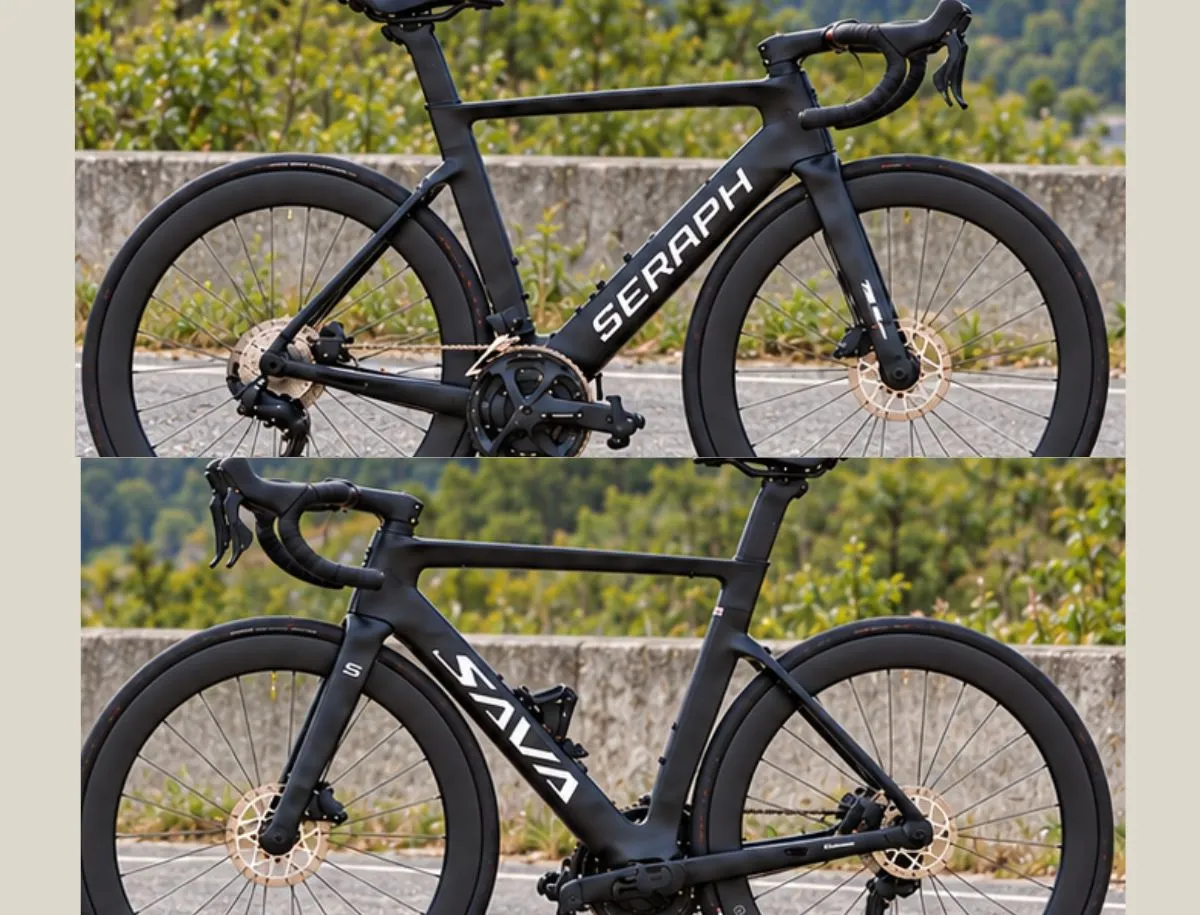
Weight is basically a tie. The SAVA A7L Pro is 8.9kg. The Seraph comes in between 8.5kg and 8.9kg depending on frame size.
Neither is a lightweight climbing bike, and that's a fair compromise at this price. On the Seraph, some of that weight is the aero shaping. Making a frame more aerodynamic means adding carbon in places, and carbon has mass.
Both frames are matte black, and both show every fingerprint, every bit of grease, every speck of dust. Not a fault. Just more effort to keep clean, and it applies equally to both.
UCI approval and warranty
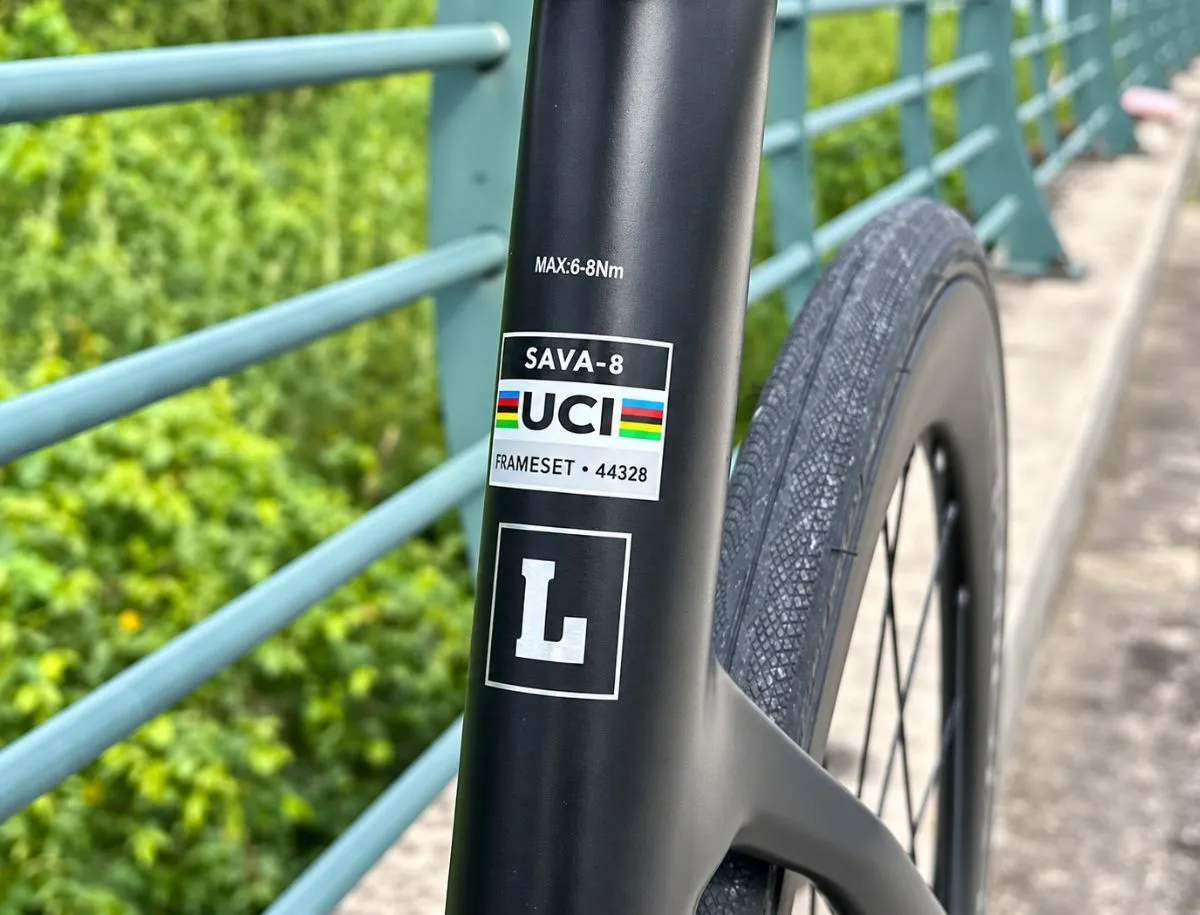
One point in SAVA's favour: the A7L Pro is UCI approved. Most people will never race a sanctioned event, but it tells you the frame went through a process rather than just being a shape somebody liked.
SAVA also states a 15-year frame warranty. I'd read the terms carefully before treating that as a guarantee, because warranty terms on direct-to-consumer bikes tend to have conditions attached.
The Seraph looks a lot like a Factor Ostro
This is the one thing about the Seraph frame I don't like at all.
The head tube shape, the dropped seat stays, the way the seat tube wraps around the rear wheel - the whole silhouette looks like the Factor Ostro. Looking similar doesn't mean it rides the same. The Factor uses a much higher-grade layup, and it's a $10,000 bike.
Seraph clearly have the engineering ability to design something of their own. I'd rather see them do that.
How They Ride
This is the part that decides it. Both spec sheets read well, and spec sheets don't tell you what a bike feels like at kilometre 80.
Stiffness and speed
The Seraph is stiff. Get out of the saddle, put the power down, and there's no noticeable flex through the bottom bracket. It just goes.
Combined with the aero frame and 50mm wheels, it's fast. With a tailwind and a bit of downhill I've had it up to around 75kph (about 45 to 46mph) without working especially hard for it.
The SAVA accelerates well and climbs well too. At speed it feels planted, with no odd handling quirks.
Comfort
What surprised me is that the Seraph is stiff and comfortable. Usually with budget carbon you get one or the other: stiff and harsh, or comfortable and slow. The 30mm clearance does a lot of that work. I've done 150km and 200km rides on it and finished feeling fine.
The SAVA rides very nicely, and I don't want that to get lost. The frame smooths out road vibration without feeling dead - on the stock 25mm tyres, which is impressive. The geometry is relatively aggressive but not punishing, and I can spend three or four hours in the saddle without real discomfort.
Both are comfortable. The Seraph is more comfortable. For a 150km+ ride I'll almost always take the Seraph. For shorter rides, I usually take the SAVA.
High-speed stability
This is where the SAVA wins. At high speed it feels far more stable.
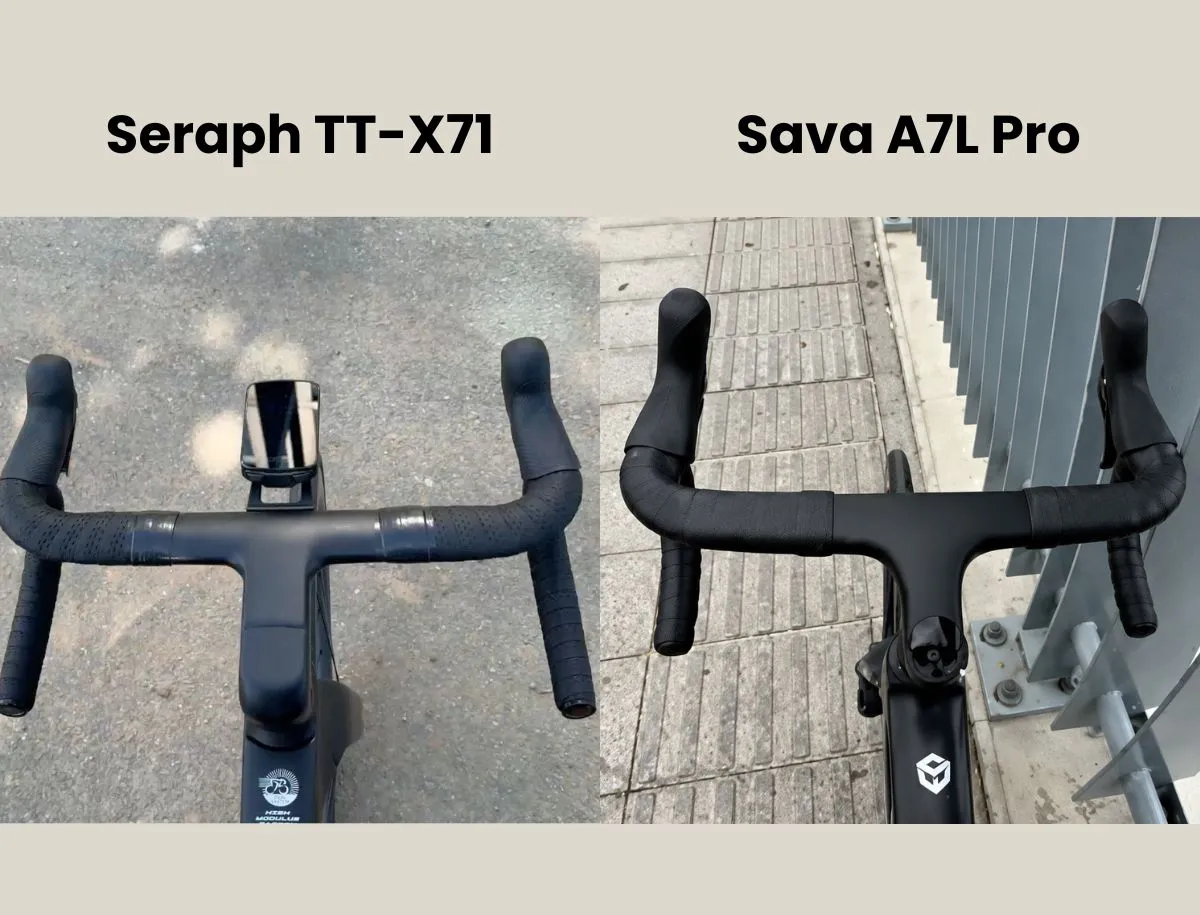
The Seraph doesn't, always. Descending at around 70kph, it can start to wobble. I put a lot of that down to the handlebars, which are very narrow for aero reasons. Narrow bars give you less leverage over the front wheel, so the steering is more sensitive.
At normal speeds, that reads as sharp and responsive. At 70kph+, the same sensitivity means a gust hitting those 50mm rims, or a bump in the road, turns into a bigger movement at the front end than you want.
A loose headset is one of the most common causes of speed wobble, and it's free to check. Check yours, whichever bike you buy.
Most people will rarely see 70kph, so for the majority this is a non-issue. If you live somewhere with long, fast descents, it's the one area where I'd give the SAVA the edge.
The Small Stuff
The things that never make a spec sheet, but that you notice every single ride.
Bar tape
The Seraph's bar tape is my favourite of any bike I own. Grippy but soft, and it feels premium. Sounds minor, but your hands are on it for the entire ride, and most budget brands cut costs there.
Seat posts
Both bikes have grip texture on the seat post to stop the saddle slipping. My Trek Domane doesn't, and I had to fix it with anti-slip agent.
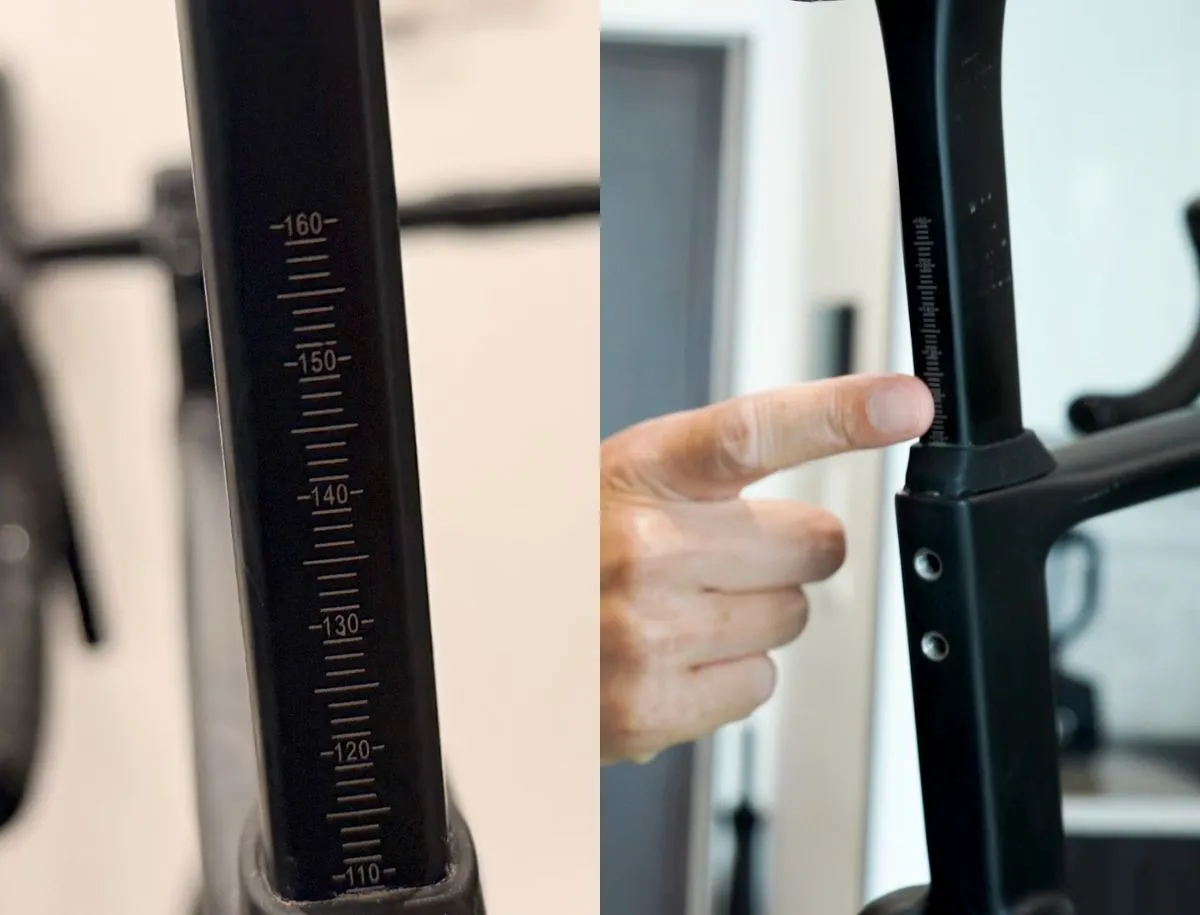
The Seraph goes further, with measurement markings on the post. I take it on road trips and pull the post out to fit the bike in the car, and those markings get my saddle height exactly right in seconds. On the Domane I have to mark the post with tape.
Extras
The Seraph ships with two bottle cages and a stem mount for a computer and light. You can also have it custom painted for around $150 more, which I think is reasonable.
Saddle
This is where the SAVA wins. Its DE99 saddle is the most comfortable saddle I've ridden. 100km, no complaints at all. It looks and feels far more expensive than it should.
The Seraph's stock saddle is thin. It's not as bad as it looks, but it was the weakest link in an otherwise very comfortable bike, and I replaced it after the second ride.
SAVA quality control
Two small things. There were two or three tiny bubbles in the chain stay protector. It won't affect the ride, but it's a quality control slip that shouldn't happen.
And during assembly I had to cut off two plastic tabs on the stem because they wouldn't fit. I was slamming the stem anyway, so it didn't matter in the end.
Delivery and Support
Worth covering, because both of these arrive in a box from another continent.
The SAVA arrived in eight days, faster than I expected. It also arrived damaged: ripped bar tape, a cut rubber hood cover, and a paint chip above the fork.
When I sent photos, SAVA asked for pictures of the box. There was extra yellow tape on one side where the courier had clearly repaired it in transit - a delivery problem, not a manufacturing one. To SAVA's credit, they responded immediately, told me to take the bike to a shop and send them the invoice, and they covered it.
The Seraph took longer. Reported delivery times run anywhere from about 13 to 39 days depending on where you are. Mine arrived undamaged, well packaged, and assembly was straightforward.
Why I buy through AliExpress
Buying through AliExpress rather than direct means you're covered by Buyer Protection. If there's a dispute, the platform steps in as a third party. I've been buying from AliExpress for about ten years, and in my experience they're reasonably fair with it.
Buy direct from a manufacturer's site and something goes wrong, you've got less to fall back on.
What I Liked
Seraph TT-X71
- Electronic shifting for $1600. The Wheeltop EDS TX gets close enough to Di2 that the gap doesn't bother me on the road.
- Stiff and comfortable. No noticeable flex out of the saddle, and I've finished 200km rides feeling fine.
- 30mm tyre clearance. Room for the 30mm GP 5000 S TRs I run, which take the edge off rough roads.
- The details. My favourite bar tape of any bike I own, seat post markings, two bottle cages and a stem mount included.
SAVA A7L Pro
- Shimano 105 R7100. Hasn't skipped a beat in 1.5 years, and any shop can service it.
- High-speed stability. Planted at speed, with no odd handling quirks.
- The DE99 saddle. The most comfortable saddle I've ridden. 100km, no complaints.
- Support. When my bike arrived courier-damaged, SAVA covered the repair invoice.
What Needs Work
Seraph TT-X71
- Speed wobble at 70kph. The narrow aero bars make the front end twitchy on fast descents.
- Big gear jumps. The wide-range cassette leaves me stuck between gears at around 32kph in group rides.
- The stock saddle. Thin. I replaced it after the second ride.
- The Factor Ostro lookalike frame. Seraph can clearly design their own. I'd like them to.
SAVA A7L Pro
- 25mm stock tyres, 28mm max. Dated, and the upgrade path is capped.
- Quality control. Two or three bubbles in the chain stay protector, and two stem tabs I had to cut off during assembly.
- Mechanical shifting. Proven, but it can't match electronic for consistency over time.
So Which One Should You Buy?
The Seraph TT-X71 is the better bike, by more than I expected before I put the kilometres in.
For roughly $30 more than the SAVA, you get electronic shifting instead of mechanical, 30mm clearance instead of 28mm, 28mm stock tyres instead of 25mm, better bar tape, a marked seat post, and bottle cages and a stem mount thrown in. And mine arrived undamaged.
If you'd asked me to guess the price gap based on riding them and nothing else, I'd have said several hundred dollars.
The SAVA A7L Pro is not a bad bike. It's a very good bike. In my full SAVA A7L Pro review I said that, knowing what I know now, I'd have bought it over my Trek
Domane and saved $2500. That still stands.
Buy the Seraph TT-X71 if
- You want electronic shifting without paying Di2 money
- Your roads are rough and you want room for 30mm tyres
- You do a lot of long rides, 150km and up
Buy the SAVA A7L Pro if
- You want a Shimano groupset any shop can service
- Your roads are smooth enough that tyre clearance matters less
- You do a lot of fast descending, where its stability is worth something
- You want the more comfortable stock saddle
- UCI approval matters to you - the Seraph's listing doesn't claim it
For the deep dive on either bike, read my full Seraph TT-X71 review or my full SAVA A7L Pro review.