



10PLUS T Series Carbon Wheels Review: Are $330 Carbon Wheels Any Good?
These are the cheapest carbon wheels I have ever put on a bike. When I filmed this 10PLUS T Series carbon wheels review, they were listed at $330. Prices on AliExpress move constantly, so check the current number before you get excited - but at the time of testing, $330 bought a full carbon wheelset.
Surely there's a catch.
There is. Several, actually. These are not perfect. But after 500km on them, I'll say this now: for the money, they're incredible. I've never seen anything like this in the carbon wheel space, and I hope this is the start of genuinely decent carbon wheels under $350.
Disclosure: 10PLUS sent me these wheels to review. I've still tested them the same way I test everything else, and I'll tell you exactly what I don't like about them.
What Are the 10PLUS T Series Carbon Wheels?
10PLUS is new to the carbon wheel space, and they focus on the budget end of it. I like that a lot.
Most carbon wheel brands are hesitant to launch genuinely cheap models. Partly because they don't want to devalue the brand with budget offerings, but mostly because the margins on cheap carbon wheels are razor thin. It makes far more business sense to sell at $500 or $1,000 and keep the margins healthy.
10PLUS came in and said forget all that. Make a solid carbon wheel, sell it at a price actual cyclists can afford.
The T Series is a 700c disc-brake wheelset, tubeless-ready, built around Toray T700 and T800 carbon. I tested the 50mm version.
Warranty, Crash Cover and Buying Safely
The warranty is 1,200 days, which works out at roughly three years and three months. That's above industry standard - most brands give you a flat three years. The hub gets one year, which is in line with everyone else.
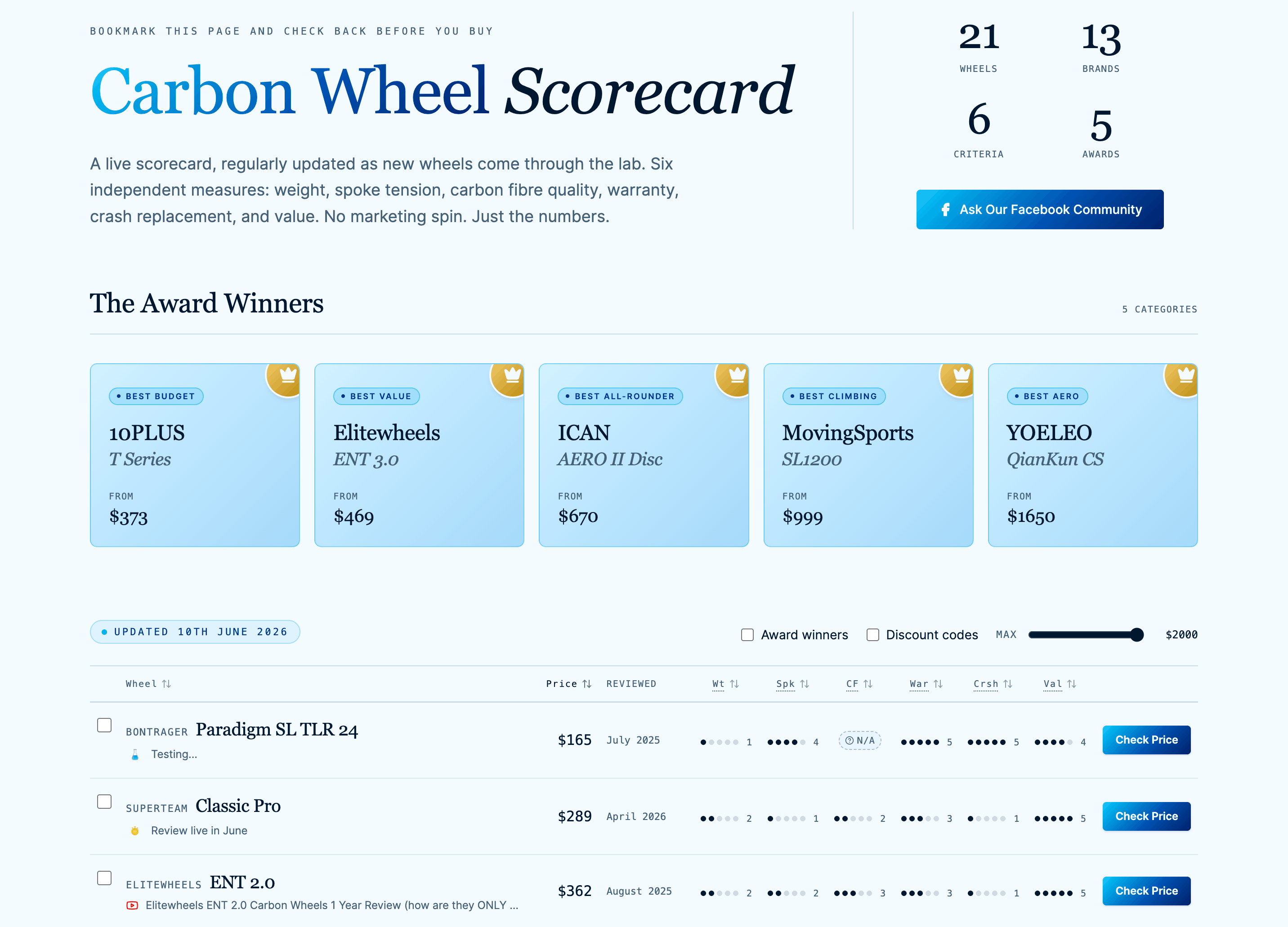
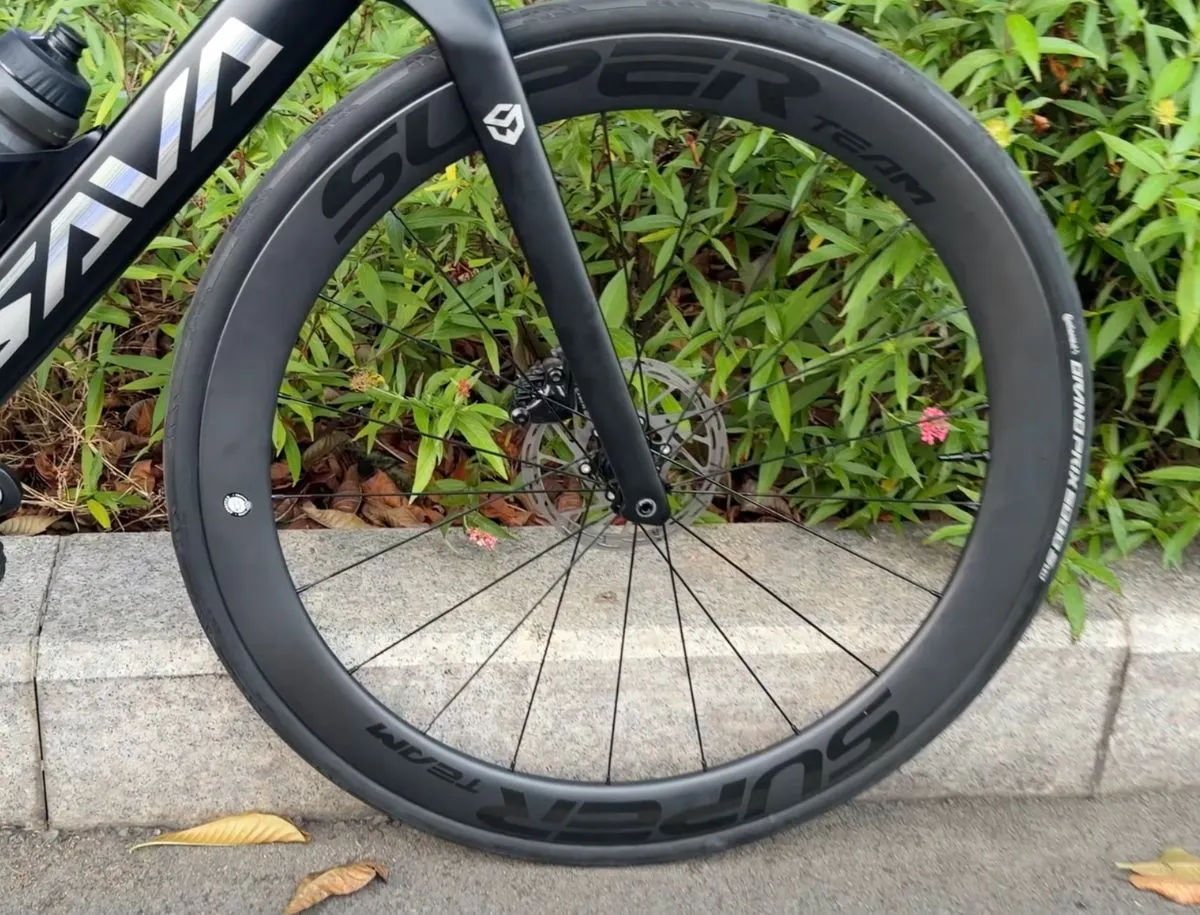
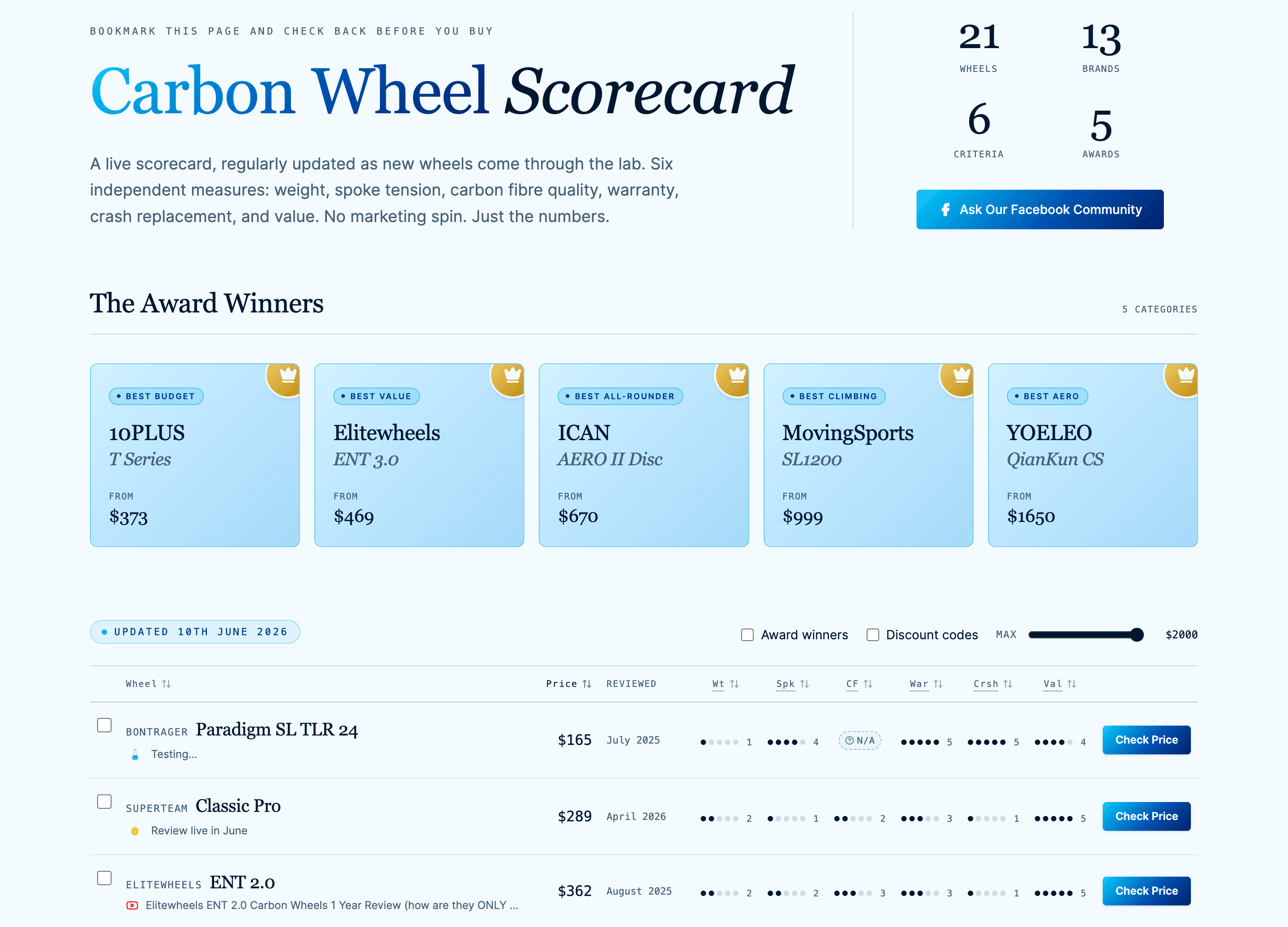
There's no crash replacement policy. If you destroy them, you're on your own. Entirely expected at this price. Most brands don't offer crash replacement until you're up around $700, and even then it's hit or miss. I reviewed a set of Superteam wheels a few weeks ago at the $1,000 mark - really good wheels, and no crash replacement either.
One thing that matters more than people realise: buy from the official 10PLUS AliExpress store, not a third-party seller. I'll link the official store below.
Shipping and import fees
The single biggest unknown when buying carbon wheels from China is whether customs will sting you on arrival.
I paid no customs taxes and no import fees. 10PLUS state on their AliExpress store that Europe, the UK and the US get free shipping with no tax, and that's exactly what I got. The listing quotes 25 to 35 days for delivery. Mine turned up in about seven.
First Impressions
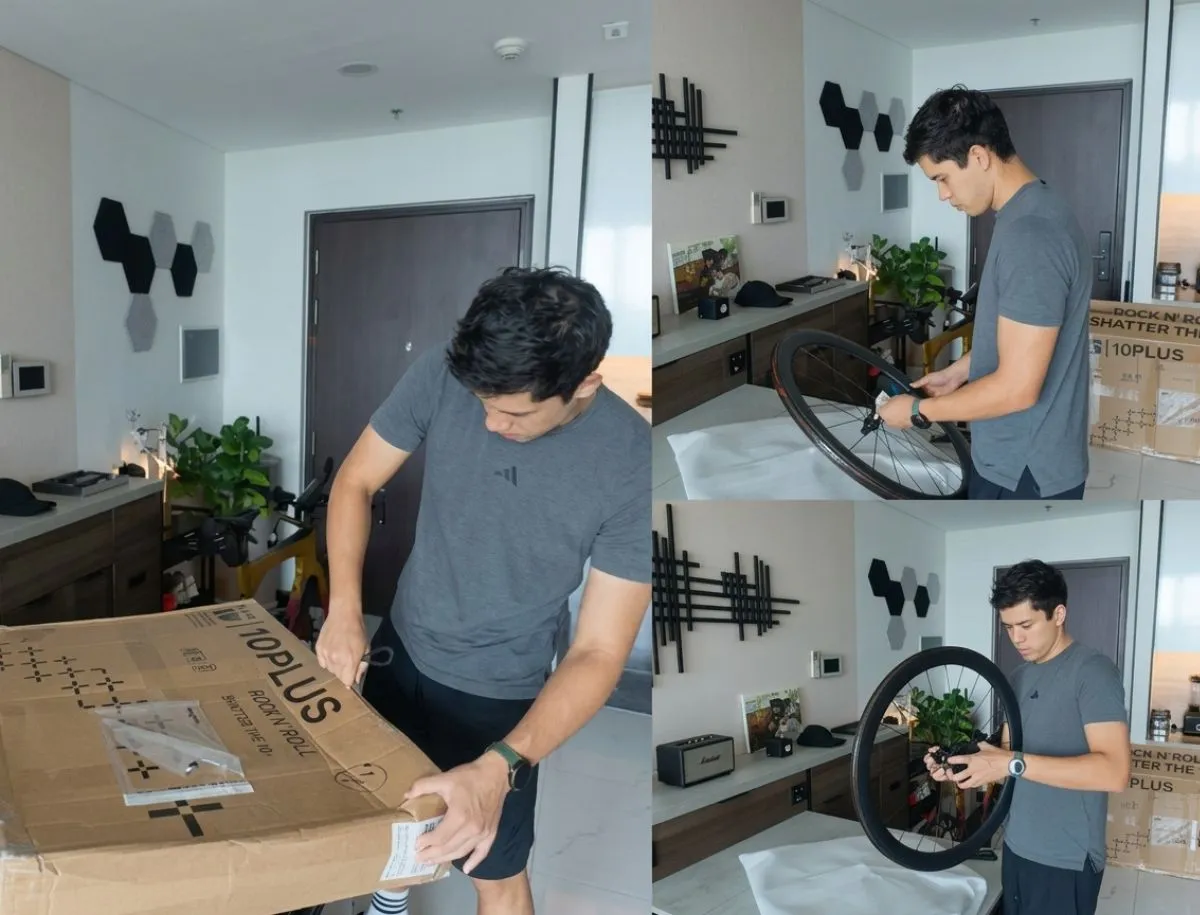
The box was thick and well packed, with no damage anywhere. Nothing about the packaging gives away that these are ridiculously cheap. They arrived exactly the way a $500 or $1,000 wheelset arrives.
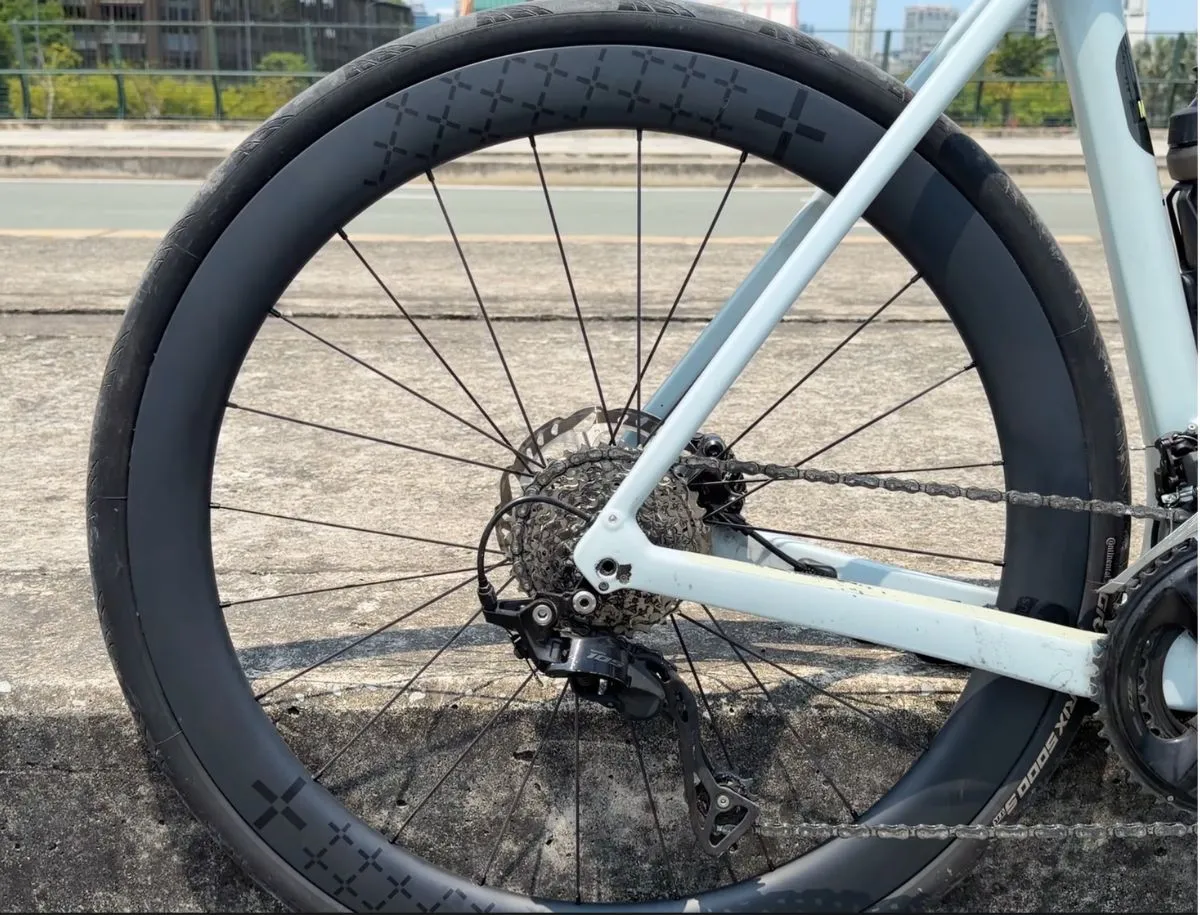
I like the design. It's creative without being garish, and there are no logos anywhere on the rim. If I saw these on a bike in the street, I wouldn't know the brand, and I'd never guess they cost less than $250.
10PLUS T Series Carbon Wheels: The Full Spec
Rim depth options
The T Series comes in 38mm, 50mm and 60mm.
The 38mm is aimed at climbers, where weight matters more than aerodynamics. The 50mm is the all-rounder, balancing aero efficiency against crosswind stability, which is why it's usually the most popular choice. The 60mm is purely for speed - deeper, more aero, but you'll feel crosswinds more, so it suits flatter routes and calmer conditions.
I'm reviewing the 50mm.
Weight
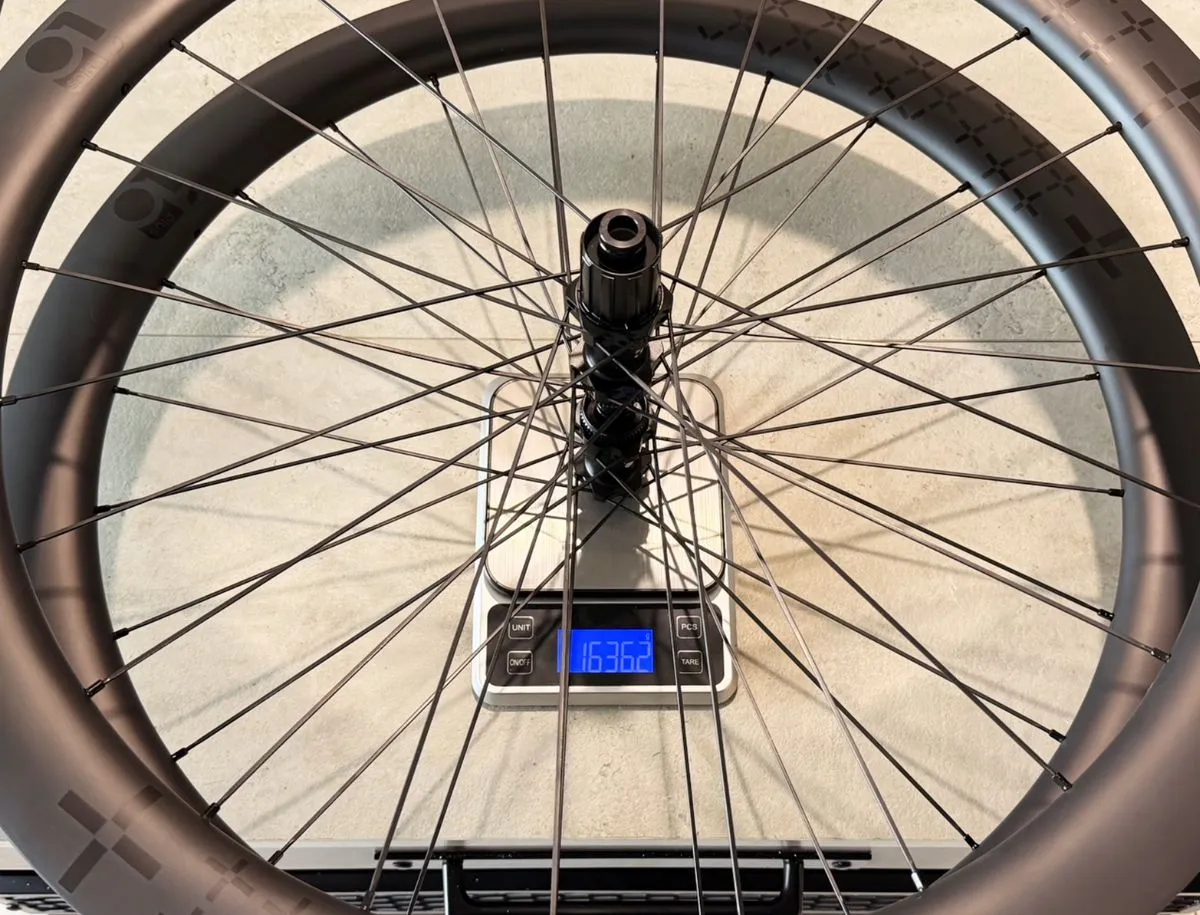
10PLUS claims 1,630g plus or minus 3% for the 50mm. I put both wheels on my own scales: front 763g, rear 873g, giving 1,636g for the set.
That's almost exactly what they claim. What's on the box is what you get.
But 1,636g is heavy for a 50mm carbon wheelset. For context, the ICAN Aero 50 IIs I tested a couple of months ago came in at 1,254g - nearly 400 grams lighter. Those retail at $670. The T Series is a third of that price.
Internal width and tyres
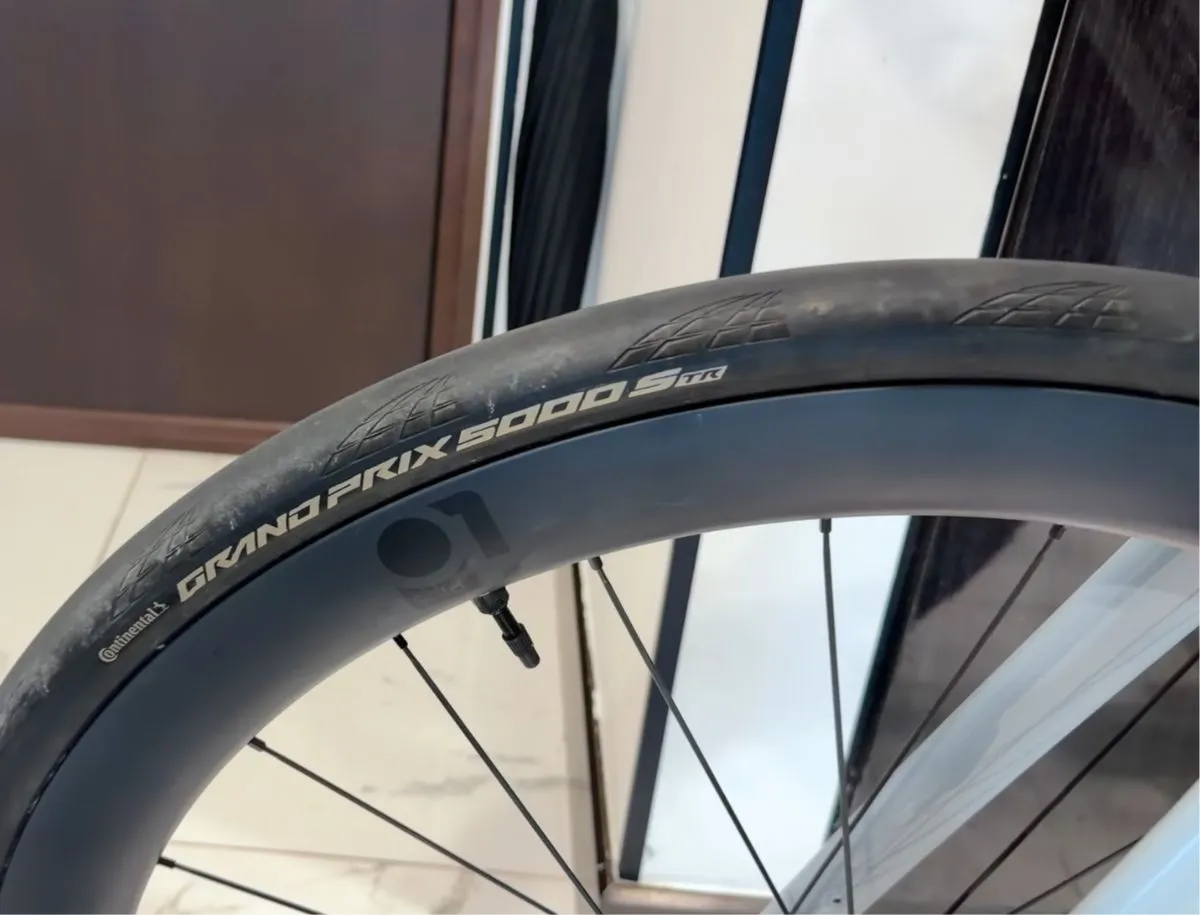
The T Series has a 21mm internal rim width, and 10PLUS recommends tyres from 25mm to 43mm.
Internal width matters because it changes how the tyre sits on the rim once inflated. A wider internal width lets the tyre open up properly, giving a rounder profile, more air volume and better rolling efficiency. 21mm is a sensible modern figure that works well with the 28mm to 32mm tyres most road riders run now.
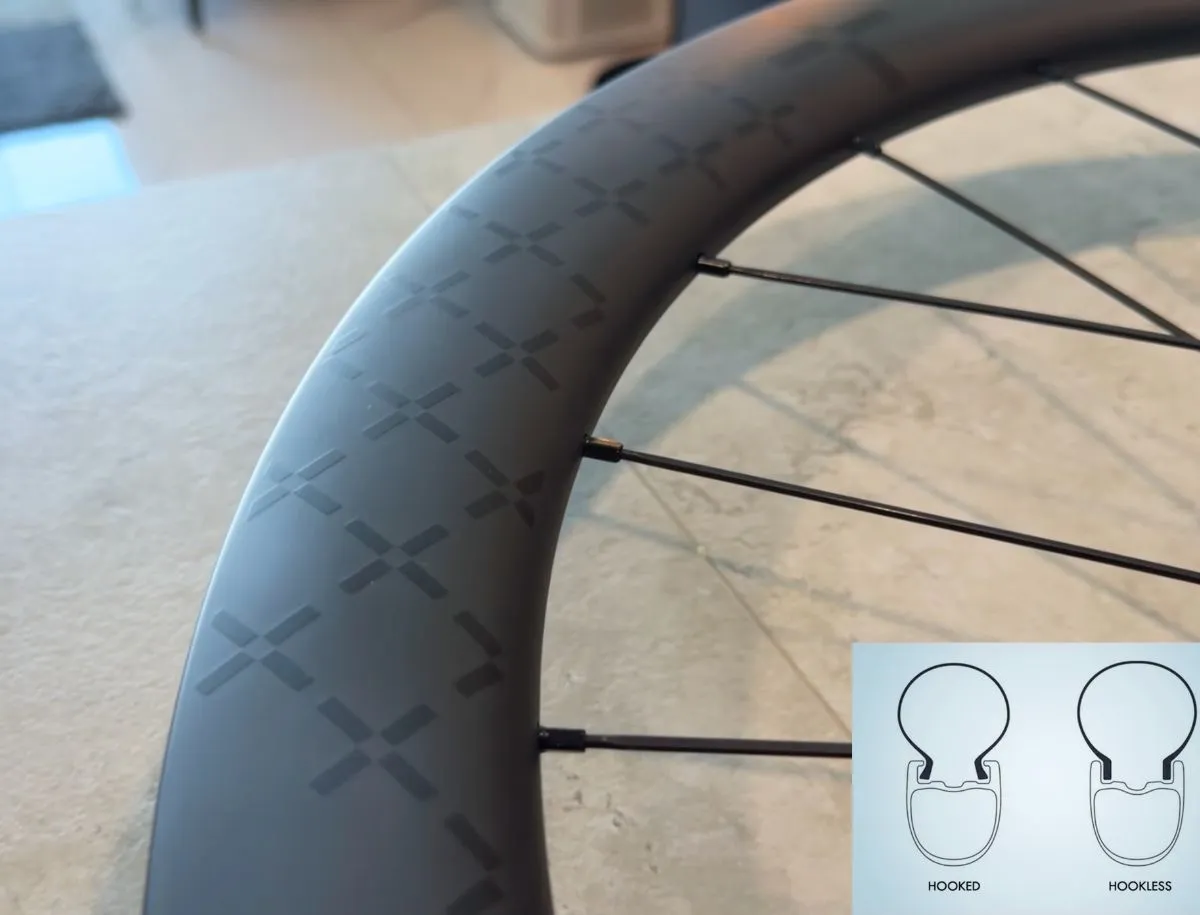
The rims use a V-shaped hooked design. The hook is a small lip curving inward at the edge of the rim bed, and its job is to retain the tyre bead under pressure - a mechanical lock between tyre and rim that stops the tyre rolling off.
For testing, I fitted 32mm Continental GP 5000 S TRs tubeless, which is what I run on every wheelset I review. Same tyre every time removes a variable, so any difference I notice comes from the wheel, not the rubber.
Because of the hooked bead, you can run these tubed or tubeless. 10PLUS include valve stems and rim tape in the box, so you've got everything you need to go tubeless straight away. That's how I've run them.
Spokes
These come with Pillar 1423 bladed steel spokes, 24 front and 24 rear, laced 2x on both wheels.
The 1423 is a double-butted bladed spoke - thicker at the ends where stress concentrates, thinner through the middle, saving a little weight without losing strength where it counts. The bladed profile also cuts drag compared to a round spoke.
Pillar is a well-regarded Taiwanese manufacturer, and seeing their spokes here rather than a generic no-name alternative is a genuinely good sign. If you ever snap one, Pillar spokes are widely available, which matters a lot when you're buying from a newer brand.
Spoke tension results
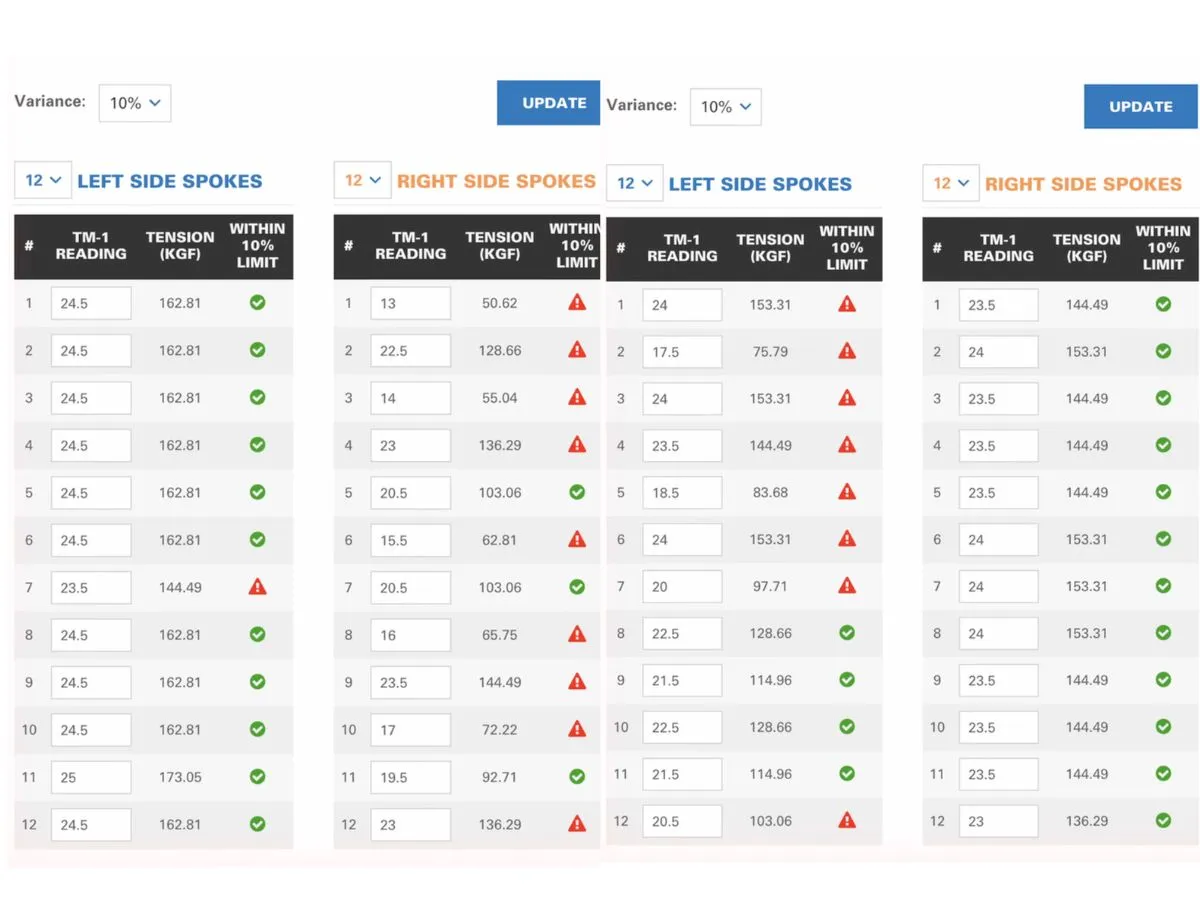
I measure every spoke on every wheelset I review with a tension meter, and flag anything falling outside 10% variance from the average.
The results here are not great. The front wheel had 7 spokes outside that limit. The rear had 8. That's 15 out of 48 failing.
That's a bad result, and I'd get them retensioned at your local shop before putting serious mileage on them. The good news is retensioning is quick and cheap, so it isn't necessarily a dealbreaker. But it's a cost and a job you need to factor in.
Bearings
The T Series runs steel bearings. For most riders, that's perfectly adequate - they roll smoothly when maintained, and replacements are cheap and easy to find.
The trade-off against ceramic is slightly higher rolling resistance and more susceptibility to corrosion over time if you neglect them. At $236 for the set, steel is the right call. If you want ceramic, 10PLUS puts those in their E Series at a higher price.
Hub design and engagement
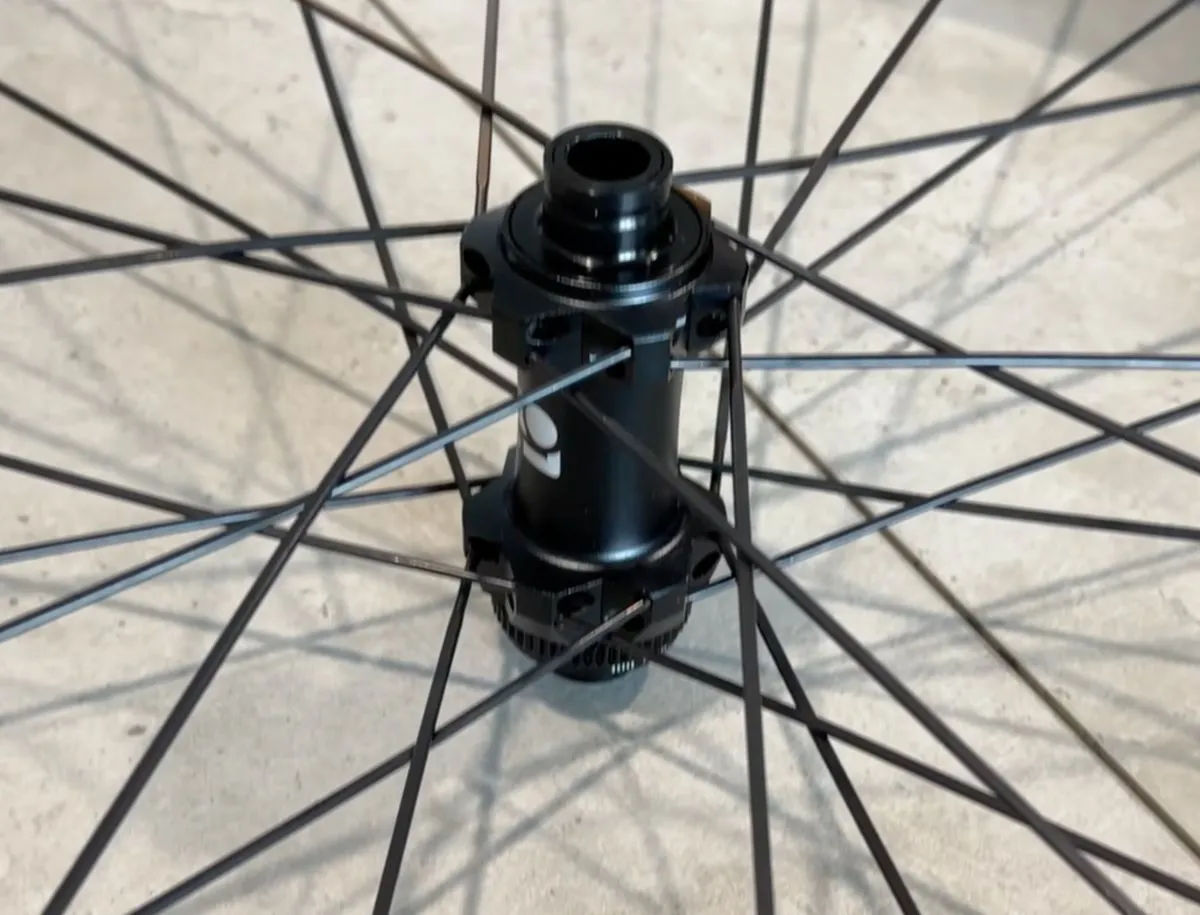
The hubs run a 36-tooth star ratchet system, and this is the spec that surprised me most.
A star ratchet works differently to the pawl-and-spring setup found in most budget hubs. Instead of a few small pawls engaging a ring, you get two toothed rings meshing together. More engagement points, more even load distribution, a lower failure rate, and easier maintenance.
With 36 teeth, engagement happens every 10 degrees of rotation, so there's very little dead travel when you start pedalling again out of a corner. This is the kind of hub you'd expect on wheels costing considerably more.
Carbon construction
The rims use Toray T700 and T800 carbon fibre. Toray is one of the most respected carbon fibre manufacturers in the world, and combining both grades lets 10PLUS balance stiffness, compliance and weight across different areas of the rim. T700 is widely used for its strength and consistency; T800 is a step up in stiffness.
10PLUS also adds reinforcement around the critical stress-bearing areas - the spoke bed and nipple seats, where forces concentrate.
They state a radial impact testing standard of 60 joules internally, with a resistance limit up to 80 joules. The UCI minimum for wheel approval is 40 joules, so 10PLUS are building to a noticeably higher benchmark than the sport mandates.
Carbon layup quality test
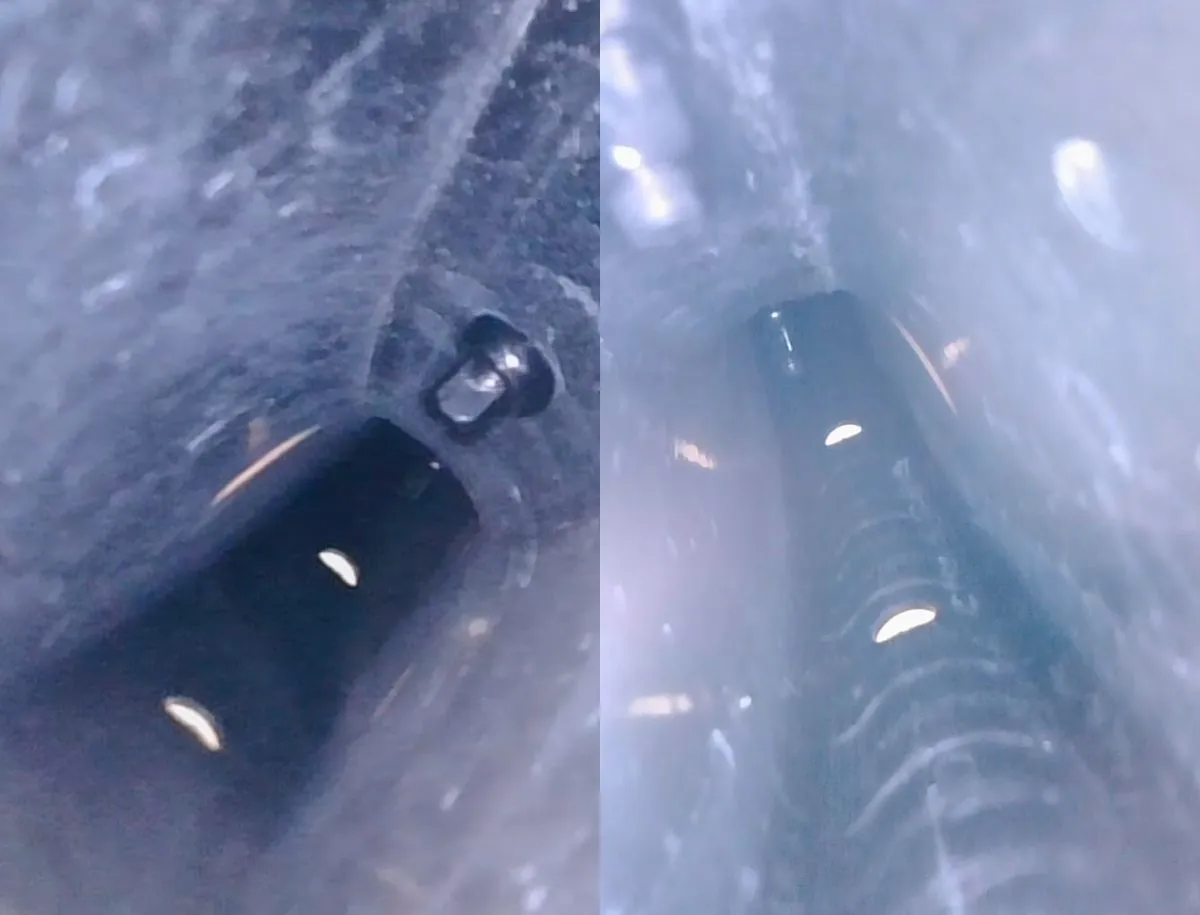
I do this with every set of carbon wheels I review. I feed an endoscope camera through the valve hole into the rim cavity so we can see the layup from the inside. I'm looking for consistent weave, clean resin distribution, no voids or air pockets, and well-formed nipple seats.
On the T Series, the nipple seats are properly formed with no cracking or deformation, and there's no visible voiding or delamination.
There are some surface texture irregularities and minor wrinkles throughout the interior. Nothing that raises structural concerns. And honestly, I'm not expecting a flawless layup at under $350 when carbon wheels selling for over $1,000 struggle with this same test.
What They're Like to Ride
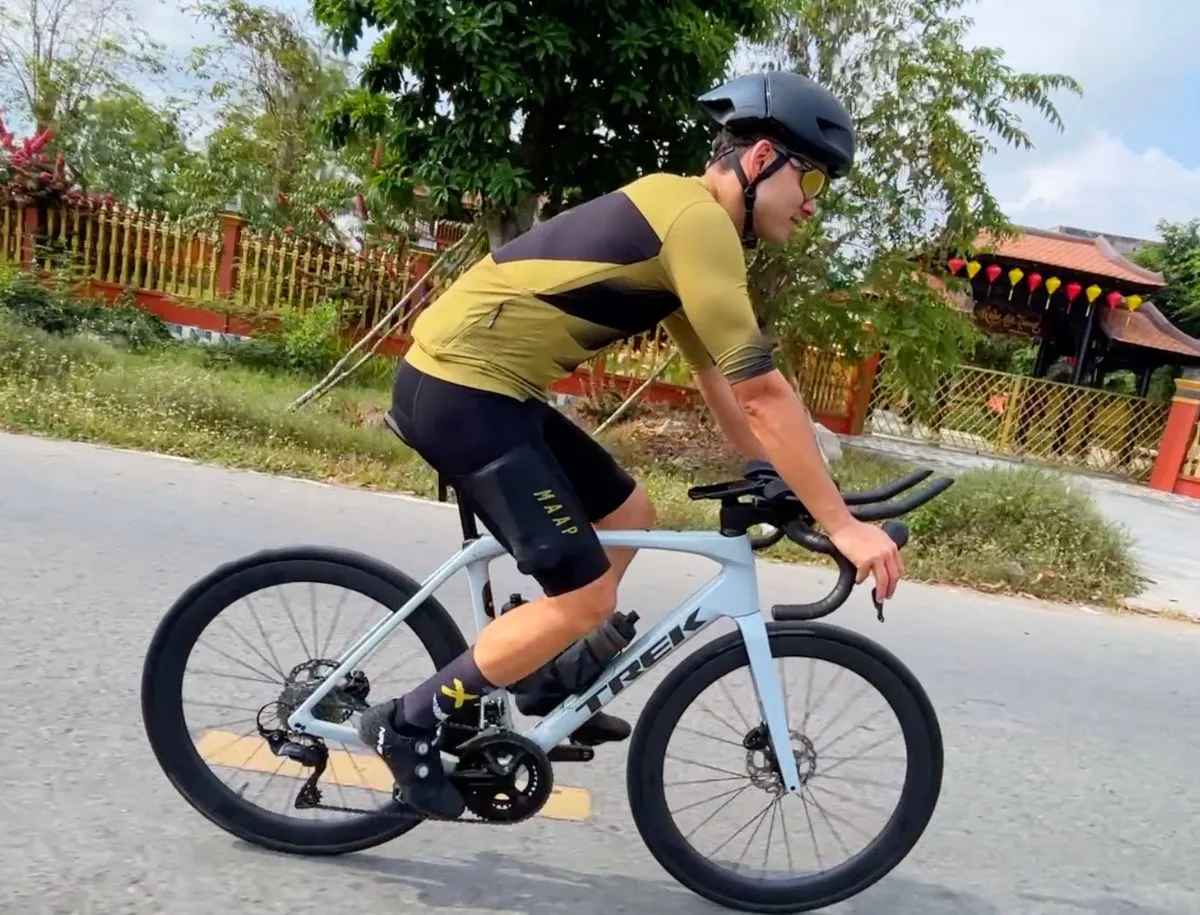
After around 500km, here's what I can tell you.
The 50mm depth gives a noticeable aerodynamic advantage over a shallow rim, and you feel it most on flat and rolling roads where you can hold speed for less effort. That's the entire point of a deeper rim, and these deliver it.
Stiffness is adequate for the price. Out-of-the-saddle sprinting and putting power down, there's no alarming flex, which is reassuring.
But at 1,636g, they aren't responsive when accelerating. Lighter wheelsets like the ICAN Aero 50 IIs feel noticeably snappier out of corners and on short punchy climbs. That difference in rotating weight is something you feel. Not dramatic. But it's there.
Comfort over longer rides is decent. The 32mm GP 5000 S TRs run tubeless do a lot of the heavy lifting, as they always do, but the wheels don't feel harsh over rough surfaces.
Handling is stable and predictable, with nothing nervous in corners or on fast descents. Crosswind sensitivity is what you'd expect at 50mm - a strong gust will push you around, same as any 50mm rim, and no worse than comparable wheels I've tested.
Nothing about how these feel on the road tells you you're riding a budget wheelset. That's probably the most important thing I can say about them.
Hub sound
The freehub is quieter than most wheels I review, and it's refreshing. Plenty of carbon wheels at this price have an aggressively loud freehub, which some riders love, but in a group ride it gets obnoxious quickly. The T Series is far more subdued.
Value: Is $330 Actually Good Value?
Yes, with one condition attached.
At the time of testing, nothing else in the carbon wheel market comes close on price with this spec sheet. The closest comparison in my own testing is the ICAN Aero 50 II at $670 - nearly 400 grams lighter and noticeably more responsive, but $434 more expensive. If you want to see what you actually get for the extra money, I've compared the two ends of the market directly.
The condition is the re-tensioning. Budget for a trip to your local shop on top of the purchase price and treat that as part of the cost of ownership. Do that, and the value here is hard to argue with.
Who Should Buy These
Honestly, 80 to 90% of riders would never notice the weight penalty in real-world riding.
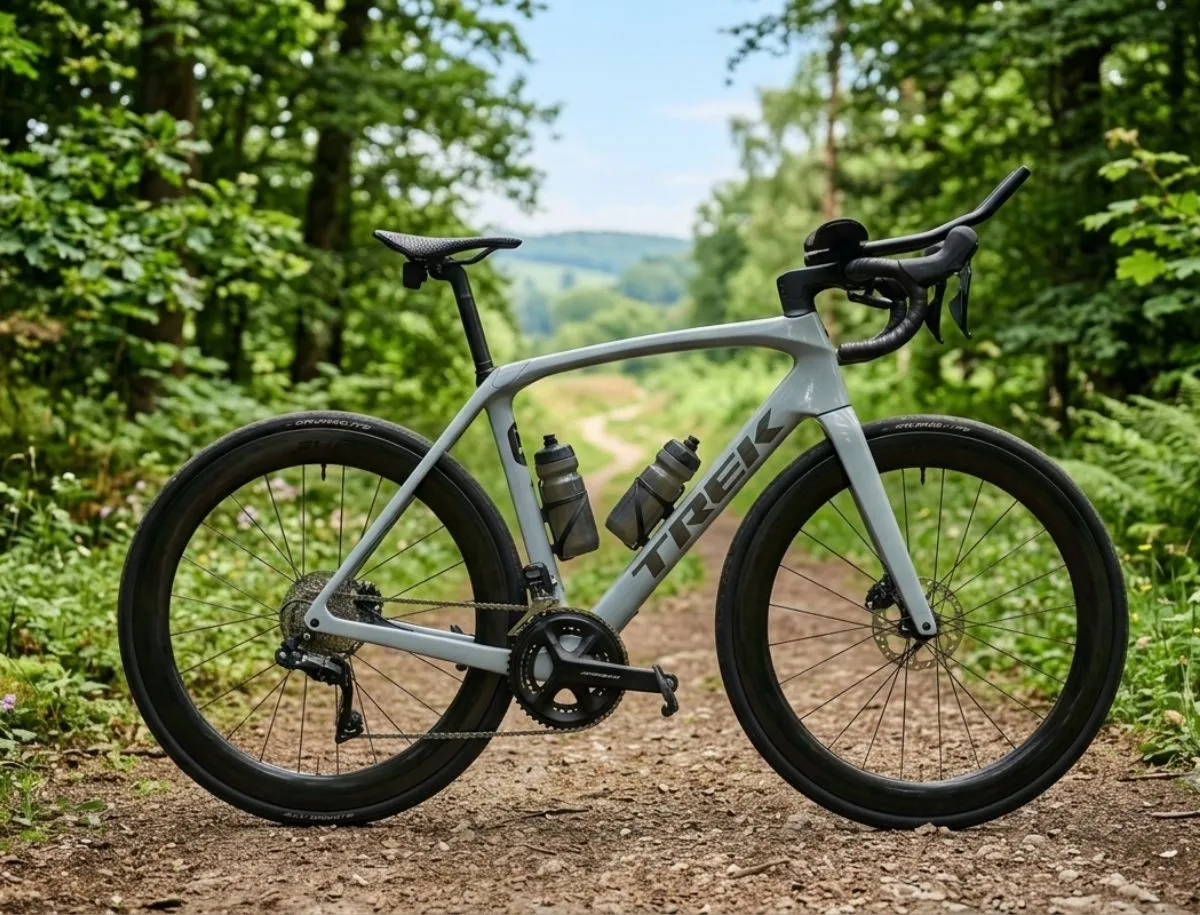
If you're upgrading from stock aluminium wheels to 50mm carbon and you don't want to spend $500 or more, these make a lot of sense. My Trek Domane SL5 came with spindly 23mm rims when I bought it a couple of years ago. With 50mm carbon on it, for $330, the bike looks enormously better. Nobody is ever going to know you paid under $350 - unless you tell them.
If you're a newer cyclist still building fitness, these are a very low-risk way to find out what carbon wheels actually feel like.
Who Should Skip Them
If you're competitive - racing triathlons, crits or sportives where grams and seconds count - spend more. Something like the ICAN Aero 50 II gets you nearly 400 grams less rotating weight and a more responsive ride. At that level, the extra $434 is meaningful.
And if the idea of taking a brand-new wheelset straight to a shop for retensioning annoys you, buy something else.

Review by Mike Dee
I test road bikes, carbon wheels, and cycling gear with quantifiable lab tests and real riding. No marketing spin, just the data - so you don't have to spend hours researching or wasting money on the wrong gear.