



TUKUS Bluefin Turbo SR Review: The Flashiest Carbon Wheels I've Tested
I've reviewed a lot of carbon wheels over the past 12 months. Many of them try to disappear into the bike: black, subtle, made to blend in. This TUKUS Bluefin Turbo SR review is about the opposite kind of wheel.
TUKUS sent me this pair to review, which I'll disclose upfront. That doesn't change what I'll tell you about what didn't work. I've put 600km on these wheels, run them through my usual bench tests, and I've got a lot to say.
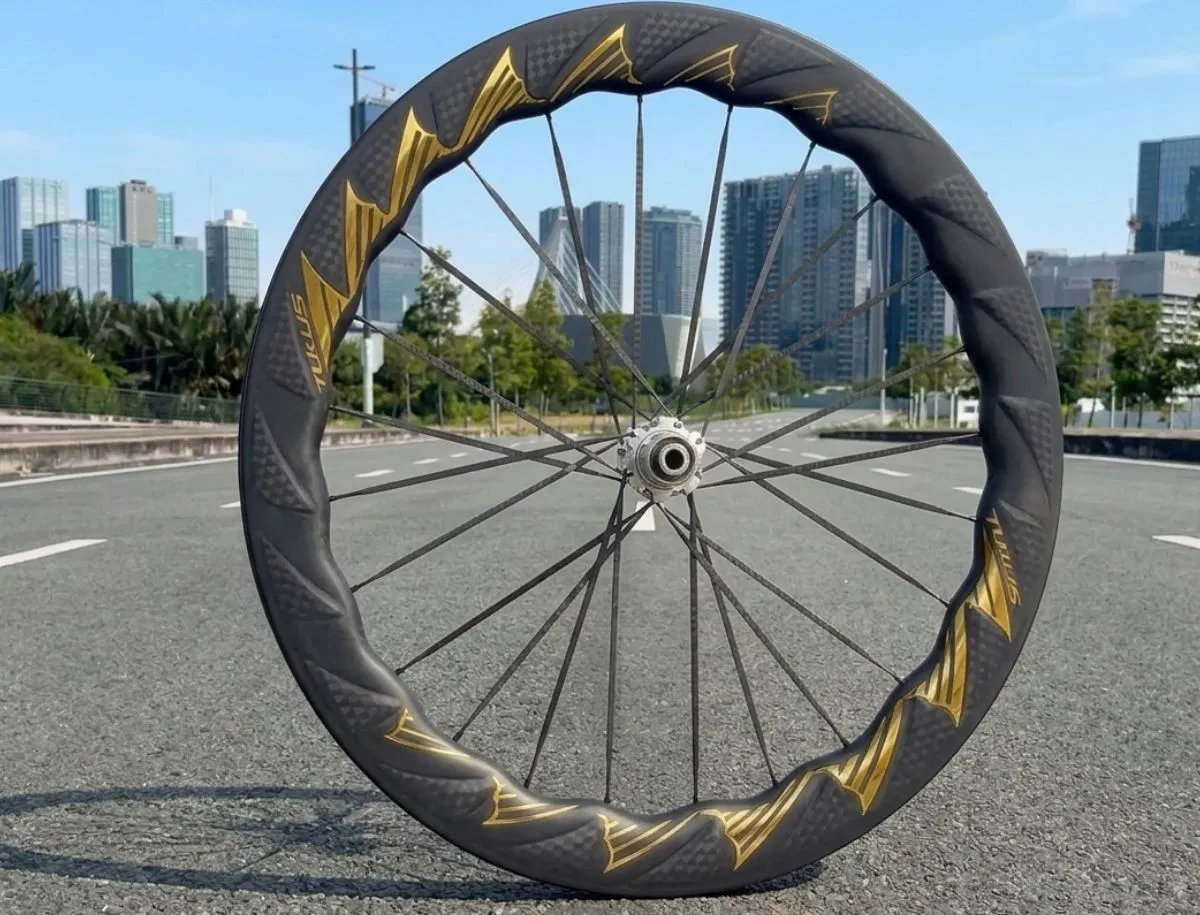
These are, without question, the boldest-looking wheels I've tested. Gold fins. A wave-shaped rim. Carbon spokes that look like they belong on a concept bike. You'll either love the look or you won't, and there isn't much middle ground.
But looks aren't why a wheel earns a spot on my bike. Performance is. So let's get into whether the TUKUS Bluefin Turbo SR backs up the way it looks.
What Is the TUKUS Bluefin Turbo SR?
TUKUS doesn't get anywhere near the review coverage that Elitewheels or Superteam get, which is part of why I wanted to test this pair. Lesser-known brands are often where you find the interesting stuff.
TUKUS is based in Xiamen, China, and launched as its own brand in 2020. That sounds young, but the founding team carried 13 years of OEM manufacturing experience into the launch, building carbon wheels for major European and American brands before putting their own name on anything. These aren't rebadged open-mould wheels from a generic factory.
TUKUS designs its own rims and spoke systems, and the wheels are UCI certified, which at least confirms they've cleared a baseline safety standard.
The Turbo SR I'm reviewing is one of TUKUS's flagship models. "SR" is the carbon spoke version. There's also a Turbo SS: same wheel, steel spokes, same $1,225.99 price. I've got the SR, and there are real trade-offs to that choice I'll cover in the spokes section below.
First Impressions: Unboxing the TUKUS Bluefin Turbo SR
The wheels arrived well packaged. Each wheel was individually wrapped and secured, with no damage in transit. TUKUS also threw in a pair of socks and a grey storage bag, which I now use for muddy shoes after wet rides.
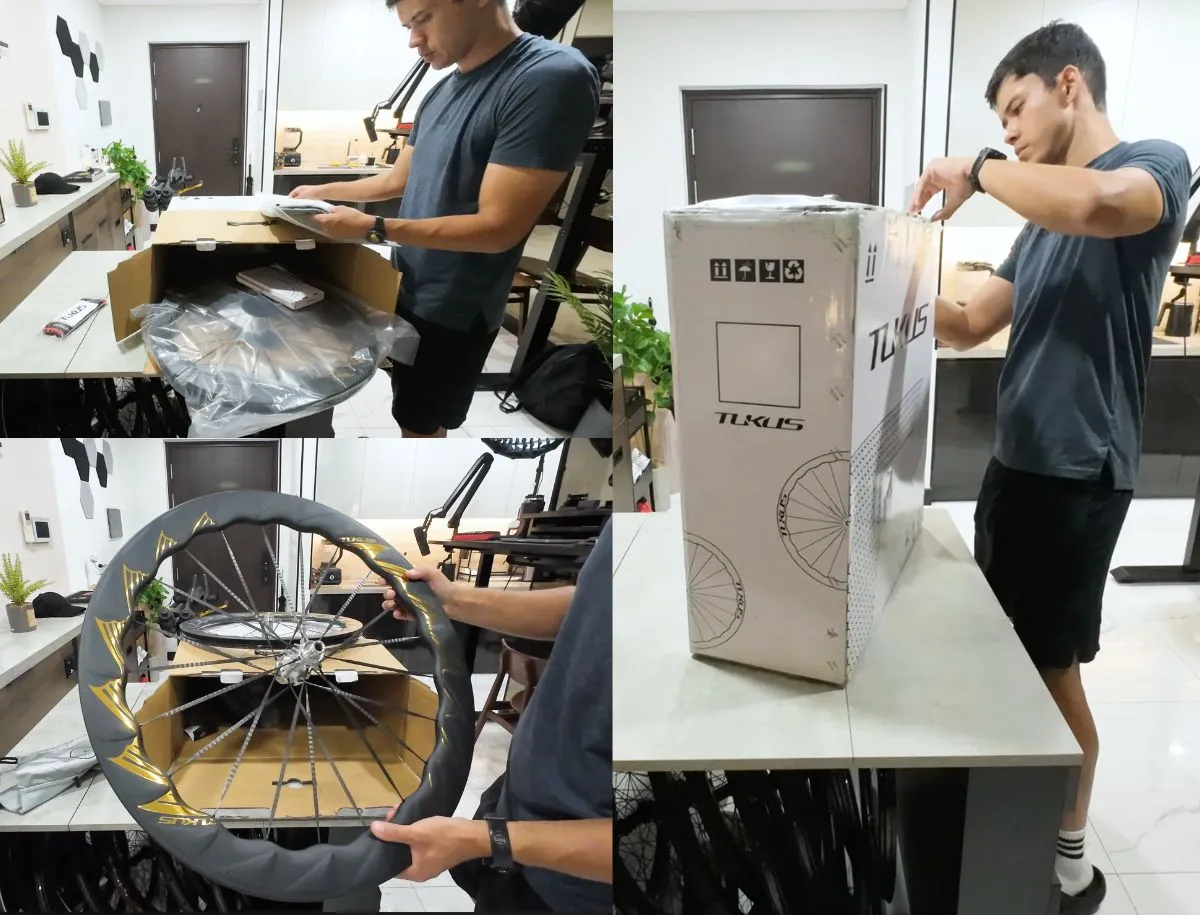
Out of the box, the build quality looks good. The carbon layup is visually tight and consistent, and the gold fin detailing is applied cleanly - no rough edges or bleed marks. Valve extenders and rim tape came preinstalled, though I stripped them off to weigh the wheels properly. Valves themselves weren't included, which is a miss at this price.
The rim uses a wave-shaped profile with 21 triangular 3D fin shapes per wheel, what TUKUS calls its "Bluefin bionic flow guidance system." The idea is that the fins reduce turbulence at the rim surface for an aero gain. I can't independently test that claim. What I can tell you is that it looks fast, whether or not it measurably is.
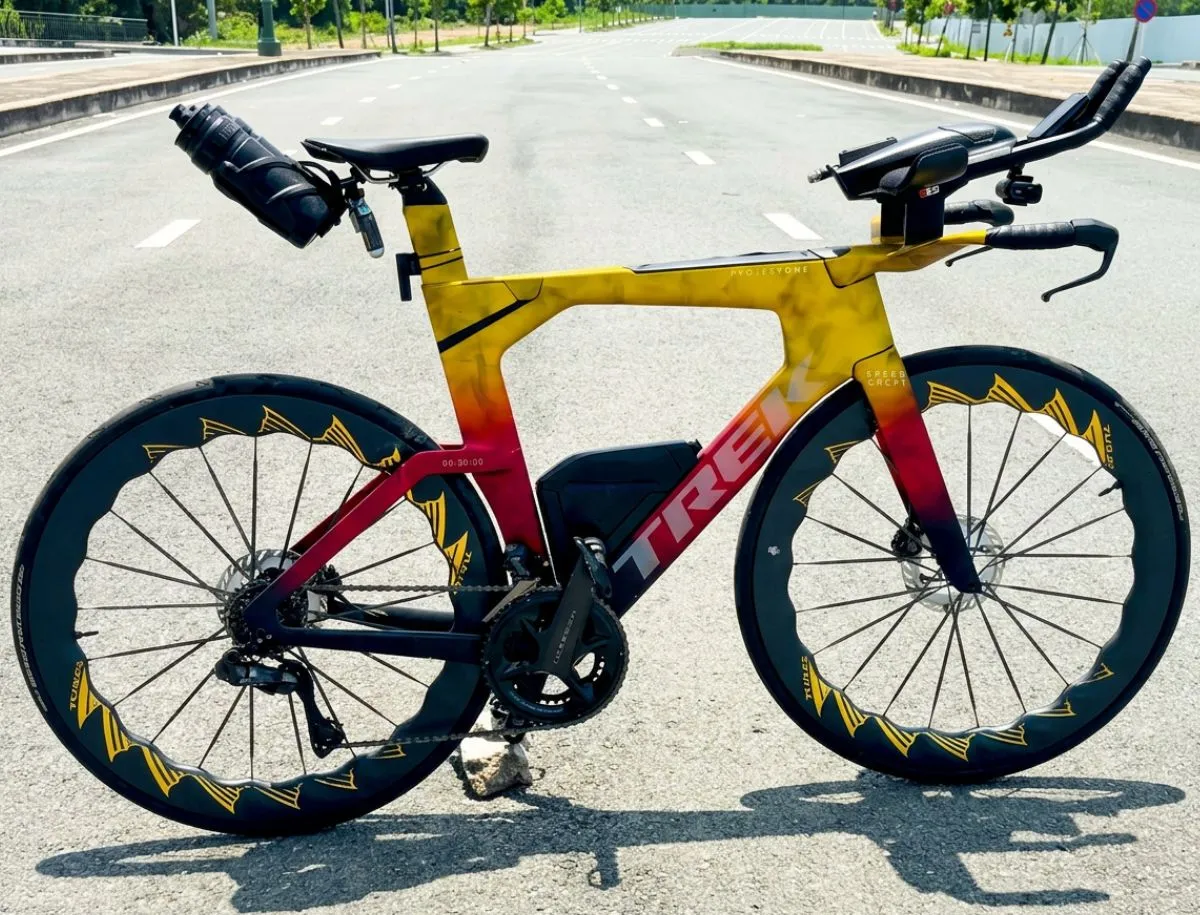
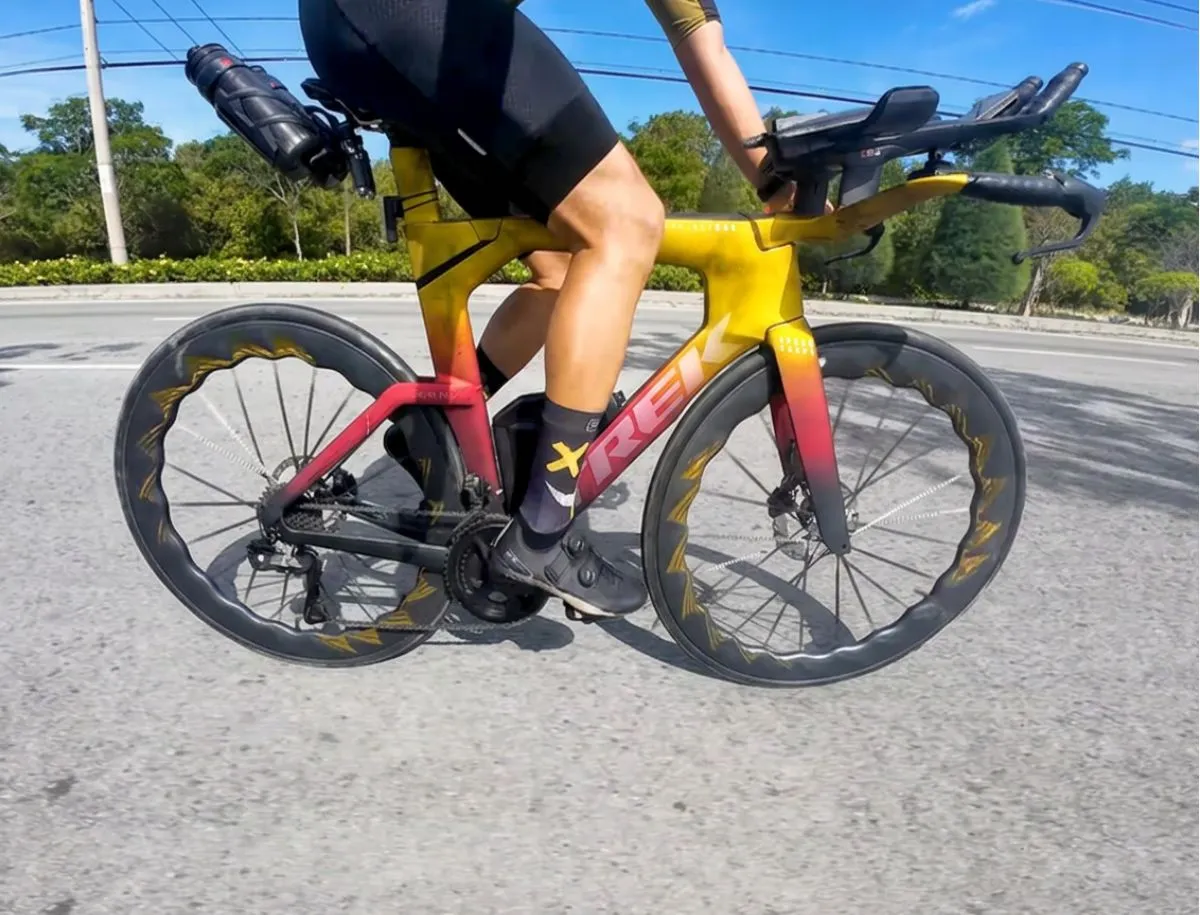
Then there's the gold. A lot of gold. The dark matte carbon with gold fin accents is unapologetic, and it either looks brilliant or makes your eyes hurt. Mine happens to match my gold Trek Speed Concept perfectly. On a more understated bike, like my white Trek Domane SL5, I think this finish would look like too much.
Shipping and Duties
If you're ordering to the US or Europe, TUKUS builds duties into the price, so what you see at checkout is what you pay. US delivery runs 7 to 16 business days, EU delivery 15 to 20 business days. Both are reasonable for a wheel shipping direct from China.
Warranty and Crash Replacement
TUKUS backs the Turbo SR with a 36-month warranty, which is standard for Chinese carbon wheels. There's no crash replacement policy, which is a real gap. I'd like to see at least a 10 to 15% crash replacement option on a wheel at this price. Most buyers will never use it, but its absence is worth knowing before you order. On the Carbon Wheel Scorecard, that puts the Turbo SR at 1 out of 5 for crash replacement.
What Makes the Bluefin Turbo SR Different
Rim Depth and Dimensions
The Turbo SR comes in two depths, 52mm and 62mm. I've got the 62mm, chosen for my Ironman 70.3 training on my triathlon bike, where the extra depth pays off more than it would on a road bike.
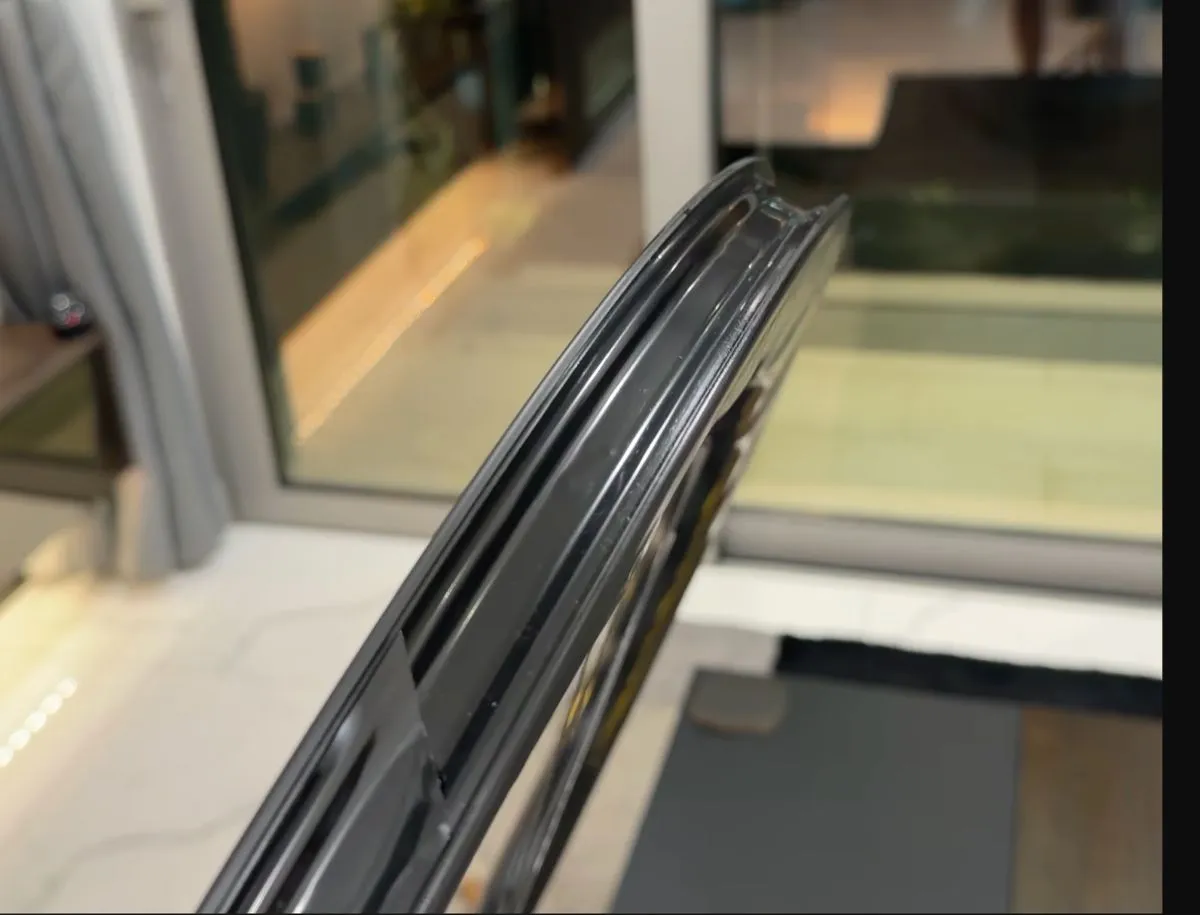
Internal width is 23mm, external width 30mm, with a recommended tyre range of 25 to 32mm. The bead is hooked, so you can run either tubed or tubeless setups. That flexibility is a genuine plus - it doesn't lock you into one tyre system.
Weight
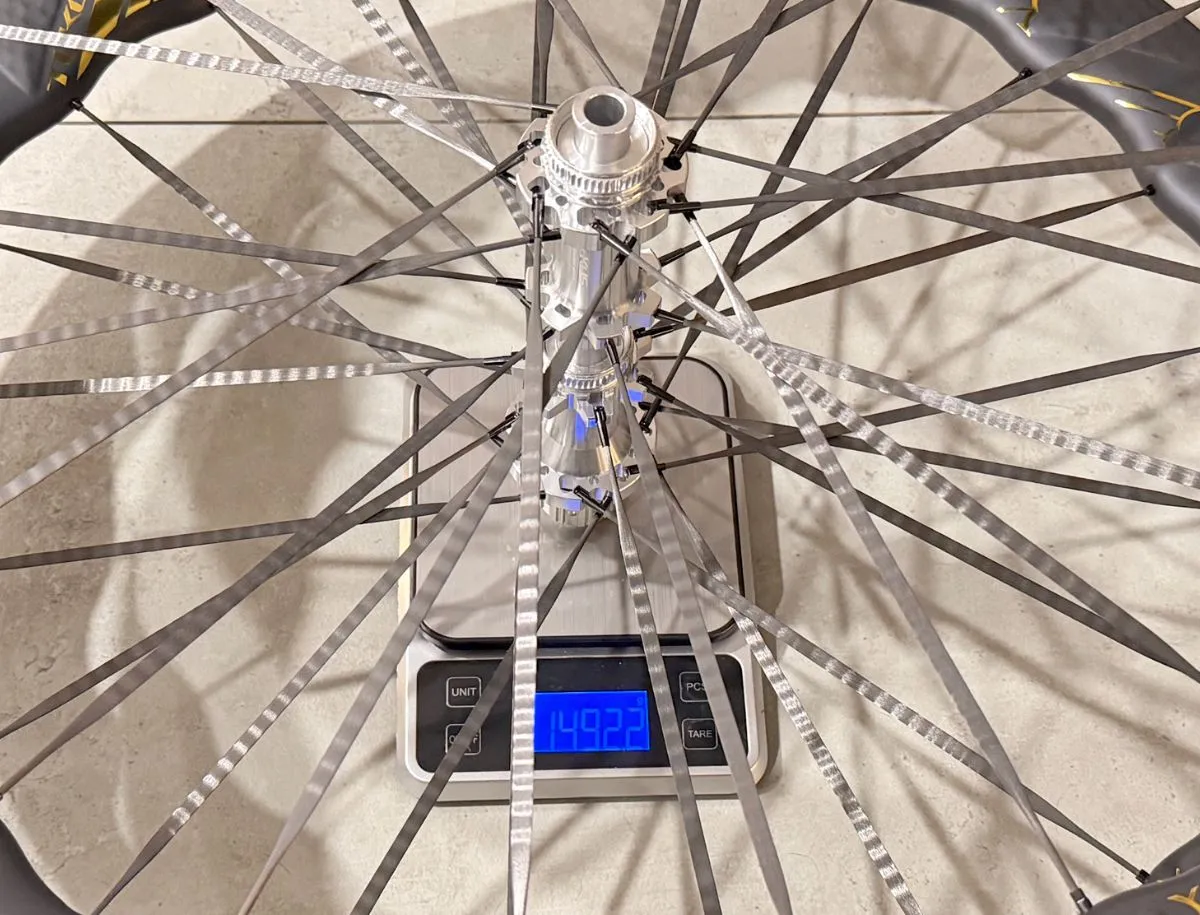
TUKUS claims 1,350g for the 52mm version. I weighed my 62mm pair at 1,492g without rim tape or valves, which is a strong number for a 62mm wheel, with the carbon spokes doing a lot of the work keeping weight down. On the Carbon Wheel Scorecard, that scores 4 out of 5 for weight.
Carbon Spokes
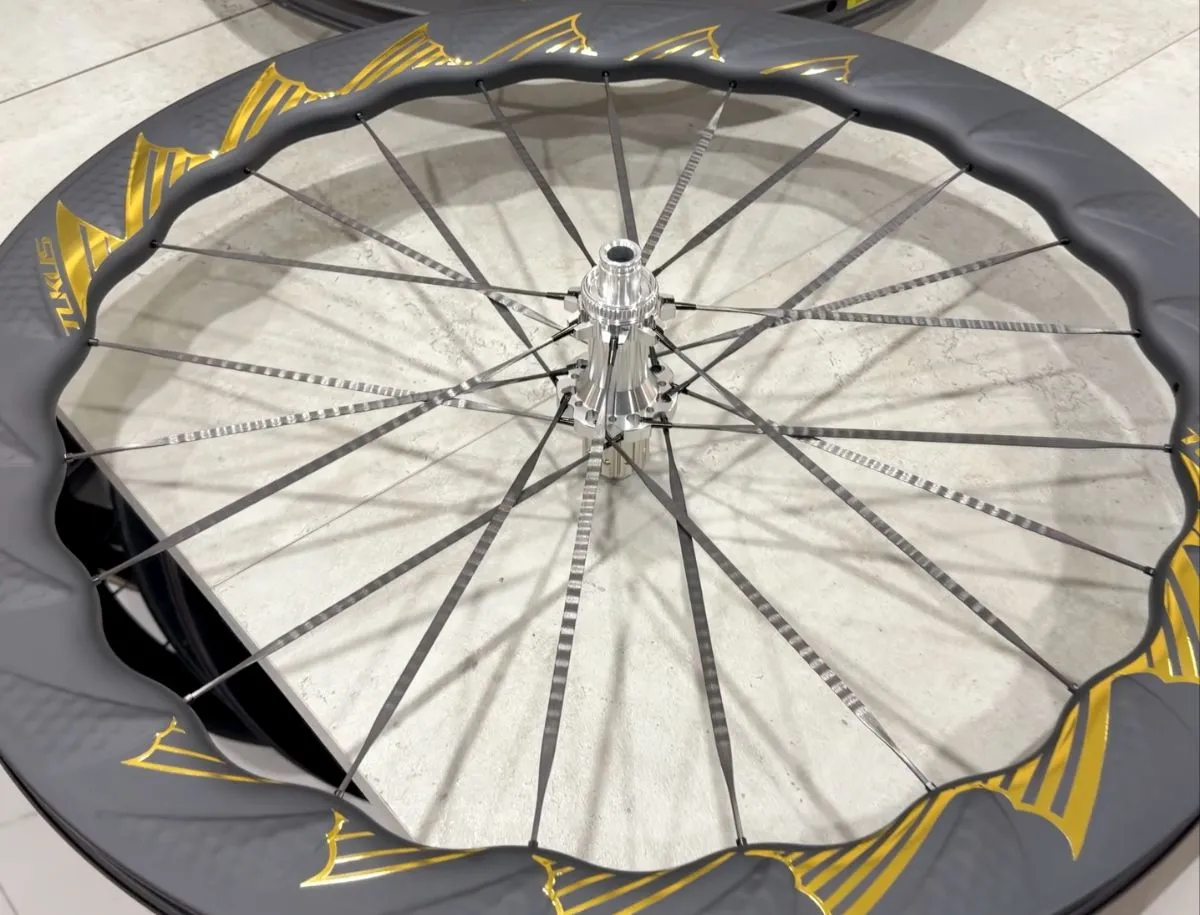
The spokes are the most distinctive part of this build: wide, flat, wave-shaped carbon blades TUKUS describes as "6mm ultra-light wide wave carbon spokes." There are 21 per wheel, front and rear, fewer than the 24-plus most wheels in this range run, trading some redundancy for weight and aero gain.
One thing to know before you buy: these spokes are non-captive, bonded into the hub flange rather than removable with standard tools. Break one, and it's not a roadside fix - you're sending the wheel back to TUKUS.
The odds of a spoke failure cascading and pulling other spokes loose are low, but not zero, particularly for heavier riders. TUKUS lists a 120kg rider weight limit on this wheel, and I'd steer clear if you're near that mark.
Spoke Tension Test
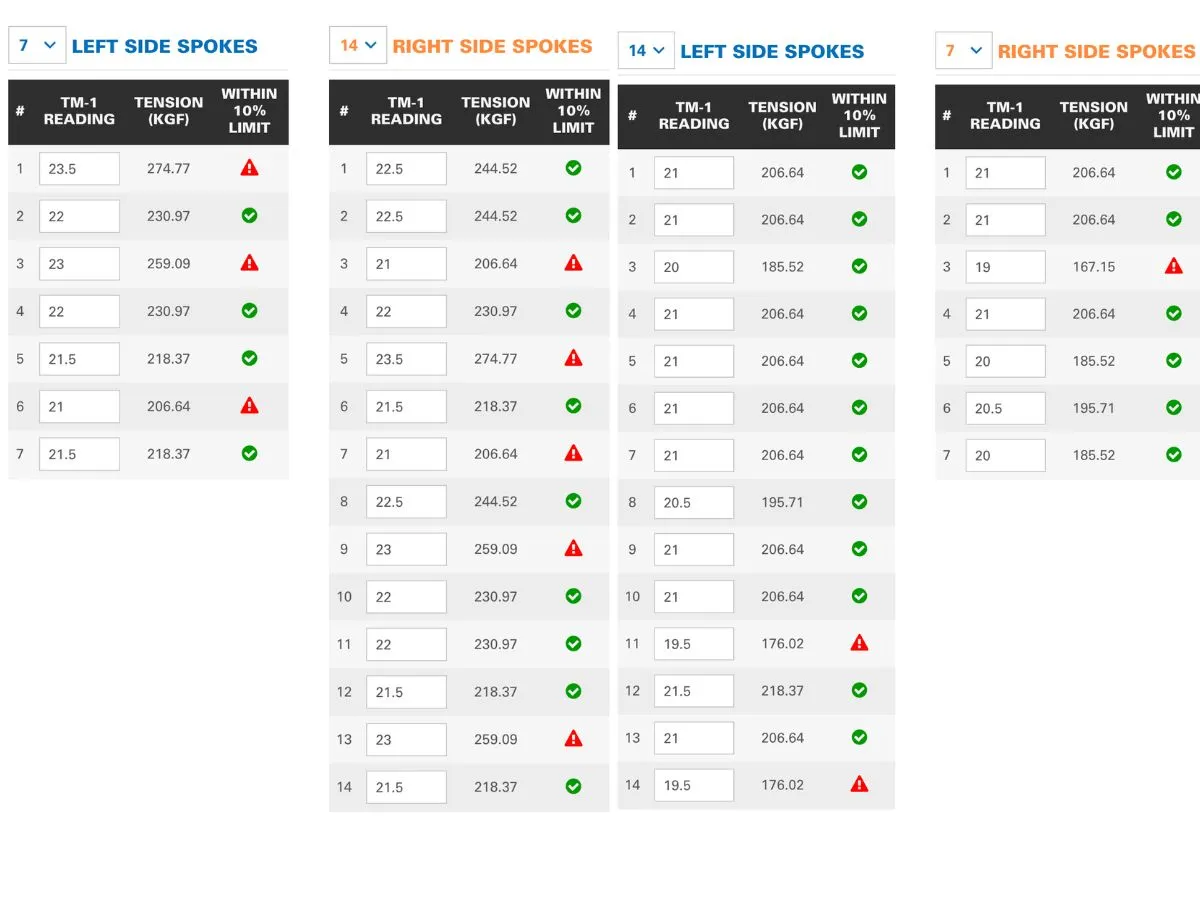
I run every wheel through a spoke tension test with a Park Tool TM-1 tensiometer, checking both the overall tension level and how consistent it is across all spokes. Consistency matters more than raw tension. Uneven tension puts uneven stress on the rim and hub, and over time that shows up as trueness and durability problems.
TUKUS specs 110 to 130 kgf tension. My measurements came in above that range on both wheels, which isn't a problem on its own if it's consistent. It wasn't. The front wheel, with 14 left-side and 7 right-side spokes, had 3 spokes outside the 10% variance threshold - a solid result. The rear wheel, 7 left and 14 right, had 8 spokes outside that threshold - an uneven build.
Combined, that's 11 spokes out of tolerance, which puts the Turbo SR at 2 out of 5 for spoke tension on the Carbon Wheel Scorecard. It doesn't mean the wheel will fail. It does mean a proper tension and truing session from a good wheel builder would improve both ride quality and long-term reliability.
Hub and Bearings
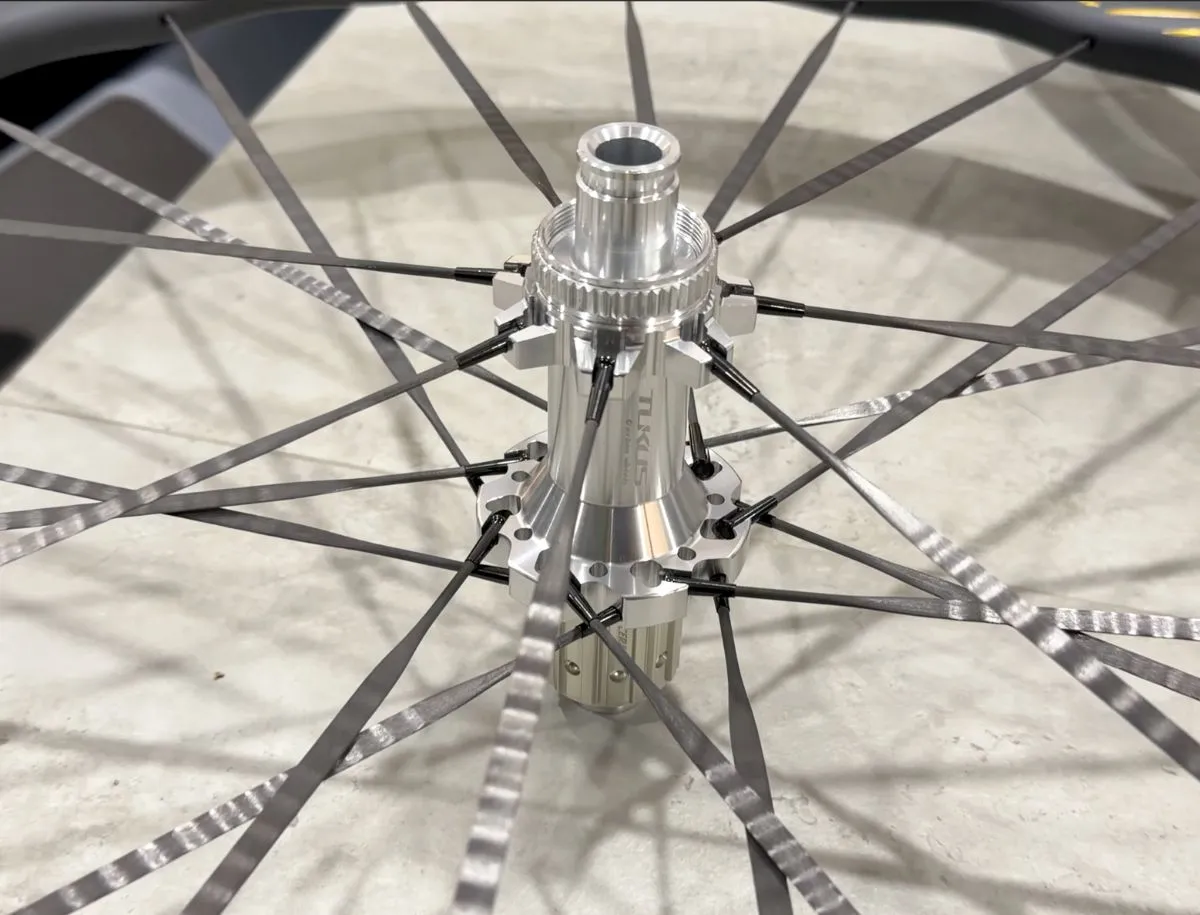
The hub is TUKUS's GA25, running a 52-tooth ceramic bearing ratchet system. 52 engagement points means a click roughly every 6.9 degrees of rotation, which is a genuinely responsive power transfer when you put the power down. Freehub compatibility covers Shimano HG and SRAM XDR, so most drivetrains are covered. No Campagnolo option.
Ceramic bearings run lower friction than steel, which in theory reduces rolling resistance, though most riders won't feel that difference on the road. It's still a higher-spec component than you'd expect at this price. What you will notice is the noise: the 52-tooth engagement produces a loud, distinctive buzz freewheeling. If you like a hub you can hear on a descent, you'll love it. If you prefer quiet, factor that in.
Drainage Holes
There are small drainage holes inside the rim bed. Carbon rims are hollow, and water from rain or road spray can work its way in. Trapped unevenly, even a small amount of water adds weight where you don't want it, and you'll feel it wobble at speed. These holes let it drain instead of pooling.
Carbon Fibre Quality
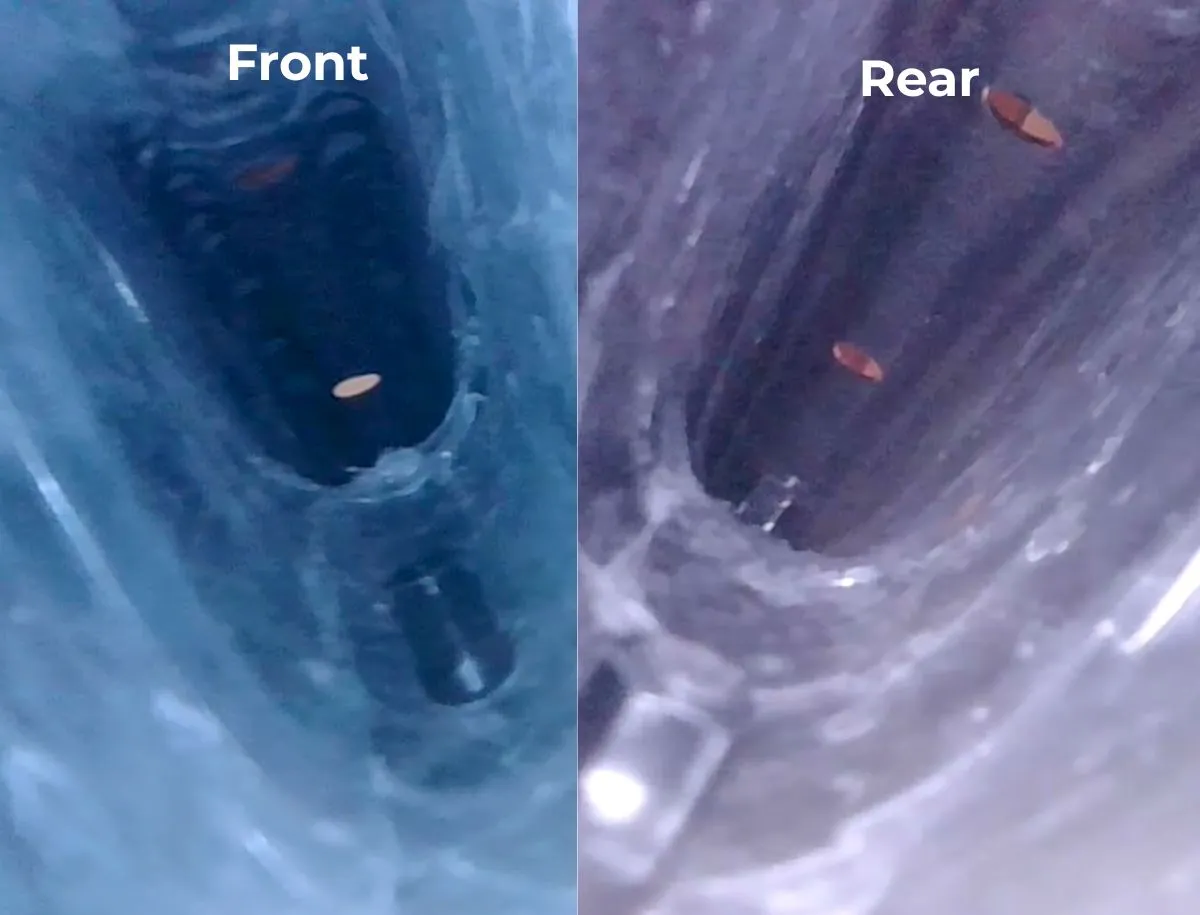
I ran an endoscope camera through the valve hole to inspect the internal layup. The structure is generally sound, and the layers are laid correctly, but there's some visible debris and a few spots where the layup isn't as clean as the best wheels I've tested. On the Carbon Wheel Scorecard, that's a 3 out of 5 for carbon fibre quality - about average.
Ride Experience: 600km on the TUKUS Bluefin Turbo SR
I've now put around 600km on these wheels, mostly flat, straight-line riding averaging around 35kph, plus some group rides and traffic in Saigon. I've kept them on my Trek Speed Concept longer than I normally would, because I've genuinely enjoyed riding them.
Stiffness is there when you put power down. No noticeable lateral flex under load, which is what you'd expect from carbon spokes and a deep rim at this price point.
Comfort is decent for a deep-section wheel, though carbon spokes don't absorb road vibration the way steel spokes do. I'm running 28mm Continental GP 5000 S TR tubeless, which is doing a fair amount of the work keeping the ride smooth. On rough tarmac, you'll feel more of the road than you would on a steel-spoked wheel.
With the 62mm depth, I expected the wide 6mm carbon spokes to make crosswinds worse than average. They didn't. The Turbo SR handled gusts better than I expected for a wheel this deep and this light, though it's still slightly more sensitive than other 60 to 62mm wheels I've ridden.
I haven't done much climbing on these. They're built for flat, aero riding, not for hauling up mountains, and for that kind of riding, they've genuinely impressed me. I don't have wind tunnel data to back up a specific aero number, but across a year of testing carbon wheels, these are among the fastest-feeling I've ridden.
Value: Is the TUKUS Bluefin Turbo SR Worth $1,225.99?
$1,225.99 sits well below what you'd pay for a comparable Western wheel. A Zipp 404 Firecrest, 58mm deep and around 1,450g, retails for roughly $1,900 to $2,150 in the US. The Turbo SR undercuts that by hundreds of dollars and comes in lighter at a deeper 62mm profile.
Against Chinese competition, the picture is closer. I rated the YOELEO QianKun CS60 the best-performing carbon wheelset I've tested, and at $1,650 (or less with the MIKE10 code) it costs a few hundred dollars more than the Turbo SR. The QianKun's spoke tension passed cleanly on both wheels, and YOELEO offers an extendable warranty plus a genuine crash replacement discount, neither of which TUKUS matches here.
So the honest answer: the Turbo SR is the more affordable option, and it looks like nothing else on the road. But the extra money for the QianKun buys you a cleaner build and better after-sales cover. If budget is the deciding factor and you want the boldest wheel in the group, the Turbo SR earns its price. If you
want the more complete package and can stretch the budget, I'd point you to the CS60 instead.
TUKUS also sells the Turbo SS, the steel-spoke version of this same wheel, at the identical $1,225.99. If the spoke concerns here put you off, that's worth a look before you commit to the carbon-spoke SR.
Who Should Buy the TUKUS Bluefin Turbo SR
Buy this if: You want a genuinely fast, genuinely bold-looking aero wheel for flat group rides, races, or triathlon training, and you're comfortable with carbon spokes and a Chinese warranty process.
Skip this if: You're over the 120kg rider weight limit, you want crash replacement cover, you ride mostly rough roads and value comfort over stiffness, or you'd rather your wheels didn't start a conversation every time you roll up to a group ride.

Review by Mike Dee
I test road bikes, carbon wheels, and cycling gear with quantifiable lab tests and real riding. No marketing spin, just the data - so you don't have to spend hours researching or wasting money on the wrong gear.